Night-time road illumination is pivotal for ensuring travel safety, yet conventional solutions have long been mired in intractable challenges. Foremost is the issue of energy wastage: traditional street lamps rely on continuous grid power supply, incurring substantial annual electricity costs. Passive reflective markers, while requiring no electricity, suffer from the critical flaw of insufficient brightness.
Secondly, safety assurance remains inadequate. Passive reflective signage suffers severely from poor visibility at night or during adverse weather conditions such as rain, fog, or snow, making timely recognition by drivers difficult. Grid-powered streetlights, meanwhile, are prone to ‘blackouts’ due to circuit faults or sudden power cuts, directly doubling the risk of night-time accidents.
Finally, maintenance costs remain prohibitively high. Traditional lights require regular bulb replacements and circuit inspections, while passive reflectors are prone to wear and detachment. Frequent manual inspections and replacements consume substantial manpower and resources, creating a heavy long-term operational burden.
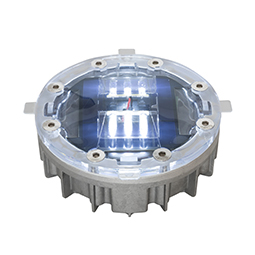
The advent of solar road studs offers a novel solution to these industry challenges. Utilising solar energy as its primary power source, it employs high-efficiency photovoltaic panels to collect light energy, which is stored in lithium batteries. This enables autonomous illumination at night, completely freeing it from grid dependency.
This innovative ‘passive power supply + active illumination’ model not only resolves the high energy consumption issues of traditional lighting but also significantly enhances night-time road visibility and warning capabilities. It stands as the preferred solution in modern road safety infrastructure, combining environmental value with safety benefits.
The core energy-saving advantage of solar road studs lies in their entirely self-contained energy supply system. Equipped with high-efficiency photovoltaic panels, they precisely convert solar energy into electricity during daylight hours, storing it in high-capacity lithium batteries.
At night, without any external power supply, the battery automatically powers the LED lights, resulting in zero electricity costs throughout the entire operation. Data indicates that a single solar road stud can save 50-100 kWh of electricity annually. Large-scale deployment can significantly reduce the carbon footprint of road operations, aligning with global energy-saving and carbon reduction policy directions.
Even in areas with insufficient sunlight (such as northern winters or shaded mountain roads), the combination of high-efficiency photovoltaic panels (≥20% conversion rate) and large-capacity lithium batteries (≥800mAh) ensures stable operation for over seven consecutive days of overcast or rainy weather, eliminating concerns about ‘blackout’ issues.
The energy-saving advantages of solar road studs extend beyond operational phases to encompass the entire product lifecycle. Their casings, crafted from engineering plastics (ABS/PC) or stainless steel, exhibit exceptional corrosion and UV resistance, ensuring a service life exceeding five years – significantly outlasting conventional lighting equipment.
Furthermore, their modular structural design permits independent replacement of core components such as batteries and LED modules, preventing total system failure due to localised faults. With IP67/IP68 waterproof ratings, they effortlessly withstand harsh outdoor conditions like torrential rain and standing water, achieving a significantly lower failure rate than conventional streetlights.
Compared to traditional streetlights requiring bulb replacement every 1-2 years, solar road studs necessitate only simple quarterly or biannual inspections. This substantially reduces labour and material consumption during maintenance, further lowering overall costs.
For low-traffic environments such as rural roads and suburban access routes, the intelligent sensing solar stud achieves precise energy optimisation. Equipped with radar or infrared sensing modules, it maintains a low-brightness sleep mode to conserve power when no vehicles or pedestrians are detected.
Upon detecting approaching vehicles or pedestrians, they automatically switch to high-brightness mode to ensure clear visibility. This intelligent ‘on-demand illumination’ mode saves 30%-50% energy compared to continuous high-brightness lighting, extending the road studs' continuous operation time by 2-3 times during rainy or overcast conditions.
Compared to traditional passive reflective markers, the active illumination feature of solar road studs represents a qualitative leap. Standard models achieve brightness ≥400 cd, with visibility exceeding 150 metres; high-brightness variants reach ≥600 cd, offering visibility over 300 metres – 5 to 10 times that of passive reflectors.
Crucially, they maintain stable illumination during low-visibility conditions such as rain, fog, or snow. This advantage fundamentally resolves the critical issue of traditional reflective markers becoming ‘invisible and indistinguishable’ in adverse weather, providing drivers with clear guidance.
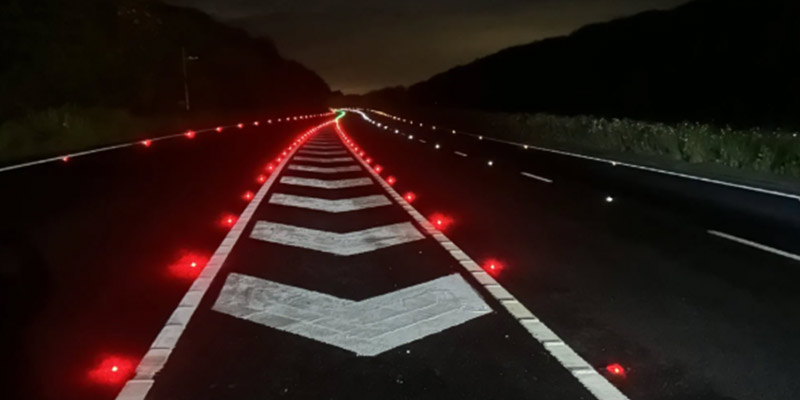
Simultaneously, precise traffic guidance is achieved through distinct colour differentiation: white delineates lane edges, yellow alerts central reservations, and red signals prohibitions or hazards. This effectively reduces visual misjudgements by drivers, enhancing traffic order.
On unlit rural roads, mountainous hairpin bends, and motorway slip roads, the greatest night-time driving risk lies in the inability to accurately discern road contours. Solar-powered road studs perfectly resolve this critical issue.
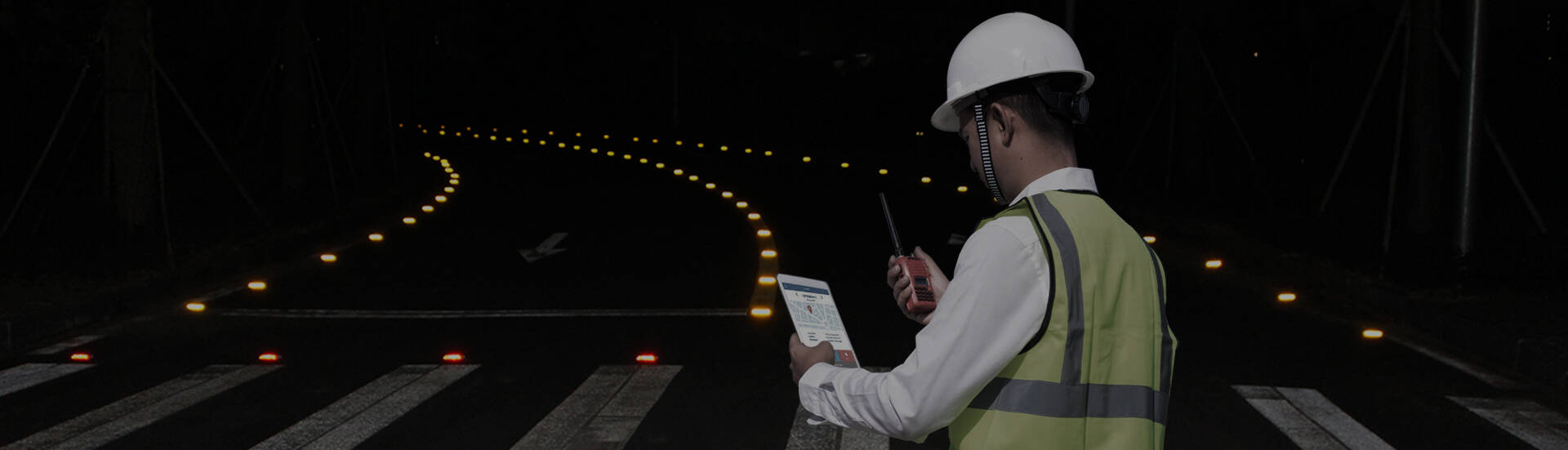
Installed along road edges, lane boundaries, and hazardous sections, they clearly delineate the road's trajectory and limits. This assists drivers in accurately judging their path, preventing accidents caused by poor visibility such as veering off the carriageway or lane drift.
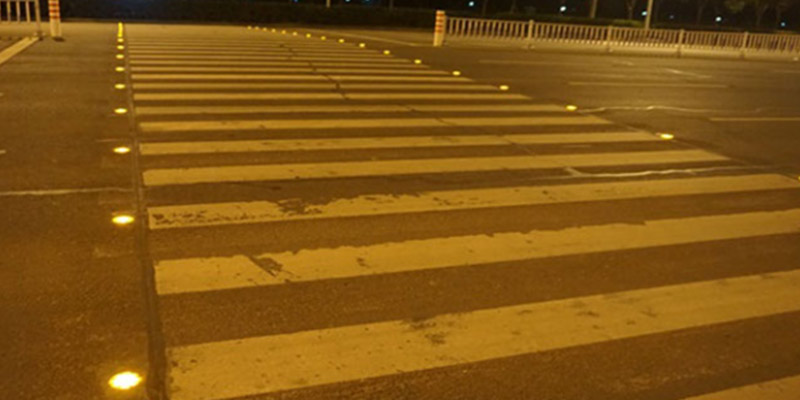
In scenarios like car parks and residential access roads, they also precisely demarcate parking bays and pedestrian crossings. This balances vehicular flow with pedestrian safety, enhancing overall traffic efficiency.
In hazardous areas such as sharp bends, steep gradients, intersections, school zones, and construction zones, the proactive warning function of solar-powered road studs proves particularly critical. Through continuous or flashing illumination, they alert drivers in advance to reduce speed, affording sufficient reaction time.
Research indicates that installing solar road studs on rural road bends reduced night-time accident rates by 45%. At unlit intersections, accident rates fell by 52%.
This proactive safety intervention represents a core advantage unmatched by traditional passive signage, fortifying night-time safety defences on high-risk sections.
Rural and suburban roads commonly lack grid coverage and suffer from inadequate maintenance resources. Traditional street lighting incurs prohibitively high installation and operational costs, hindering widespread adoption. Solar-powered road studs, requiring no wiring and operating autonomously, perfectly align with the core needs of such environments.
We recommend selecting active-lighting models with extended endurance (≥7 days of continuous overcast/rainy weather), high waterproofing (IP68), and pressure resistance ≥20 tonnes. These achieve zero-cost night-time illumination, effectively reducing night-time accident rates on rural roads by over 40%, thereby enhancing rural road safety.
Despite streetlight coverage on urban thoroughfares, illumination blind spots persist—particularly at pedestrian crossings, cycle lanes, and overpasses—where collisions between pedestrians and vehicles frequently occur at night. Solar road studs serve as an effective supplement to streetlights, enhancing illumination and guidance in these areas.
Recommended underground models feature flush-mounted designs to prevent trampling and crushing. Synchronised flashing variants for pedestrian crossings significantly enhance visibility, reducing vehicle-pedestrian collision risks by 60% and safeguarding urban transit safety.
Night-time illumination in scenic areas and parks must ensure visitor safety while avoiding light pollution that disrupts natural landscapes. Solar road studs' low-intensity, self-illuminating properties perfectly address this core requirement.
Low-brightness models in soft hues like green or blue, or portable temporary variants, are recommended. These clearly guide visitor routes without compromising the natural nocturnal scenery, aligning seamlessly with eco-tourism and sustainable development principles.
Dynamic scenarios such as construction zones, event-specific temporary routes, and emergency repair access points demand exceptionally rapid deployment of safety signage. Conventional temporary lighting requires wired power supply, resulting in inefficient deployment that struggles to meet emergency needs in such dynamic settings.
We recommend adopting temporary solar road studs with suction cups or counterweights, featuring alternating red and yellow flashing lights for rapid installation without wiring. Compared to conventional temporary lighting, deployment time is reduced by 80%, enhancing safety levels on construction zones by over 50%.
Solar road studs operate on a one-off investment model with zero electricity expenditure during operation, saving 50-100 kWh per unit annually. Conventional streetlights incur annual electricity costs of approximately $200-500 per unit, plus around 15% line losses, resulting in extremely high long-term energy expenditure.
While passive reflective markers have no operational energy consumption, their short lifespan (≤2 years) necessitates frequent replacement, leading to significant long-term comprehensive costs. Clearly, solar road studs hold an absolute advantage in energy efficiency economics.
Solar road studs offer a visibility range of ≥150 metres and maintain stable operation during adverse weather, reducing accident rates by over 40%. Traditional streetlights provide uneven illumination with significant visual blind spots, exhibiting annual failure rates of 10%-15%, indicating clear shortcomings in safety assurance.
Passive reflective markers offer visibility ≤30 metres and become largely ineffective in rain or fog, contributing less than 10% to accident reduction. From a safety perspective, solar road studs' active illumination mode provides superior assurance.
Solar road studs boast a service life ≥5 years, with annual maintenance costs ≤$5 and average annual comprehensive costs ≤$100. Traditional streetlights incur average annual comprehensive costs ≥$250, where maintenance alone accounts for ≥$50, representing a substantial long-term burden.
Passive reflective markers incur average annual comprehensive costs ≥$150, primarily due to frequent replacement expenses. Long-term, solar studs demonstrate a pronounced comprehensive cost advantage, representing the most cost-effective choice.
The conversion efficiency of photovoltaic panels directly determines energy harvesting capability. Opt for monocrystalline silicon panels with ≥20% conversion efficiency, as their low-light performance is superior, making them suitable for scenarios with insufficient illumination. Prioritise lithium batteries with a capacity ≥800mAh to ensure operation for ≥7 consecutive days of overcast or rainy weather.
Avoid low-quality photovoltaic panels (conversion efficiency <16%) and lead-acid battery products. Such items exhibit poor endurance, short lifespans, and may cause secondary waste, thereby increasing overall costs.
Luminosity selection must match the application scenario: ≥400 cd suffices for standard roads, while motorways and high-risk sections require ≥600 cd to ensure visibility at extended distances. For waterproofing, ≥IP67 is adequate for general environments, but coastal or high-rainfall areas demand ≥IP68 to withstand severe weather.
Compression resistance must match traffic demands: raised types ≥20 tonnes (for light vehicles), in-ground types ≥40 tonnes (for heavy vehicles), preventing damage from vehicle rolling and ensuring long-term stable operation.
Housing materials should preferably be engineering plastics (ABS/PC) or stainless steel, offering UV resistance and corrosion protection to prevent degradation in outdoor environments. Core components (photovoltaic panels, batteries) require a warranty of ≥2 years, with the entire product covered for ≥1 year to eliminate post-purchase concerns.
Additionally, select manufacturers offering installation guidance, technical support, and spare parts supply to prevent delays in repairs following faults, thereby safeguarding the product's utility.
Solar road studs seamlessly integrate ‘zero-energy operation’ with ‘high-safety alerts’, fundamentally resolving the pain points of traditional road safety products: high energy consumption, low safety, and high maintenance costs. They not only align with global energy-saving and carbon-reduction policy directions but also conform to the development trend of intelligent transportation construction.
With over a decade of dedicated research and production in solar road studs, we possess extensive industry expertise. We offer customised products and solutions tailored to diverse scenarios, including rural highways, urban traffic systems, scenic area development, and emergency construction applications.
Whether you seek to enhance road safety standards, reduce operational costs, or advance environmental sustainability, we welcome your enquiries regarding collaboration. Let us join forces to illuminate every roadway with the energy-efficient, safety-focused ‘guardian light’ of solar road studs.