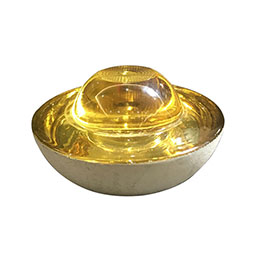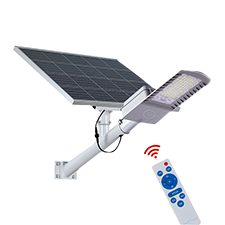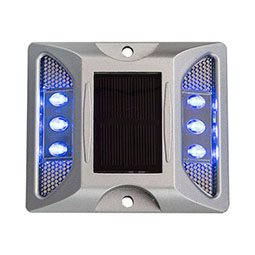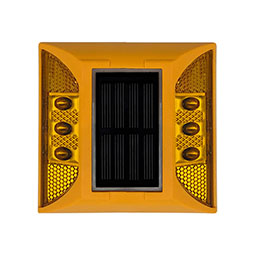
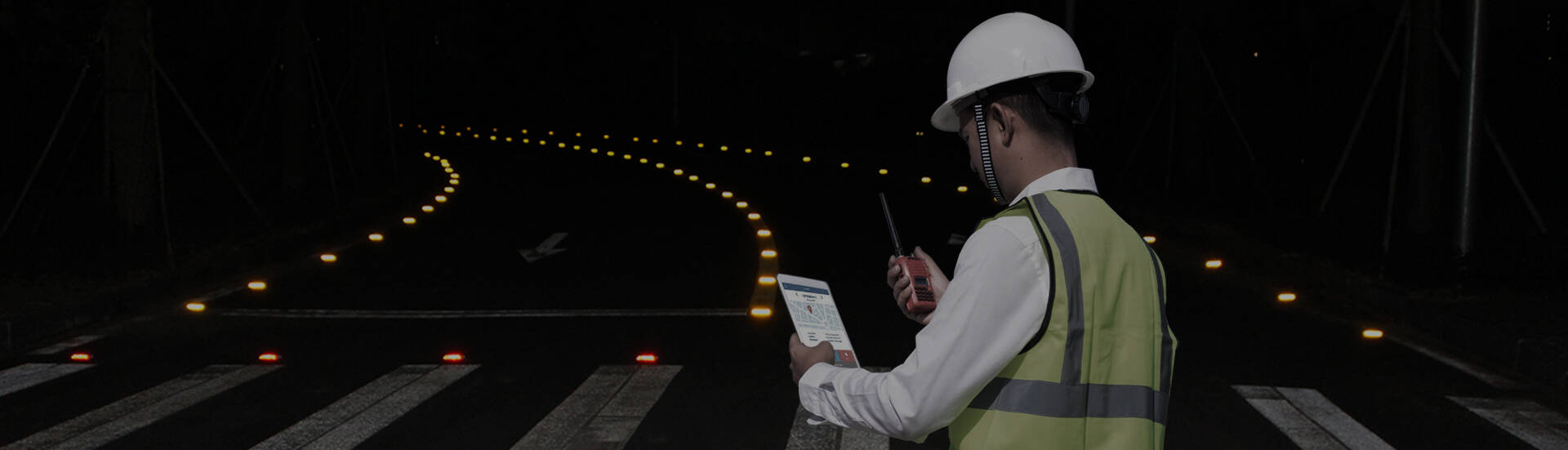
Rural roads, village streets, and mountainous routes across the Philippines suffer from widespread inadequate lighting, particularly in regions like Luzon, Visayas, and Mindanao. Solar road studs effectively address this gap by enhancing nighttime road visibility.
During the rainy monsoon season, slippery roads and foggy highlands create low visibility conditions that increase accident risks. Solar road studs clearly outline road contours, providing precise guidance for drivers. Additionally, their independence from grid power avoids disruptions caused by frequent brownouts in the Philippines, ensuring continuous road marking visibility.
As a renewable energy product, solar road studs align with the green objectives of the Philippines' “Build, Build, Build” initiative, supporting the nation's goal of achieving 35% renewable energy by 2030.
The Philippines experiences over 20 typhoons annually, accompanied by heavy rainfall and high temperatures (30-40°C). Coastal areas also face salt fog corrosion, demanding exceptional weather resistance from road studs.
Road conditions vary dramatically, requiring road studs with different durability levels for unpaved rural roads, rugged mountain trails, and busy urban highways like Edsa Avenue and North Cebu Highway. Simultaneously, tight local government budgets demand cost-effective products while ensuring long-term stability.
Philippine National Standards (PNS) impose clear specifications on traffic products, and maintenance resources are scarce in remote areas, further complicating selection and implementation.
On unlit rural roads, solar road studs mark lanes, curves, and intersections, effectively reducing head-on collisions and run-off-road accidents. Project data from Iloilo Province shows a 70% reduction in nighttime accidents after stud installation.
During power outages caused by typhoons, solar road studs remain operational, providing critical illumination for emergency rescue and traffic restoration. In village communities, they also enhance visibility at crosswalks and school zones, safeguarding pedestrian safety.
Zero electricity costs significantly reduce long-term operational burdens for local governments, making them particularly suitable for budget-constrained grassroots units. Compared to traditional road studs, they require no wiring, have lower installation costs, and are easier to deploy in remote areas.
High-quality solar road studs feature core components with a lifespan exceeding 5 years, requiring minimal maintenance and replacement costs. After a one-time investment, they deliver long-term stable operation with a notable return on investment.
Tailored for the Philippines, these studs feature ≥150 km/h wind resistance and IP67+ waterproofing, withstanding typhoons, torrential rains, and floods. Components operate reliably in 30-40°C temperatures without degradation from prolonged exposure.
Supporting diverse mounting methods—bolted, adhesive—they adapt to asphalt, concrete, and semi-paved rural roads, ensuring exceptional versatility.
Solar road studs comply with the Philippines' Renewable Energy Strategy, qualifying for inclusion in green infrastructure projects. They are eligible for tax credits, subsidies, and other incentives under the Renewable Energy Act of 2008.
Their implementation also assists local governments in meeting road safety upgrade requirements set by the Department of Public Works and Highways (DPWH), enhancing project compliance and recognition.
Weather resistance is paramount. Prioritize products with wind resistance ≥150 km/h and IP68 waterproof rating to withstand super typhoons and monsoon floods. Coastal regions (Cebu, Palawan) require additional salt-fog resistant coatings to prevent corrosion.
Solar panels should utilize monocrystalline silicon with ≥22% conversion efficiency to match the Philippines' abundant sunlight. Lithium batteries must support 7-10 days of standby during rainy periods, covering the June-November monsoon season. Enclosures should be made of aluminum alloy or stainless steel for impact resistance and corrosion protection.
Load-bearing capacity must exceed 20 tons to withstand heavy traffic on national highways and prevent damage from freight vehicles.
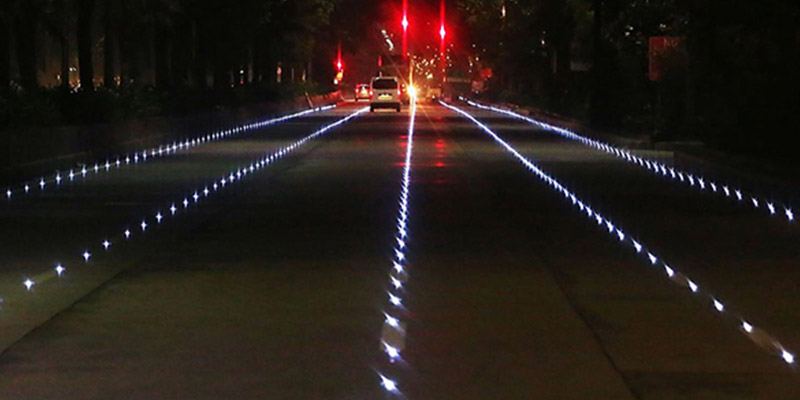
Urban Highways (EDSA, North Luzon Expressway): Select high-brightness models ≥500 cd/m², supporting adjustable flashing modes. Optional smart monitoring enables real-time device status tracking, suited for heavy traffic and rainy conditions.
Rural/Community Roads: Prioritize medium-brightness markers (300-500 cd/m²), emphasizing easy installation and low maintenance. Installation requires no complex equipment, adapting to remote area operational conditions.
Mountainous Regions (Baguio, Benguet): Select products with ≥120° viewing angle and anti-fog illumination design. Enhance curve and slope identification while improving impact resistance for rugged terrain.
Coastal and Island Areas: Opt for compact, high-waterproof-rated road studs with salt spray resistance. These facilitate maritime shipping and short-distance island transport, accommodating logistically challenging scenarios.
Products must comply with Philippine National Standards (PNS) and obtain Department of Energy (DOE) Renewable Energy Product Approval to prevent project acceptance and subsidy application delays due to non-compliance.
Strictly adhere to DPWH road marking specifications, including light color requirements and installation spacing, to ensure compatibility with existing traffic infrastructure. Imported products require advance preparation of documents such as Certificates of Origin and performance test reports to facilitate smooth customs clearance.
Avoid installation during peak monsoon seasons. Bolt-fixed mounting is required for asphalt and concrete surfaces to ensure stability; adhesive-based installation may be used for temporary projects. Establish rapid inspection protocols post-typhoon to promptly repair or replace damaged road studs.
Prioritize products with replaceable batteries and self-diagnostic capabilities to reduce on-site maintenance complexity. Pre-verify suppliers' spare parts availability to ensure timely replenishment of critical components in remote areas.
Project Background: A rural highway in Iloilo Province lacked lighting and grid coverage, resulting in frequent nighttime accidents. Local government budgets were insufficient to cover the construction and operational costs of traditional lighting infrastructure.
Solution: Installed 300 medium-brightness solar road studs along a 15-kilometer stretch. Products feature IP68 waterproofing and 10-day standby capability during rainy periods. Bolt-mounted installation requires no wiring.
Project Outcomes: Nighttime accident rate decreased by 70%. Residents experienced significantly enhanced safety and convenience for nighttime travel. Local government achieved zero electricity expenses, saving approximately 180,000 pesos annually in maintenance costs—funds redirected to other public services.
Project Background: A coastal highway in Cebu City experiences heavy traffic volume. Rainy weather frequently causes rear-end collisions, while frequent power outages render traditional road markings ineffective, compromising traffic safety.
Solution: Deployed 500 high-brightness solar road studs with adjustable flashing modes, featuring salt-fog resistant coatings and IP68 waterproof design to meet coastal climate and traffic demands.
Project Outcomes: Rain-related accidents decreased by 55%, lane discipline markedly improved, and continuous illumination maintained during power outages, providing stable nighttime travel assurance. This project became a benchmark for road upgrades in Cebu City.
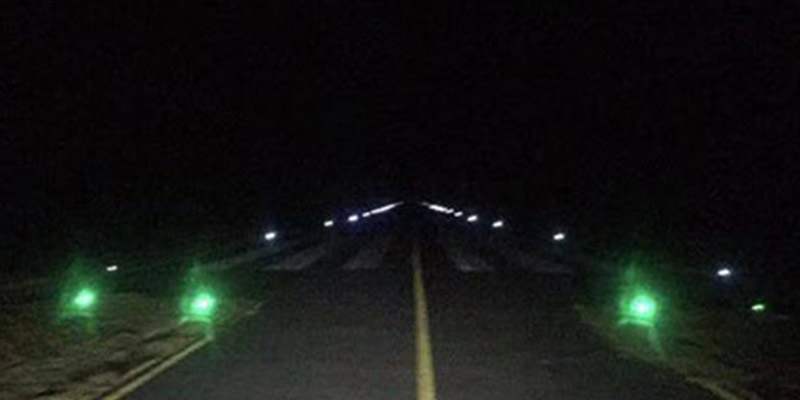
Project Background: A remote Palawan island relied on diesel generators for power, resulting in limited road lighting hours and scarce maintenance resources, hindering local travel and tourism development.
Solution: Installed 150 compact solar road studs featuring high waterproofing and low maintenance. These products facilitate maritime transport and mountainous relocation while eliminating diesel dependency.
Project Outcomes: Achieved full-time nighttime road marking, reduced diesel consumption by 25%, enhanced tourist safety during nighttime travel, and required minimal post-installation maintenance—perfectly suited for island operational conditions.
Issue: Selecting products with low wind resistance and waterproof ratings leads to extensive damage after typhoons or floods, requiring frequent replacements that increase overall costs.
Response: Strictly verify wind resistance ratings (≥150 km/h) and IP68 waterproof certification. Require suppliers to provide typhoon simulation test reports to ensure suitability for extreme weather.
Issue: Selecting batteries with ≤3 days standby time causes road studs to fail during prolonged rainy monsoon periods, compromising nighttime visibility.
Solution: Prioritize lithium batteries with explicit 7-10 day standby capability during rainy conditions. Test product endurance in simulated rainy environments.
Issue: Procuring products without PNS certification or DOE approval leads to customs detention or project acceptance failure, delaying schedules and forfeiting subsidies.
Solution: Partner with suppliers familiar with Philippine certification processes. Secure all certifications and customs clearance documents in advance to ensure product compliance.
Issue: High-maintenance road studs are selected, but remote mountainous regions and islands lack specialized maintenance personnel. This prevents timely repairs after product failures, rendering them ineffective as road markers.
Solution: Prioritize low-maintenance products with quick battery replacement. Verify that suppliers have local service centers or partners in the Philippines to ensure ongoing maintenance support.
The Philippines' extreme weather, complex road conditions, and budget constraints necessitate abandoning a one-size-fits-all approach to solar road stud selection. Focus must be placed on localized adaptation. Only by balancing climate resilience (typhoon resistance, rain endurance, extended standby time) with compliance requirements and contextual needs can safety value and long-term benefits be unified.
Procurement entities are advised to follow this logic: “Define Scenario Requirements → Screen Climate Adaptation Parameters → Verify Compliance Certifications → Evaluate Local Suppliers.” Conduct field testing before bulk procurement to ensure product performance meets standards.
We specialize in customized solar road studs for the Philippines, with all products certified by PNS/DOE. Our solutions feature typhoon resistance, monsoon-adapted design, and comprehensive local after-sales support. We are committed to partnering with Philippine local governments and contractors to fortify road safety defenses through sustainable solutions and advance green infrastructure upgrades.