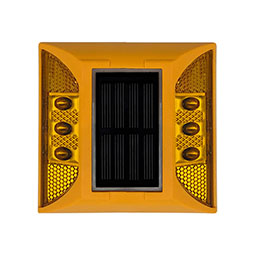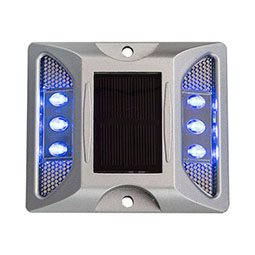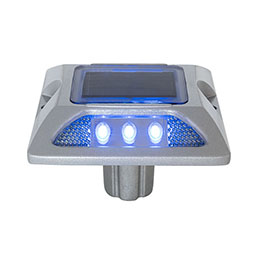
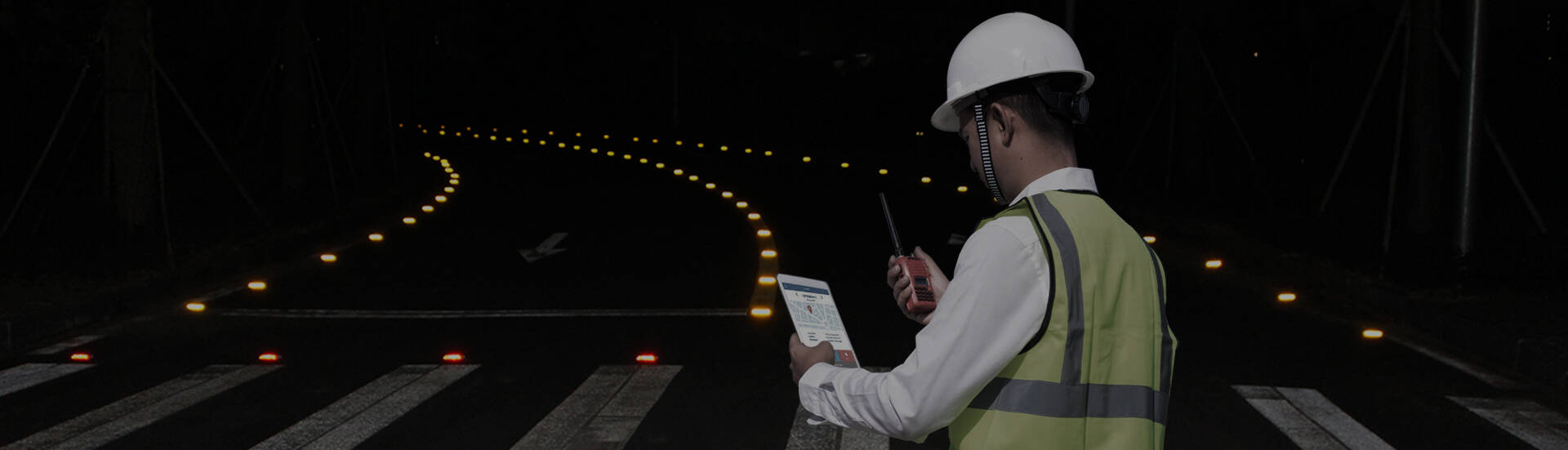
Road lighting conditions vary significantly across South America. Rural highways, mountain roads, and remote areas in countries like Peru and Bolivia commonly suffer from inadequate illumination. Solar road studs effectively address this gap, reducing risks during nighttime travel.
In scenarios like Brazil's rainforests and Chile's coastal highways, frequent rainy conditions cause slippery roads and low visibility. Solar road studs enhance road contour markings, improving vehicle safety during nighttime travel. In areas with unstable power grids like parts of Argentina and Venezuela, solar road studs operate independently of municipal electricity, ensuring continuous illumination.
Furthermore, countries like Colombia have set carbon neutrality targets for 2050. As a renewable energy application, solar road studs precisely align with South American nations' sustainable development strategies.
South America's extreme climatic diversity—including torrential rains in the Amazon basin, high temperatures in northeastern Brazil, intense UV radiation in the Andes, and frost conditions in southern Chile and Argentina—demands exceptional weather resistance from road studs.
Varied road conditions present another challenge. Unpaved rural roads, rugged mountain trails, and high-traffic urban highways require road studs with different durability ratings. Non-uniform national traffic standards and certification systems—such as Brazil's INMETRO and Argentina's IRAM requirements—complicate compliance during selection.
Logistical and maintenance gaps in remote areas further necessitate solar road studs with extended lifespans and low maintenance needs, reducing long-term operational costs and complexity.
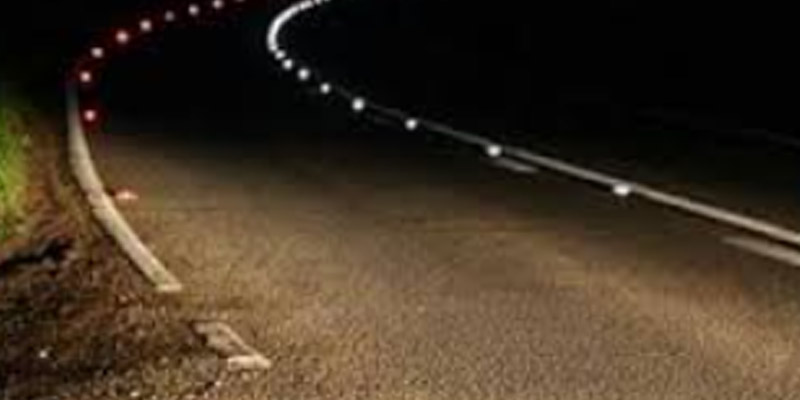
Brightness levels must be adjusted based on the environment. In standard areas, the minimum brightness should not fall below 300 cd/m². For low-visibility zones such as rainy days, fog, or dense vegetation, high-brightness models exceeding 500 cd/m² are recommended.
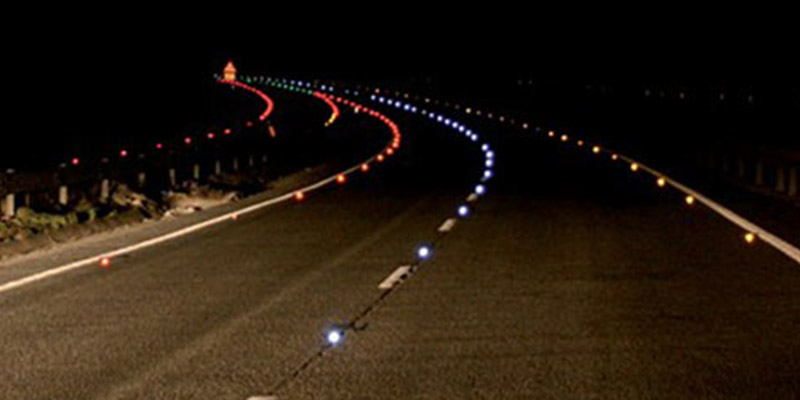
Light color must comply with local traffic signage standards: white for lane demarcation, yellow for warning zones, red for restricted access areas. Select adjustable flashing modes—use flashing patterns for high-risk curves to enhance warnings, while maintaining constant illumination on urban roads to avoid driver distraction.
Visibility angle must be ≥120° to ensure clear recognition from multiple directions on complex road sections like curves and slopes.
Prioritize monocrystalline silicon solar panels with ≥22% conversion efficiency for regions with intense UV radiation like the Andes Mountains and northern Brazil. For areas with moderate sunlight like Uruguay and Paraguay, polycrystalline silicon panels may be selected to balance cost and efficiency.
Batteries should utilize lithium-ion cells rather than lead-acid batteries, offering extended lifespan and high-temperature resistance. They must support 7-10 days of standby during rainy periods to withstand Amazonian and southern Brazilian monsoons. Charging time must be ≤6 hours to accommodate shorter daylight hours in southern South American winters.
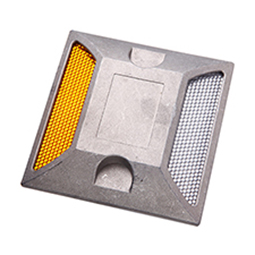
Load-bearing capacity must match traffic volume. For heavy-duty sections like Brazilian highways and Argentine freight corridors, road studs must withstand ≥20 tons; rural roads may use products rated for ≥10 tons. Waterproof and dustproof ratings must reach IP67+, resisting Amazonian floods and dust erosion in Andean arid zones.
Operating temperatures must span -20°C to 60°C to accommodate southern South American frosts and northern heatwaves. Panels require UV-resistant coatings to prevent material degradation. Aluminum alloy or stainless steel housings are preferred for enhanced corrosion resistance, suitable for coastal salt spray environments in Chile, Peru, and neighboring regions.
Installation methods must flexibly accommodate road surface types. Bolt-mounted options are suitable for asphalt and concrete surfaces, while adhesive-mounted options are ideal for temporary projects. Installation should require no complex equipment to meet construction demands in remote areas.
Products must feature low-maintenance design with replaceable batteries and self-diagnostic functions to reduce on-site maintenance frequency. Core components (panels, batteries, LEDs) must have a minimum 5-year lifespan to avoid frequent replacements in hard-to-reach areas.
Characterized by high humidity, heavy rainfall, intense UV radiation, and mountainous terrain. Selection must prioritize IP68 waterproofing, UV-resistant coatings, and high load-bearing capacity for mountain roads, while ensuring 10-day standby capability during continuous rainy periods.
Recommended selection: 500+ cd/m² high-brightness road studs paired with lithium batteries and monocrystalline silicon panels, compliant with Colombia's ICONTEC and Peru's INDECOPI certification standards.
Southern Brazil's Amazon region experiences heavy rainfall, the northeast faces high temperatures, and the south has moderate precipitation. Rural roads in Paraguay are dusty. Selection must meet 20+ ton load capacity (suitable for Brazil's BR highways), 7-day standby during rainy periods, and incorporate dustproof design.
Select monocrystalline or polycrystalline silicon panels based on regional sunlight conditions. Road studs must support adjustable flashing modes and flood resistance, complying with Brazil's INMETRO and Uruguay's UNIT certifications.
This region experiences extreme temperature variations, with frost in southern winters and intense summer heat. Chile's coastal areas feature high humidity, while Patagonia faces strong winds. Selection must prioritize wide temperature tolerance (-20°C to 60°C), wind resistance, and coastal corrosion resistance to ensure extended winter standby.
Recommended: High-durability stainless steel road studs paired with lithium batteries and high-efficiency charging panels, compliant with Argentina's IRAM and Chile's INN certifications.
Urban Highways: Prioritize high-brightness, adjustable flashing/constant-on road studs with ≥20-ton load capacity. Optional smart monitoring enables real-time device status tracking. Rural/Mountain Roads: Emphasize easy installation, low maintenance, and extended standby during prolonged rainfall, ensuring a viewing angle ≥120°.
Coastal Roads: Core focus on enhanced corrosion resistance, waterproofing, and salt spray protection; select stainless steel housing products. Tourist Routes (Machu Picchu, Patagonia): Ensure high visibility while selecting designs that harmonize with natural landscapes and utilize eco-friendly materials.
Strict adherence to country-specific certification standards is mandatory: INMETRO certification for Brazil, IRAM for Argentina, INN for Chile, and ICONTEC for Colombia. This prevents product detention due to non-compliance.
Simultaneously, align with local traffic signage standards, such as Brazil's NBR lane marking specifications. Proactively research import and customs policies in countries like Bolivia and Venezuela, preparing all required documentation to prevent clearance delays.
Prioritize suppliers with proven South American project experience, as they possess deeper familiarity with regional climates, road conditions, and regulatory requirements, enabling tailored solutions. Verify that suppliers maintain service centers or partnerships in South America to ensure timely maintenance and spare parts supply in remote areas.
Suppliers must possess customization capabilities to adapt product designs for extreme conditions like Chilean frosts or Amazonian floods. Require testing reports for weather resistance, load capacity, and luminance, with a minimum overall product warranty of 2 years and core component warranties ≥5 years.
Issue: Deploying generic road studs in extreme environments—e.g., using non-UV-resistant products in the Andes or low-waterproofing studs in the Amazon—causes rapid degradation and failure.
Solution: Select products based on target region's climate characteristics. Require suppliers to provide targeted weather resistance test reports, verifying critical metrics like temperature tolerance, waterproofing, and UV resistance.
Issue: Choosing low-load-bearing studs to control costs on heavy-duty freight highways in Brazil, Argentina, etc., results in studs being crushed and damaged. Frequent replacements ultimately increase total costs.
Solution: Pre-confirm traffic volume and freight load on target road sections. For heavy-duty highways, select studs with ≥20-ton load capacity, prioritizing high-strength casings like aluminum alloy or stainless steel.
Issue: Procuring studs without local certification results in customs detention, project delays, and potential fines.
Solution: Partner with suppliers familiar with South American certification processes. Obtain necessary country-specific certifications in advance and prepare complete customs clearance documentation to mitigate compliance risks.
Issue: Selecting high-maintenance track spikes for remote mountainous or rainforest regions in South America, where timely maintenance becomes impossible, leading to widespread failure.
Solution: Prioritize low-maintenance, long-life products. Verify suppliers possess local maintenance capabilities and ensure core components are readily replaceable to reduce reliance on on-site operations.
South America's climate, road conditions, and regulatory requirements dictate that solar-powered stud selection cannot be standardized. Beyond core parameters like brightness, durability, and compliance, precise adaptation to regional characteristics is essential.
We recommend following this selection logic:
Conduct field testing in target regions before bulk procurement to ensure product performance meets standards.
We specialize in providing customized solar road studs for South America. All products carry local certifications, feature climate-adaptive designs, and offer comprehensive local after-sales support. We empower South American nations to enhance road traffic safety and advance sustainable development.
.png)