Having procured solar street lights in the Philippines for years, I know the local challenges well: while urban centers fare better, many rural areas, slums, and provincial roads lack even basic lighting. Walking at night means navigating blind spots, leading to frequent thefts, accidents, and constant resident complaints.
Even more troublesome is the grid issue. Power outages (brownouts) are commonplace in the Philippines. Traditional streetlights completely shut down during outages, making emergency lighting a luxury. Local government budgets are already tight, and the electricity costs for traditional streetlights keep rising year after year, with maintenance fees also being a significant expense. Procurement decisions are truly a dilemma.
Crucially, the nation is now promoting renewable energy. Choosing high-energy-consumption fossil fuels for streetlights is not only counter to policy but would also fail environmental inspections.
Frankly, the Philippines' climate is tailor-made for solar street lights—with an average of 5-7 hours of sunlight daily year-round, power generation is entirely sufficient with the right panel selection. The core advantage is their grid independence. Even during citywide blackouts, these lights stay on—a critical feature in the Philippines.
For procurement teams, zero electricity costs are the biggest draw. Local governments and businesses are cash-strapped, and after the initial investment, ongoing operational costs are negligible. Long-term, they're far more cost-effective than traditional streetlights. Plus, government subsidies for renewable energy projects mean choosing the right product can save you money—why wouldn't you?
I won't cover abstract theories—only practical insights from years of project experience in the Philippines. Whether you're a local government procurement officer, community project manager, or scenic area buyer, you'll learn: What parameters to prioritize when selecting solar streetlights in the Philippines? How to choose based on different scenarios? How to avoid subpar products while complying with national policies?
During a rural project in Iloilo Province, we addressed a community without grid power where nighttime darkness fueled frequent thefts. After installing solar streetlights with sufficient brightness and full coverage, crime rates dropped by 65% within just three months. Residents could finally venture out at night without fear.
Given the Philippines' frequent typhoons, this procurement aspect is critical. Solar streetlights remain operational during power outages caused by typhoons, providing vital illumination for rescue and evacuation efforts—a capability traditional streetlights cannot match. Especially in remote areas with limited police presence, stable nighttime lighting offers the most direct security assurance.
Budget constraints are paramount for local government procurement. While solar streetlights require a higher upfront investment, they excel with zero ongoing electricity costs. In Manila's neighborhood renovation project, replacing 200 streetlights saved 2.5 million pesos annually in electricity costs, while maintenance expenses amounted to a fraction of traditional lighting systems.
Moreover, solar lights eliminate complex wiring, making installation effortless in remote areas and islands. This significantly reduces labor and construction costs—an absolute priority for budget-conscious procurement teams.
The Philippine Department of Energy (DOE) now mandates that renewable energy must account for 35% of the energy mix by 2030. Procuring solar streetlights aligns perfectly with this goal. Our previous Palawan island project, for instance, secured policy subsidies and earned the destination an “eco-tourism” designation precisely because it adopted solar power.
Especially in major cities like Manila and Cebu, replacing traditional coal-powered streetlights improves air quality, making projects easier to approve and potentially eligible for additional policy support. Be sure to leverage this advantage during procurement.
The Philippines' tropical climate poses significant challenges—extreme heat, torrential rains, and typhoons are common occurrences. Previously, we fell into a pitfall by selecting ordinary waterproof products, which were completely destroyed after a typhoon, resulting in extremely high maintenance costs.
Therefore, when procuring, it is essential to choose models with wind resistance ≥150km/h and waterproofing ≥IP67+, components that can withstand temperatures of 30-40°C, and coastal areas require additional anti-salt spray coating. Otherwise, problems will arise before long.
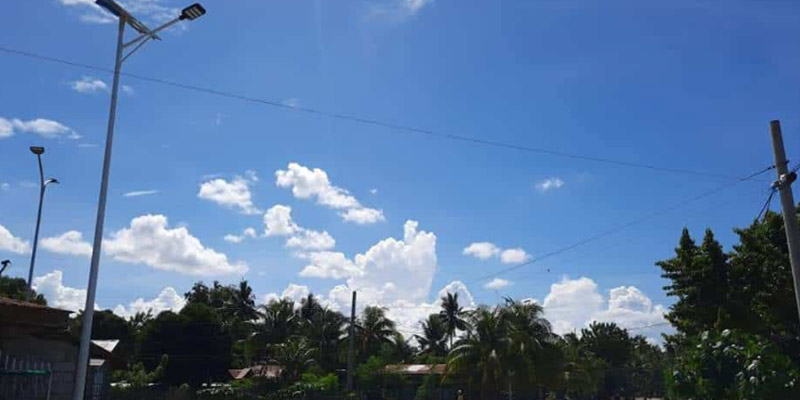
Prioritize monocrystalline silicon solar panels for their high conversion efficiency, enabling power generation even on cloudy days—making them more suitable than polycrystalline silicon for the Philippines' variable sunlight conditions. Batteries must be sealed lithium-ion cells; lead-acid batteries are prone to swelling in the Philippines' high temperatures and have shorter lifespans.
During the monsoon season with heavy rainfall, batteries must withstand 7-10 days of continuous overcast conditions without shutting down. Lamp bodies should use rust-resistant materials, as coastal areas and the rainy season bring high humidity. Rust not only affects appearance but also shortens lifespan.
Urban Main Roads (Manila, Cebu): Opt for high-brightness models (8,000-15,000 lumens) with motion sensors. These automatically dim during low-traffic periods, balancing brightness with energy efficiency. Rural & Provincial Roads: 3,000-6,000 lumens suffice. Prioritize rainy-day endurance and durability over unnecessary brightness.
Islands and Scenic Areas (Palawan, Boracay): Opt for compact, transportable units with maximum waterproof ratings. Scenic areas may also choose designs with tropical flair, balancing illumination and aesthetics. Note: Island logistics are inconvenient, so select models with readily available spare parts for hassle-free maintenance.
Before purchasing, verify products comply with Philippine National Standards (PNS) and DOE regulations. Failure to do so will result in project approval rejection and subsidy loss. One client previously opted for uncertified products to save costs, only to face costly full-scale rework.
Also review local government requirements—e.g., glare restrictions in residential areas or pole height limits. Overlooking such details often leads to post-installation rectification demands. Always confirm specifics with local authorities beforehand to avoid complications.
When procuring solar street lights in the Philippines, never select suppliers who only sell products without providing service. After a typhoon, broken lights with no one to repair them cause delays and damage your reputation. Always choose suppliers with local offices or partners who can provide rapid on-site repairs and timely spare parts replenishment.
Ideally, select suppliers with local project experience. They understand local government collaboration processes, recognize pain points across different scenarios, and can help you avoid many hidden issues. For example, when we undertake projects, we conduct advance site surveys and adjust installation plans based on terrain—something suppliers from other regions cannot achieve.
Procurement Challenges: No grid coverage, limited budget, frequent typhoons, and urgent need to address nighttime safety. Many suppliers recommended high-brightness models, which were entirely unnecessary.
Implementation Solution: Selected 50 medium-brightness units (3000 lumens) with batteries capable of 10 days of standby during rainy periods. Designed to withstand 150 km/h winds, no wiring required, and installed within 3 days.
Outcome: Zero electricity costs, saving the local government 200,000 pesos annually. Nighttime crime rates plummeted, resident satisfaction soared, and the project became a benchmark for rural lighting initiatives.
Procurement Challenges: Unstable grid, high electricity costs, cumbersome maintenance, while balancing commercial ambiance and energy efficiency.
Implementation Solution: Deployed 200 smart lights with human motion sensors and remote monitoring. Features include automatic dimming, real-time device status tracking via backend systems, and timely failure alerts.
Outcome: Maintained uninterrupted lighting during power outages, preserving commercial operations. Achieved annual electricity savings of 2.5 million pesos. Maintenance staff reduced from 5 to 1, significantly boosting efficiency.
Procurement Challenges: Reliance on diesel generators, logistical constraints, high humidity, and alignment with eco-tourism positioning.
Implementation Solution: Selected 30 compact, high-waterproof streetlights requiring no diesel power. Installation via sea freight + manual handling, with island-themed aesthetics.
Outcome: 30% reduction in diesel consumption, full nighttime coverage for scenic area lighting, enhanced visitor experience, and secured renewable energy subsidies—achieving three objectives simultaneously.
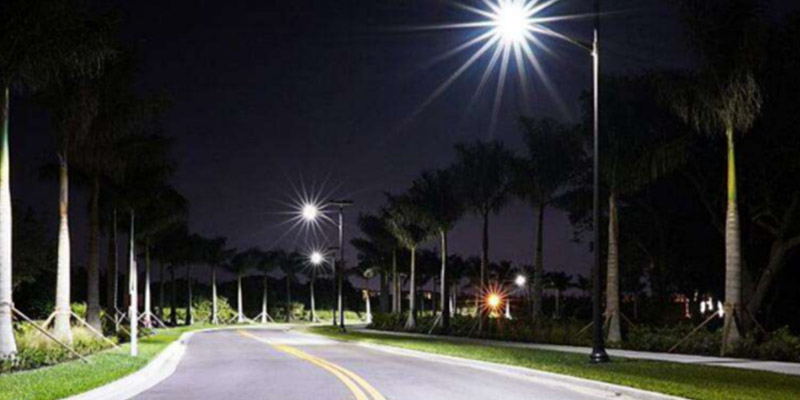
Government subsidies will increase, particularly for local government projects. Monitor the Department of Energy's (DOE) latest policies during procurement to secure greater funding support. Smart models will dominate the market—IoT-enabled streetlights offering remote dimming and fault alerts are ideal for urban areas and scenic spots.
Island and rural projects will proliferate. The rise of eco-tourism will make solar streetlights essential. Procurement should proactively target these scenarios to build project experience.
When procuring solar street lights in the Philippines, the key isn't selecting the brightest or most expensive models, but choosing those best suited to local climate, policies, and scenarios. Focus on parameters like wind resistance, waterproofing, and battery standby time. Partner with suppliers offering local service to avoid substandard products, and your project will likely run smoothly.
If you're procuring solar street lights for the Philippines—whether for local government projects, island tourist attractions, or rural communities—let's connect. With years of local project experience, we can guide you through every step: from model selection and subsidy applications to installation and maintenance. We help you avoid pitfalls, making procurement hassle-free and projects successful.