In recent years, the application of underground solar road studs in the Philippines has experienced explosive growth, with widespread deployment across urban expressways, rural roads, and coastal areas in Luzon, Visayas, and Mindanao.
Whether for local government road upgrade projects, infrastructure development by the Department of Public Works and Highways (DPWH), or safety enhancements in island tourist areas, these solar-powered road studs have become the procurement choice of preference, earning strong endorsement from contractors and grassroots units.
Numerous challenges in Philippine road conditions have led to the gradual obsolescence of traditional surface-mounted studs, while underground studs precisely meet these demands.
Given the Philippines' traffic characteristics dominated by motorcycles and heavy freight, these embedded studs avoid damage from vehicle rolling or collisions. During typhoon season, their flush-with-road design withstands strong winds and torrential rain without suffering damage, preventing waterlogging or being blown away by gales.
For remote villages and islands with scarce maintenance resources, the low-maintenance nature of in-ground studs significantly reduces replacement frequency. Furthermore, their flush-with-road design does not impede vehicle or pedestrian traffic, nor does it create additional safety hazards such as tyre blowouts.
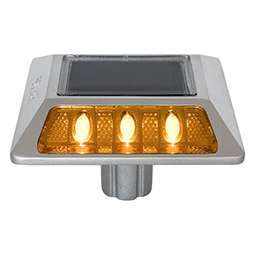
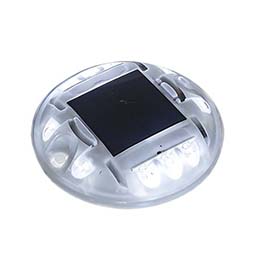
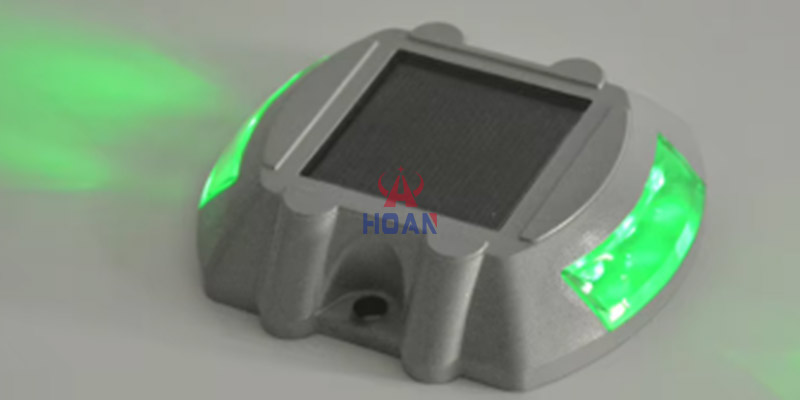
Underground solar road studs are an innovative traffic signage product where core components—solar panels, batteries, and LED lights—are installed beneath the road surface, with only the illuminated surface protruding to maintain flush alignment with the pavement.
Its operating principle is simple and efficient: during daylight hours, underground solar panels absorb sunlight and convert it into electrical energy, which is stored in lithium batteries. At night, light-sensing devices automatically activate the LED lights, enabling 24-hour unattended road marking functionality.
Compared to traditional surface-mounted studs, its most significant distinction lies in its ‘concealed installation’ – core components remain hidden, avoiding external damage while achieving seamless integration with the road surface.
The underground solar road studs gained rapid popularity in the Philippines due to core characteristics perfectly aligned with local requirements, primarily centred on the following aspects.
Exceptional durability forms the foundation: Load-bearing capacity generally ≥30 tonnes, easily accommodating the Philippines' busy freight highways and dense motorcycle traffic. The casing utilises impact-resistant materials, making it resistant to damage from vehicle rolling.
Exceptional Weather Resistance for Local Conditions: IP68 waterproofing withstands monsoon downpours and flood immersion, while ≥150km/h wind resistance handles typhoon impacts. Salt-spray resistant coatings suit coastal areas, and 30-40°C heat tolerance matches the Philippines' year-round tropical climate.
High-efficiency energy storage ensures continuous operation: Utilising monocrystalline silicon solar panels with ≥22% conversion efficiency paired with lithium batteries, it maintains standby for 7-10 consecutive days of overcast weather, fully covering the Philippines' monsoon season's prolonged rainy periods.
Outstanding safety performance: With luminance exceeding 500 cd/m² and a viewing angle of ≥120°, the anti-glare design ensures clear visibility even in rain or fog, significantly enhancing night-time traffic safety.
Convenient and hassle-free maintenance: The light-emitting surface is removable, and batteries can be replaced individually without excavating the entire road surface for repairs. This substantially reduces maintenance complexity and costs, making it suitable for remote area operations.

Compared to conventional surface-mounted studs, the advantages of buried studs are comprehensive and better aligned with the Philippines' practical requirements, which is key to their rapid adoption.
Longer service life: Underground studs last 5-8 years, whereas traditional surface studs only 2-3 years. This substantially reduces replacement frequency and procurement costs, aligning with local government budget constraints.
Enhanced typhoon resistance: The flush-with-road design prevents impact from debris carried by typhoons and avoids being blown away by strong winds. Post-typhoon, no large-scale replacements are needed, enabling rapid restoration of road marking functionality.
Enhanced Traffic Compatibility: The absence of road surface protrusions facilitates unimpeded passage for motorcycles and bicycles while preventing tyre blowouts caused by heavy vehicle rolling. This improves both road safety and traffic flow.
Lower long-term costs: Although initial procurement costs are slightly higher than above-ground studs, their low maintenance and extended lifespan reduce long-term operational costs by over 60%, aligning better with Philippine procurement cost considerations.
Balancing aesthetics and functionality: Seamlessly integrated into the road surface, they preserve road flatness while meeting aesthetic requirements for urban roads and island scenic areas, achieving dual benefits of safety and visual appeal.
Considering Philippine road conditions, climate characteristics, and procurement requirements, three underground solar road stud models currently dominate the market, each tailored for distinct scenarios:
Model 1: High-Brightness Underground Solar Road Stud (Urban Expressway Specialised)
Core Features: Illuminance up to 600 cd/m², adjustable flashing/constant-on modes, load capacity ≥30 tonnes, IP68 waterproof rating, salt-fog resistant coating, lithium battery standby duration up to 10 days.
Local Adaptation: Specifically engineered for Philippine urban expressways and coastal highways, offering resistance to salt spray, high temperatures, and heavy loads. Suitable for busy routes like Edsa Avenue and North Luzon Expressway, certified by DPWH and PNS.
Popularity: Outstanding safety performance, capable of withstanding heavy traffic and rainy conditions on urban expressways. Easy maintenance makes it the preferred model for Philippine urban road upgrades.
Model 2: Medium-Brightness Underground Solar Road Studs (Rural/Community Roads)
Core Features: 400 cd/m² luminance, load capacity ≥25 tonnes, IP68 waterproof rating, lithium battery standby time of 7 days. Simple installation process requiring no complex road-digging equipment, with minimal maintenance costs.
Local Adaptation: Designed for Philippine rural, village, and mountain roads, suitable for unpaved or semi-paved surfaces. Quick deployment without specialist teams, aligning with remote area maintenance conditions.
Popularity: Exceptional value-for-money meeting local government budgets. Low-maintenance characteristics reduce operational pressure in remote areas, making it a favoured choice for rural road safety upgrades.
Model 3: Compact Underground Solar Road Studs (Island/Scenic Area Specialised)
Core Features: Compact size, lightweight construction, luminous intensity of 500 cd/m², load-bearing capacity ≥20 tonnes, IP68+ waterproof rating, outstanding salt spray resistance, sleek aesthetic design, facilitating transport and installation.
Local Adaptation: Specifically engineered for Philippine islands (e.g., Palawan, Cebu archipelago) and scenic areas. Its lightweight design facilitates island logistics, while superior waterproofing and salt spray resistance suit island climates. The aesthetically pleasing appearance aligns with scenic route requirements.
Popularity Factors: Addresses the challenges of limited island logistics and scarce maintenance resources while balancing safety and aesthetics, making it the preferred model for island and scenic route upgrades.
The popular in-ground solar road studs in the Philippine market are not generic products but have undergone targeted optimisation for complete local suitability. Key enhancements focus on four areas.
Climate Adaptation: Reinforced waterproofing, wind resistance, and high-temperature tolerance components. Select models incorporate salt-spray resistant coatings to enhance stability against extreme weather like typhoons and monsoon downpours, preventing climate-related damage.
Road Adaptation Optimisation: Adjustable installation depth accommodates both urban surfaces like asphalt and concrete, as well as semi-paved rural roads. This ensures flush installation with the road surface, maintaining unimpeded traffic flow.
Compliance Adaptation Optimisation: All popular models hold Philippine National Standards (PNS) certification and Department of Energy (DOE) approval. Strict adherence to DPWH road signage specifications guarantees smooth project acceptance and mitigates compliance risks.
Maintenance Adaptation Optimisation: Features removable light-emitting surfaces and replaceable batteries, alongside optimised component structures to reduce failure rates. This addresses maintenance resource constraints in remote Philippine regions, lowering operational complexity.
Different road scenarios demand distinct solutions. Selecting appropriate popular models maximises cost-effectiveness. Specific recommendations are as follows:
Urban motorways and coastal highways: Prioritise Model 1 (high-brightness variant). Suited for heavy traffic, rainy conditions, and salt spray environments, it enhances night-time and low-visibility safety while meeting urban road upgrade requirements.
Rural/village roads and mountainous routes: Opt for Model 2 (medium-brightness variant). Offering high cost-effectiveness, straightforward installation, and low maintenance, it aligns with remote area construction and operational constraints without requiring excessive additional resources.
Island, scenic area roads, and school perimeters: Model 3 (compact version) is the preferred choice. Lightweight and easy to transport, it combines aesthetic appeal with durability, meeting the logistics requirements of islands and the visual standards of scenic areas while ensuring safe passage.
Temporary road projects: The lightweight variant of Model 3 is available. Its straightforward installation and dismantling, along with reusability, reduce procurement and construction costs for temporary projects.
Whilst the installation of underground solar road studs is not complex, it must be adapted to the road and climatic characteristics of the Philippines and follow standardised procedures to ensure secure installation and long-term stable operation.
Pre-installation Preparation
First, clear debris and dust from the road surface, ensuring the installation area is level and free of standing water. Mark installation positions according to DPWH road signage standards, maintaining a spacing of 5-10 metres between markers on straight sections, and increasing to 2-3 metres on bends and intersections.
Avoid areas prone to water accumulation or cracks to prevent component damage from rainwater infiltration. Additionally, prepare portable installation tools suitable for remote locations lacking heavy equipment.
Specific Installation Procedure
Step One: Excavate installation trenches according to stud dimensions, maintaining a depth of 15-20cm to ensure complete component embedding with the luminous surface flush with the road surface. Step Two: Lay a waterproof membrane at the trench base to prevent rainwater infiltration and corrosion of underground components.
Step Three: Embed studs into trenches, adjusting their position to ensure the luminous surface is perfectly horizontal and free from tilt. Step 4: Fill the trench with asphalt or concrete, compacting and smoothing the surface to achieve seamless integration with the road surface, thereby preventing water ingress.
Local Installation Considerations
Schedule installations outside the peak monsoon season (June to November) to avoid rain compromising installation quality and road surface restoration. In typhoon-prone areas, additional fixing devices may be employed to enhance stud stability and prevent displacement during storms.
In coastal areas, promptly remove residual salt deposits from the road surface after installation to prevent long-term salt spray corrosion of the stud edges. For semi-paved rural roads, compact the surrounding soil post-installation to prevent stud tilting due to road settlement.
A key advantage of in-ground solar studs is their low maintenance requirements. However, tailored to the Philippine context, diligent routine maintenance further extends service life and safeguards safety performance.
Routine Inspections: Conduct monthly checks to clear dust, debris, and fallen leaves from the light-emitting surface to maintain illumination effectiveness. Inspect for surface damage or tilting, repairing or adjusting promptly.
Post-Typhoon Maintenance: Following typhoons, prioritise checking for displaced or damaged studs. Clear debris and standing water around installation slots. Adjust and re-secure displaced studs to restore functionality swiftly.
Battery Replacement: Lithium batteries have a lifespan of approximately 3-4 years. Assess battery condition via luminous intensity prior to expiry; replace batteries promptly upon detecting significant brightness reduction. Replacement requires only removal of the luminous surface without excavating the road surface, taking approximately 10 minutes per unit.
Spare Parts Stockpiling: Confirm with suppliers to ensure adequate local stock of batteries, light panels, and other components. Remote areas may pre-stock limited quantities to prevent safety blind spots arising from delayed repairs following failures.
Project Background: Edsa Avenue in Manila experiences extremely high traffic volumes with dense freight vehicle flow. Traditional surface-mounted studs were frequently crushed and damaged, requiring replacement of hundreds monthly at substantial maintenance costs. Concurrently, accidents frequently occurred during rainy nights, compromising traffic safety.
Solution: Deployed 800 Model 1 high-brightness solar-powered in-ground studs along lane boundaries, bends, and intersections. Featuring IP68 waterproofing and salt-fog resistance, they withstand heavy-duty motorway conditions and rainy environments.
Implementation Outcomes: Road stud damage rates decreased by 90%, reducing annual maintenance costs by approximately 2 million pesos. Rainy night-time accidents fell by 50%, with significantly improved night-time visibility for drivers. The project received high recognition from the Department of Public Works and Highways (DPWH) and local transport authorities, establishing itself as a benchmark case for urban expressway upgrades.
Project Background: A semi-paved rural road in Iloilo Province lacked grid coverage. Conventional surface-mounted studs were frequently damaged by motorcycles and agricultural machinery, while maintenance personnel faced access difficulties. Failed studs remained unreplaced, resulting in persistently high night-time accident rates.
Solution: Installation of 400 Type 2 medium-brightness solar-powered in-ground studs using a simplified installation method requiring no heavy equipment. The studs possess a 7-day standby capacity during overcast or rainy periods, aligning with rural areas' grid-free and low-maintenance requirements.
Implementation Outcomes: Night-time accident rates decreased by 75%, significantly enhancing villagers' safety during evening travel. No replacement was required for two years post-installation, resulting in near-zero maintenance costs. This solution perfectly aligns with rural road operational conditions and has been adopted and promoted by multiple neighbouring provinces.
Project Background: A remote Palawan island reliant on tourism features narrow roads, logistical challenges, and severe salt spray corrosion. Traditional studs proved prone to damage and difficult to transport. Additionally, scenic areas demanded high aesthetic standards, necessitating a balance between safety and visual appeal.
Solution: Deployed 200 Model 3 compact in-ground solar road studs. Their lightweight design facilitated maritime transport and mountainous handling. Salt-fog resistance and high waterproofing suited the island climate, while the sleek, aesthetic appearance complemented the scenic area's style.
Implementation Outcomes: Stud installation proved straightforward, reducing transport costs by 40%. Service life exceeded six years in salt-fog environments, eliminating frequent maintenance. Visitor safety during night-time travel is assured, while enhancing the scenic area's road aesthetics. This has garnered unanimous praise from local authorities and the scenic area management.
Many purchasers fall into common pitfalls when selecting underground solar road studs, resulting in products unsuitable for local conditions and increased costs and safety risks. Five prevalent pitfalls are outlined below.
Misconception 1: Selecting low-load-bearing models rated ≤20 tonnes for urban expressways and freight routes, resulting in road studs being crushed and damaged, necessitating frequent replacements and increased costs.
Misconception 2: Neglecting waterproofing and salt spray resistance; procuring products without salt spray coatings in coastal areas leads to corrosion, significantly shortening service life.
Misconception 3: Procuring products without PNS certification or DOE approval leads to customs detention or project acceptance failure, delaying schedules and forfeiting subsidies.
Misconception 4: Neglecting detachable designs by purchasing integrated studs necessitates excavating road surfaces for battery repairs, increasing maintenance complexity and costs while rendering them unsuitable for remote areas.
Misconception 5: Opting for batteries with ≤5 days standby time. Continuous rainy monsoon seasons cause road studs to fail, compromising night-time road marking functionality and creating safety hazards.
By aligning with Philippine environmental conditions and leveraging popular model advantages, adhere to these five principles to precisely select suitable in-ground solar road studs and avoid pitfalls:
Prioritise compliant products: Mandatorily select PNS-certified and DOE-approved products. Require suppliers to provide local test reports to ensure compliance with Philippine standards and regulations, mitigating compliance risks.
Precise scenario-model matching: Select corresponding popular models based on road type (urban/rural/island) and traffic volume. Avoid blind pursuit of high brightness or high specifications; balance cost-effectiveness with suitability.
Focus on core parameters: Prioritise three key specifications—load capacity ≥25 tonnes (≥30 tonnes for urban motorways), IP68 waterproofing, and 7–10 days standby during overcast/rainy periods. Additionally, verify salt-fog resistant coating for coastal regions.
Select reliable suppliers: Prioritise suppliers with proven Philippine project experience, local spare parts availability, and after-sales support to prevent road safety compromises from delayed repairs.
Balance Long-Term Costs: Avoid focusing solely on initial purchase price. Holistically evaluate lifespan and maintenance costs, prioritising durable, low-maintenance popular models to reduce total cost of ownership.
The rapid adoption of in-ground solar road studs in the Philippines is no coincidence. Their durability, disaster resilience, low maintenance requirements, and high safety standards perfectly align with the nation's climatic conditions, road environments, and budgetary constraints.
These studs not only address the shortcomings of traditional studs—such as susceptibility to damage, maintenance difficulties, and poor typhoon resistance—but also balance safety and cost-effectiveness. This makes them an ideal choice for upgrading road safety across Philippine cities, rural areas, and islands.
Moving forward, as the Philippines' ‘Build, Build, Build’ initiative progresses, underground solar road studs are poised to become mainstream infrastructure for road safety, expanding coverage across more regions and scenarios.
We specialise in supplying the Philippines' most sought-after underground solar road studs, offering three locally adapted models as detailed above. All products carry PNS/DOE certification and benefit from comprehensive local spare parts supply and after-sales support.
Whether you are a local government body, engineering contractor, or scenic area operator, we provide tailored one-stop solutions for precise selection, installation, and maintenance based on your specific requirements. This helps you reduce costs, fortify road safety defences, and achieve efficient, secure, and sustainable road upgrades.