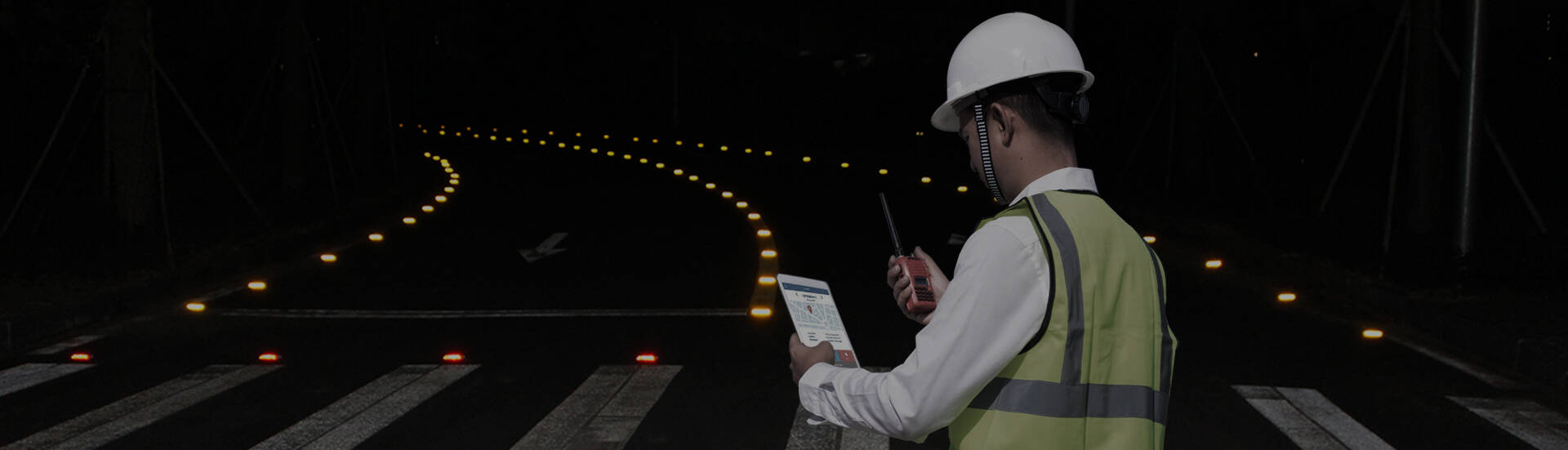
The road safety situation in the Philippines is extremely serious, with a consistently high rate of accidents at night. In regions such as Luzon, Mindanao, and Mindoro, rural roads, village streets, and mountain roads are generally lacking in lighting, making them areas prone to collision accidents.
The rainy roads during the monsoon season and the foggy conditions on highlands lead to a sudden drop in visibility, further increasing the risks. Moreover, frequent power outages (brownouts) render traditional road lighting ineffective, leaving the night roads in a state of "no signage".
As the main means of transportation, motorcycles, along with a large number of vulnerable road users such as pedestrians and cyclists, face difficulties in ensuring travel safety when there are no effective road signs.
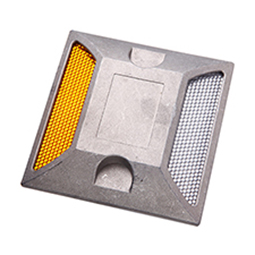
Solar-powered road studs do not rely on the power grid and can provide continuous marking 24 hours a day. Even in cases of power outages, typhoons, etc., they can operate stably, filling the safety gap left by traditional lighting.
Its characteristics of being resistant to typhoons, heavy rain and high temperatures precisely match the climate of the Philippines, enabling it to continuously provide road guidance even in adverse weather conditions. At the same time, the advantages of zero electricity cost and low maintenance cost are in line with the tight budget situation of local governments, allowing for an upgrade in safety without incurring excessive financial burdens.
The design does not require complex wiring, and it can be quickly deployed in remote areas, extending security coverage to rural and island areas without power grids.
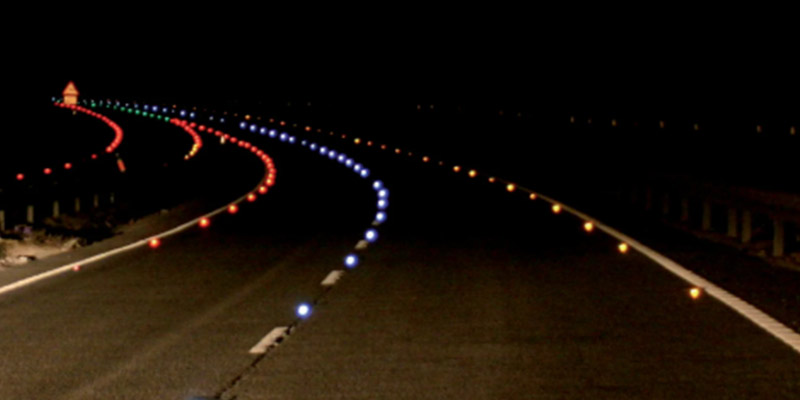
Solar road studs can clearly outline the road contours. They are particularly useful in rural roads and mountainous areas where there is no lighting. They can mark lanes, bends and intersections, effectively preventing accidents such as head-on collisions and going off the road.
The high-brightness and anti-glare design ensures clear visibility even on slippery roads in rainy weather or in foggy conditions, helping drivers accurately determine the lane boundaries and the distance between vehicles.
The switchable flashing mode (applicable to curves and intersections) can enhance the warning effect and alert drivers to slow down and avoid in advance.
When the power grid collapsed after the typhoon, the solar road studs were still able to function normally, providing crucial road signs for emergency rescue vehicles and evacuating the public, helping to quickly restore traffic.
The spikes with IP68 waterproof rating and wind resistance capability of ≥ 150 km/h can withstand typhoons and floods, preventing the occurrence of safety blind spots after disasters.
The battery's standby capacity during 7 to 10 days of rainy weather can cover the entire monsoon season, ensuring that the safety signs remain uninterrupted even in rainy conditions.
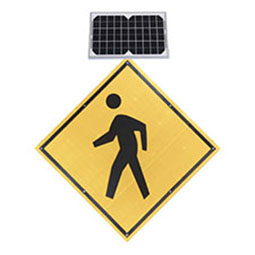
Install solar-powered road studs at pedestrian crossings, around schools and in village community entrances. This can enhance area identification, alert drivers to the presence of pedestrians, and reduce the risk of pedestrian-vehicle collisions.
Clear lane markings can provide dedicated guidance for motorcycles, reducing accidents involving collisions or scrapes with large vehicles and ensuring the safety of motorcycle riders.
For remote villages without power grid coverage, solar road studs have provided villagers with reliable guidance for their nighttime travels, completely eliminating the safety hazard of "travelling in the dark".
The core components of the solar road studs have a lifespan of over 5 years. They possess excellent shock resistance and corrosion resistance, and require minimal maintenance. They can consistently perform their safety functions over a long period of time, reducing facility downtime.
The flexible and portable feature enables the layout to be adjusted according to changes in traffic flow and road upgrade requirements, achieving dynamic adaptation of safety facilities.
Its renewable energy characteristics not only enable the implementation of the road safety goals of the Department of Public Works and Highways (DPWH), but also align with the national renewable energy strategy, achieving the dual value of "safety and environmental protection".
Brightness and visibility are fundamental. Rural roads should have a brightness of ≥ 300 cd/㎡. For urban expressways and high-risk sections, it is recommended to choose high-brightness models with a brightness of 500+ cd/㎡. The viewing angle should be ≥ 120° to ensure that drivers from all directions can clearly identify.
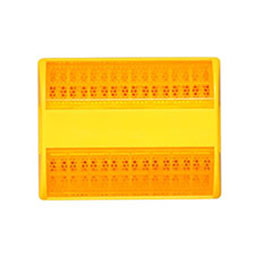
The lighting mode should support adjustable settings. The flashing mode should be used for bends and intersections to enhance warning, while the constant-bright mode should be used on straight roads to ensure stable guidance. The colors should comply with the standards, with white marking the lanes and yellow indicating the warning areas.
The battery should preferably be a lithium battery. It must be able to meet the standby requirements during 7 to 10 days of rainy days to avoid the situation where the safety indicator fails due to insufficient battery power during the monsoon season.
The weather resistance directly determines the safety and continuity. Products with IP68 waterproof rating and ≥150km/h wind resistance rating must be strictly selected. The working temperature range covers -20℃ to 60℃, and they are suitable for the extreme climate of high temperatures, heavy rain and typhoons in the Philippines.
The shell is made of aluminum alloy or stainless steel, which can withstand impact and corrosion. It has a load-bearing capacity of ≥ 20 tons and is suitable for heavy loads on urban expressways and freight roads, preventing it from being damaged by vehicles.
In coastal areas such as Cebu and Palawan, it is necessary to select products with anti-salt fog coating to protect the equipment from the erosion caused by the marine environment.
Urban Expressway (Edessa Avenue, Northern Luzon Expressway): Choose the high-brightness (500+ cd/m²) model, equipped with intelligent monitoring function. It can monitor equipment failures in real time and issue warnings. It supports adjustable flashing mode and is suitable for busy traffic and rainy environments.
Rural/Village Road: Prefer 300-500 cd/m² medium-brightness road nails, emphasizing ease of installation and low maintenance features. Construction can be carried out without complex equipment and is suitable for remote area operation conditions.
Mountainous/ Foggy Area (Birya, Bengert): Select products with anti-glare function and wide viewing angle. Enhance the markings for curves and slopes, and improve the impact resistance to cope with rough roads.
Campus area / pedestrian crossing: Choose traffic cones with high visibility and constant illumination mode. The shell should have high strength and anti-collision capabilities to ensure stable operation even under frequent contact.
The product must be certified by the Philippine National Standards (PNS), and approved by the Department of Energy (DOE), to ensure that its performance and safety indicators comply with local regulations, and to prevent any non-compliance from affecting project acceptance and safety outcomes.
The installation must strictly follow the road marking standards set by DPWH, clearly specifying the spacing of road spikes (5-10 meters for straight sections, 2-3 meters for curved sections), color combinations, etc., and seamlessly integrating with the existing traffic facilities.
Prioritize choosing suppliers that provide third-party safety performance test reports, and verify the authenticity of indicators such as brightness, weather resistance, and load-bearing capacity.
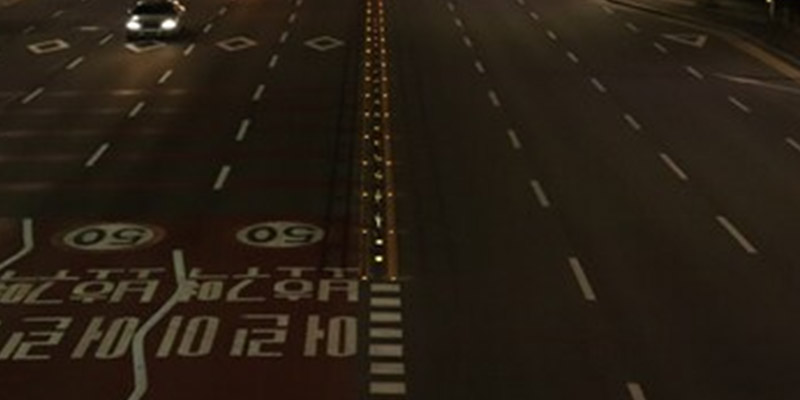
The installation method needs to be adapted to the type of road surface. For asphalt and concrete roads, a bolt-fixed type is used to ensure stability against wind and heavy traffic. For temporary safety upgrades, a pasting type can be selected for quick deployment.
Install strictly in accordance with the DPWH spacing standards. Arrange the bends, ramps and intersections densely (2-3 meters per point), while maintaining a spacing of 5-10 meters for straight sections. This will maximize the guiding effect.
The installation period should be avoided during the peak period of the monsoon. Construction should be carried out during the periods with low traffic flow to minimize the disturbance to traffic and reduce the safety risks during the construction.
Establish a monthly inspection mechanism, focusing on checking the brightness, battery status and physical damage of the equipment. Replace faulty components in a timely manner to avoid the occurrence of safety blind spots.
After a typhoon and heavy rain, emergency inspections need to be carried out to quickly repair the damaged and displaced railway spikes, ensuring that the road safety signs can quickly regain their functionality after the disaster.
Give priority to products with replaceable batteries and easily disassembled components. At the same time, make sure that the supplier has sufficient spare parts reserves locally to shorten the time for fault repair.
Challenge: A 15-kilometer rural road has no lighting and no power grid. The accident rate during the night accounts for 40% of the total for the year. The risks for motorcycle riders and pedestrians are extremely high. The local government's budget is limited.
Solution: Install 300 solar studs of medium brightness. The product is IP68 waterproof and has the ability to stand idle for 10 days in rainy conditions. They are densely arranged at bends and intersections, and are fixed using bolts.
Safety achievements: The accident rate during the night has dropped by 70%, significantly enhancing the safety of villagers' nighttime travel. Motorcyclists have a clearer understanding of the road boundaries, and 24-hour safety markings have been implemented in areas without power grids.
Challenge: In a coastal expressway in Cebu, nighttime rear-end collisions occur frequently due to rainy weather, accounting for 35% of all accidents. Frequent power outages cause traditional signs to fail, and the salt-spray environment also easily corrodes equipment.
Solution: Deploy 500 high-brightness solar road studs, equipped with anti-salt spray coating and IP68 waterproof design, supporting adjustable flashing mode, and suitable for rainy and nighttime traffic needs.
Safety achievements: Rain-related accidents decreased by 55%. Continuous lighting was maintained during power outages. Drivers' recognition accuracy of the lanes improved. The equipment's service life reached over 6 years in the coastal salt-spray environment.
Challenge: On a remote island in Palawan, the roads around the school campus have no signs. During the students' commute to and from school, there is a high risk of collisions between pedestrians and vehicles. Moreover, the maintenance resources on the island are scarce and logistics are inconvenient.
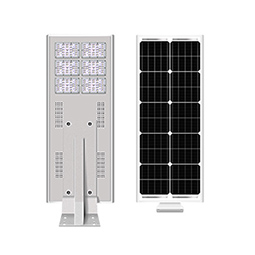
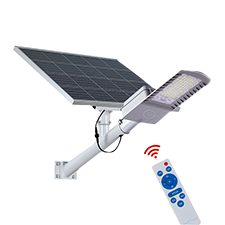
Solution: Install 50 solar street lights to mark the boundaries of the campus and pedestrian crossings. Choose compact, low-maintenance, and highly waterproof products that are suitable for the island environment and operational conditions.
Safety achievements: After installation, the campus area has achieved zero accidents. The road studs do not require frequent maintenance. It is suitable for the current situation of limited island resources and has built a safety barrier for students' travel, earning high recognition from parents and the school.
Budget constraints are the main obstacle. Some local governments have postponed safety upgrades due to short-term cost concerns. By applying for renewable energy subsidies and tax exemptions, the initial investment pressure can be reduced, and focus can be placed on long-term safety benefits.
Some stakeholders have doubts about the product's resistance to typhoons and high temperatures. We can provide local climate simulation test data and the effectiveness of implemented cases to address their concerns.
If the compliance certification process is not familiar, it may lead to project delays. It is recommended to collaborate with suppliers who have local experience and can provide certification agent services to ensure that the products comply with the PNS/DPWH standards.
Adopt a phased deployment model, giving priority to covering high-risk areas such as curves, intersections, areas around campuses, and rural roads. With a limited budget, achieve the maximum safety benefits.
Strengthen communication with local governments, communities and schools. Through on-site demonstrations and case sharing, convey the safety value of solar road studs and strive for support from all parties.
When making the selection, priority should be given to suppliers with local project experience in the Philippines and those who offer comprehensive after-sales maintenance services. This ensures the long-term stable operation of the equipment and guarantees that the safety effect remains intact.
The extreme climate, complex road conditions and the large number of vulnerable road users in the Philippines have determined that the upgrade of road safety must precisely adapt to local needs. Solar road studs, with their advantages of independent power supply, strong durability and controllable cost, have become an ideal solution for addressing the lack of night lighting and strengthening road signs.
From rural roads to urban highways, from emergency guidance after typhoons to daily safety protection, solar road studs are building a comprehensive and sustainable road safety defense system for the Philippines. Choosing safety-oriented and locally adapted products means choosing to safeguard the life safety of every traveler.
We specialize in customized solar road studs for the Philippines. All our products have passed PNS/DOE certification and possess wind resistance, season adaptation and high safety performance. They are also equipped with local after-sales and maintenance support. We are willing to collaborate with the Philippine transportation department and engineering contractors, using professional products and solutions, to ensure the safety of every road and contribute to the construction of a more resilient transportation network.