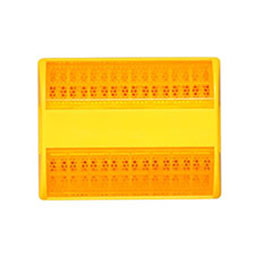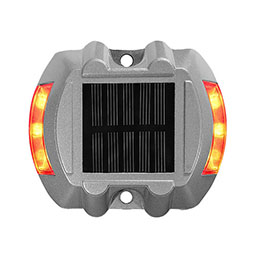
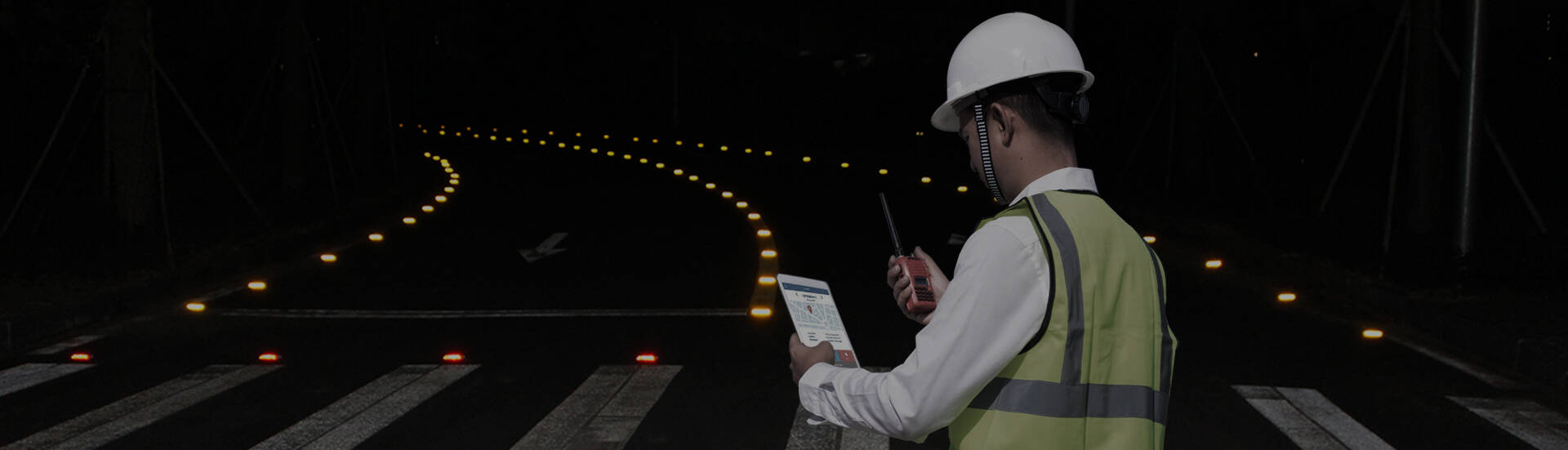
Solar-powered road studs are a core component of nighttime path lighting. Choosing the right ones can significantly improve pedestrian safety, while choosing the wrong ones can render them an "ineffective investment." Many users have fallen into similar traps: blindly choosing high-speed models for scenic trails not only results in excessive brightness causing glare but also wastes budget due to excessive costs.
Rural roads often opt for cheaper, low-waterproof road studs, leading to frequent short circuits and failures during the rainy season, requiring mass replacements in less than six months. Meanwhile, residential roads use ordinary raised road studs, which are frequently trampled by pedestrians and run over by vehicles, resulting in a persistently high damage rate. The core of these problems stems from a mismatch between the intended use case and the product.
The core value of solar-powered road studs lies in outlining paths and warning of dangerous boundaries through "passive lighting," providing clear guidance for nighttime traffic. To fully realize this value, the key to selection is not "the more expensive the better" or "the brighter the better," but rather to accurately match the path type, traffic needs, and environmental conditions.
Today, we bring you a complete guide to selecting solar road studs to help you avoid common mistakes and choose the product that best suits your path.
Before selecting a model, it's essential to clarify the core categories of solar-powered road studs to narrow down your choices based on your specific needs. Different product categories have clearly defined boundaries for suitable application scenarios.
|
Product Type |
Core features |
Applicable Scenarios |
|
Passive reflective type |
Relying on light reflection, low cost |
Low-traffic areas such as residential walkways and scenic trails |
|
Active light type |
Self-illuminating, high brightness, and wide range of applications |
Rural roads, main roads in industrial parks, and other medium-to-high traffic scenarios |
|
Intelligent sensing type |
Sensor-activated lighting and precise energy-saving warnings |
High-risk scenarios such as sharp bends in mountainous areas and intersections |
Raised installation is simple, using 3M adhesive and nails for fixation, suitable for asphalt and cement pavements, but easily trampled; buried installation is flush with the ground, has strong damage resistance, suitable for high-traffic lanes and sidewalks, but requires a small amount of road cutting for installation; temporary installation is movable, suitable for dynamic scenarios such as temporary access roads on construction sites and race routes, with extremely high flexibility.

After clearly defining the product categories, it is also necessary to focus on core indicators for selection. The following six dimensions directly determine the effectiveness and lifespan of solar-powered road studs, and none of them can be omitted.
For low-speed scenarios (≤20km/h), a brightness of ≥200cd and a visibility distance of ≥50 meters are sufficient to avoid glare; for medium-speed scenarios (20-60km/h), a brightness of ≥400cd and a visibility distance of ≥150 meters are required to ensure reaction time; for high-speed scenarios (≥60km/h), a brightness of ≥600cd and a visibility distance of ≥300 meters are required to meet the needs of highway travel.
In areas with ample sunlight, a product with a battery life of ≥3 days on cloudy or rainy days is sufficient; in areas with insufficient sunlight (northern winters, mountainous areas), a battery life of ≥7 days on cloudy or rainy days is required. Prioritize models with a lithium battery capacity of ≥800mAh and a solar panel conversion efficiency of ≥18% to avoid the short lifespan issue of lead-acid batteries.
For general outdoor scenarios, waterproof rating ≥ IP67 is required; for coastal and rainy areas, IP68 rating is recommended. For raised structures, pressure resistance ≥ 20 tons is required; for buried structures, pressure resistance ≥ 40 tons is required. Engineering plastics or stainless steel are preferred materials to ensure corrosion and UV resistance and a service life ≥ 5 years.
White outlines the lane edges, yellow warns of the central divider, red indicates prohibition/danger, and green guides to safety exits. Multiple colors can be customized for special scenarios to adapt to intelligent transportation needs.
Prioritize products that require no wiring and are fixed with 3M adhesive and nails to reduce construction costs; models with a warranty of ≥2 years for core components and support modular replacement can reduce later maintenance costs and avoid partial damage leading to overall scrapping.
For basic needs, a standard active light-emitting type is sufficient; for energy-saving needs, choose an inductive type (lights up when a vehicle approaches); for management needs (municipal, smart park), choose a model with remote monitoring (power monitoring, fault alarm) to avoid excessive configuration and waste.
Based on the above classifications and indicators, we have compiled precise selection solutions for different common scenarios, which can be directly referenced and adapted.
The core requirements are low vehicle speed and consideration for both pedestrians and vehicles. We recommend the in-ground active light-emitting type (white/yellow), with a brightness of 300-400cd, waterproof IP67, and pressure resistance of ≥30 tons. Choose the red warning model for parking lot entrances and exits, and the low brightness anti-glare model for the edges of walkways, which is suitable for dense pedestrian scenarios.
For applications requiring passive lighting and controllable costs, choose either a raised passive reflective type (economical) or a low-brightness active light-emitting type (green), with IP67 waterproof rating; for dangerous road sections, pair with a red light-emitting type to enhance warning without disrupting the scenic area's atmosphere.
High brightness and long battery life are key features. We recommend the raised active light type (brightness ≥ 600 cd), solar panel conversion efficiency ≥ 20%, battery life ≥ 7 days in cloudy or rainy weather, and IP68 waterproof rating. For high-risk road sections, choose the intelligent sensing model, which is suitable for harsh outdoor environments.
Focusing on portability and high alertness, we selected a temporary active light-emitting type (with suction cup/counterweight), which flashes red and yellow alternately and has a brightness of ≥400cd; a dual power supply model with priority charging and solar power is available to address the problem of insufficient lighting in the construction area.
For vehicles that need to be protected from being run over and comply with municipal regulations, we recommend the buried active light type (white/yellow), with a brightness of 300-500cd, pressure resistance of ≥40 tons, waterproof IP68, and support for modular maintenance; for pedestrian crossings, choose the synchronous flashing type to improve nighttime visibility.
While understanding the selection methods, it is also important to be wary of the following common misconceptions to avoid wasting resources due to misunderstandings.
Low-priced products often have inflated specifications, seemingly saving money but actually leading to frequent replacements and higher overall costs. When selecting a product, prioritize verifying core parameters such as battery life, pressure resistance, and waterproofing, rather than simply comparing prices.
High-brightness road studs can cause glare in low-speed scenarios, while low-brightness studs cannot meet visibility requirements in high-speed scenarios. The brightness needs to be precisely matched according to the vehicle speed.
In northern winters and mountainous areas with insufficient sunlight, choosing a product with a 3-day battery life may result in a black screen on cloudy or rainy days; in the south, choosing a long-lasting model will increase unnecessary costs, so it is necessary to select a model based on local lighting conditions.
Raised installations in densely populated pedestrian areas are prone to being trampled on, adhesive installations in high-traffic lanes are prone to falling off, and buried installations on rural dirt roads are prone to damage due to settlement. The appropriate installation method should be selected according to the road surface type and traffic intensity.
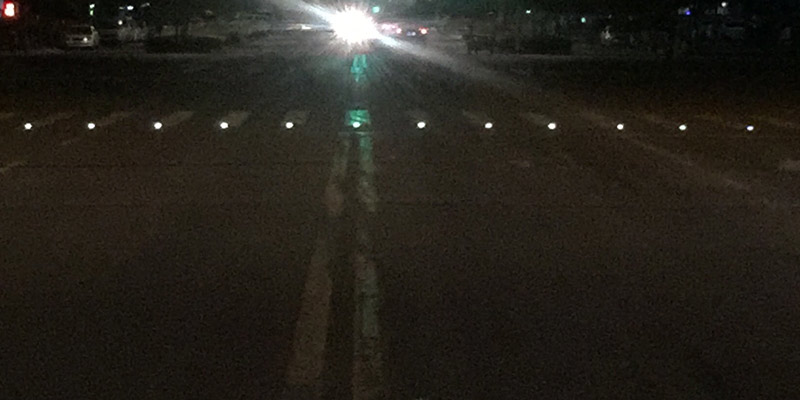
Choosing the right product is only the first step. Proper installation and maintenance can maximize the value of solar road studs and further extend their service life.
(1) Control the installation spacing to adapt to vehicle speed requirements.
At low speeds, the spacing should be 3-5 meters; at medium to high speeds, it should be 8-10 meters; and at sharp bends and intersections, it should be increased to 2-3 meters to ensure clear guidance and timely warnings.
(2) Improve road surface treatment to enhance its stability.
Before installation, clean the road surface of dust, oil, and standing water. Use expansion nails for asphalt roads and self-tapping screws for cement roads. The raised type is combined with 3M adhesive for double protection to prevent it from falling off.
(3) Optimize the orientation of solar panels to improve charging efficiency
In the Northern Hemisphere, solar panels should be oriented due south. In areas with insufficient sunlight, the angle should be adjusted appropriately to avoid obstructions that could affect charging performance.
(1) Regular cleaning to ensure charging efficiency
Wipe away debris from the surface of the solar panels monthly. Increase cleaning frequency in coastal and dusty areas to prevent corrosion and sun shading.
(2) Conduct regular inspections and address problems promptly.
Check the fixtures and lighting status quarterly, and focus on waterproofing issues after the rainy season. Repair or replace any faulty parts promptly.
(3) Standardize fault handling and reduce maintenance costs
For aging batteries, replace them directly with lithium batteries; for damaged LEDs, choose modular replacement to avoid resource waste caused by complete scrapping.
|
core scenarios |
Recommended product types |
Key adaptation points |
|
Low traffic volume and low vehicle speed (residential area/scenic area trails) |
Passive reflective type / Low brightness active light type |
Anti-glare, cost controllable |
|
Medium to high traffic volume (rural roads/main roads in industrial parks) |
Active light type |
High brightness, long battery life, and crush resistance |
|
High risk (sharp bends/intersections) |
Intelligent sensing type |
Precise early warning, energy saving |
|
Dynamic scenarios (construction/temporary routes) |
Temporary active light type |
Portable, dual power supply |
The selection of solar-powered road studs is never a simple "one-size-fits-all" procurement, but rather a precise match based on the scenario, needs, and environment. From functional classification to parameter benchmarking, from scenario solutions to installation and maintenance, every step directly affects the final performance.
We have been deeply involved in the field of traffic safety products for more than ten years, focusing on the research and development and production of solar road studs. We have a product series that can adapt to all scenarios - from economical and practical passive reflective lights to high-brightness active light-emitting models, and then to advanced models with intelligent sensing, which can meet the needs of different scenarios such as residential areas, scenic spots, rural roads, and municipal projects.
We not only provide high-quality products, but also offer a full range of services including product selection consultation, customized production, installation guidance, and after-sales maintenance. If you are struggling to select the right products for your path lighting project, please contact us. Our professional team will tailor a solution to your specific needs, illuminating every path with high-quality solar-powered road studs for nighttime safety.