

With the global upgrade to smart transportation and the full implementation of low-carbon infrastructure policies, market demand for solar-powered road studs—as core road safety facilities that are zero-energy, wiring-free, and provide all-weather smart warnings—continues to surge. According to 2026 global road safety infrastructure industry research data, the global solar-powered road stud market has maintained a stable compound annual growth rate (CAGR) of over 9%, with penetration rates continuing to rise in projects such as new smart city construction, the renovation of aging road networks, rural transportation infrastructure development, and safety upgrades for high-risk roads.
Compared to traditional reflective road studs and municipal streetlights, solar-powered road studs have become the product of choice for municipal engineering projects, general contracting projects, and cross-border procurement worldwide, thanks to their core advantages of clean energy power supply, low O&M costs, strong adaptability, and smart functionality. However, due to significant regional and climatic differences in the global market, rapid evolution of industry standards, and the ongoing refinement of product application scenarios, most overseas buyers and engineering firms find it difficult to accurately identify the right product selection strategies and market trends.
The year 2026 marks a pivotal year for the widespread adoption of solar road studs. The market’s rapid growth is not driven by a single demand factor but is instead fueled by three key dimensions—policy, infrastructure, and safety upgrades—enabling the industry as a whole to enter a phase of high-quality development.
First, global carbon neutrality and green transportation policies are being fully implemented. Countries are successively introducing low-carbon assessment standards for road infrastructure, vigorously promoting photovoltaic and other clean energy transportation facilities, and phasing out traditional streetlight wiring solutions that are energy-intensive and require high maintenance costs. With their advantages of zero electricity costs, zero carbon emissions, and passive power supply, solar road studs have become a mandatory, value-adding component for green highway and smart city projects. Second, global infrastructure continues to expand. With the concentrated implementation of smart new cities in Southeast Asia, future cities in the Middle East, rural road networks in Africa, and highway renovation projects in Europe and the United States, a massive demand for equipment has emerged in off-grid and remote areas, thoroughly opening up new growth markets for the industry.
Finally, global road safety standards continue to evolve. New regulations from transportation authorities in many countries explicitly require that high-risk road sections—such as those prone to rain, fog, or nighttime driving—be equipped with active-lighting warning devices. Traditional passive reflective road studs, which suffer from poor visibility and fail in adverse weather conditions, are being mandatorily phased out, making active-lighting solar road studs the standard product for road safety upgrades. In terms of market structure, the Asia-Pacific region has become the world’s largest consumer market due to the scale of its infrastructure projects. Europe and the United States focus on high-end smart products, while the Middle East, Latin America, and Africa prioritize cost-effective basic models. As the core production and export hub, China—with source manufacturers such as HOAN—continues to dominate global product supply and technological innovation.

Based on feedback from project implementations worldwide and the direction of industry technology evolution, the solar road stud market in 2026 will exhibit six distinct trends. These trends will directly determine project selection, product procurement, and implementation standards, serving as essential reference points for overseas contractors and buyers.
Starting in 2026, major municipal and smart transportation projects worldwide will incorporate low-carbon and energy-efficient criteria into their acceptance standards. Solar road studs powered exclusively by passive photovoltaic systems will completely replace traditional electricity-consuming lighting facilities. Product features such as no reliance on grid power, zero energy consumption, and low O&M costs perfectly align with national carbon neutrality requirements, making them standard equipment for green infrastructure projects. Road facilities without photovoltaic energy-saving configurations will gradually be phased out by the market.
Generic road stud products are gradually exiting the mainstream market, and region-specific climate customization has become a core trend. In tropical, rainy regions and coastal areas prone to salt fog, projects mandate IP68 waterproofing and corrosion-resistant cast aluminum materials; in extremely cold northern regions, the focus is on high-capacity, low-temperature-resistant batteries to ensure stable battery life at low temperatures; and in areas with high temperatures and intense sunlight, high-temperature-resistant casings and energy storage components are preferred to prevent equipment failures caused by excessive heat. Scenario-based and region-specific customization has become the core prerequisite for product adaptation to engineering projects.
Smart transportation and vehicle-road coordination projects are driving the intelligent evolution of solar-powered road studs. By 2026, the high-end market will see widespread adoption of IoT-enabled smart road studs capable of remote control, synchronized strobe flashing, and status monitoring. These studs can integrate with urban traffic IoT systems to enable self-diagnosis of equipment failures, remote adjustment of lighting modes, and auxiliary monitoring of road conditions, upgrading them from simple warning devices to micro-terminals within the smart road network.
Global highway and urban expressway renovation and expansion projects are phasing out traditional raised road studs entirely, with deep-buried, embedded cast-aluminum solar road studs becoming the mainstream choice. Their advantages—including resistance to碾压, anti-detachment, impact resistance, and a longer service life—make them suitable for withstanding long-term碾压 from heavy-duty traffic. This significantly reduces the frequency of equipment replacement and operational and maintenance costs on highways, making them the standard configuration for high-risk highway sections.
To ensure product quality, accommodate customization needs, and control project costs, by 2026, global bulk procurement will have largely moved away from the middleman model, with contractors dealing directly with manufacturers. Procurement demands have shifted toward one-stop services, including sample testing, specification customization, international certification, customs clearance and logistics, and after-sales warranty. Leading manufacturers such as HOAN, which possess end-to-end service capabilities, have become core partners for large-scale overseas projects.
The market has completely moved beyond the era of “one product fitting all scenarios,” with demand for specialized products in various niche segments growing rapidly. Specialized products—such as ultra-thin trip-proof models for urban sidewalks, soft-light landscape models for scenic areas, single-sided directional lighting models for parking lots, and high-brightness models specifically designed for airports—precisely meet the safety, aesthetic, and functional requirements of different scenarios. Refined product selection has become a hallmark of high-quality engineering projects.
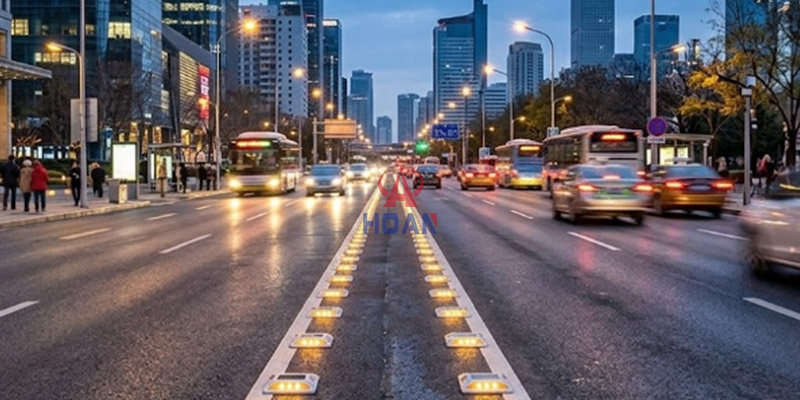
Climatic conditions, infrastructure standards, and budgetary systems vary significantly across different regions. In light of 2026 market trends, HOAN leverages its comprehensive product portfolio to develop customized solutions for the world’s five core markets, precisely meeting local project requirements.
Asia-Pacific Market (Southeast Asia, Australia, Japan, and South Korea): Characterized by high temperatures, heavy rainfall, and severe salt fog corrosion, with a high concentration of smart city projects. Priority is given to HOAN’s square strobe solar road studs and corrosion-resistant embedded road studs, which feature IP68 fully sealed waterproofing and salt fog resistance, along with multiple flashing frequency modes to support refined urban traffic management.
Europe and the Americas: With stringent industry standards and the widespread adoption of smart highways, the focus is on intelligence and safety. HOAN’s heavy-duty embedded smart road studs are the primary recommendation; they support IoT integration and multi-mode adjustment, and come with full CE and RoHS certifications to meet the acceptance standards for high-end smart engineering projects.
Middle East Market: Characterized by year-round high temperatures and intense sunlight, with no severe cold and little rainfall, and featuring large-scale new city infrastructure projects. The preferred choice is HOAN’s long-lasting round solar road studs, equipped with high-temperature-resistant, high-capacity batteries that withstand extreme heat and provide long-term, stable operation, making them ideal for large-scale new city road network installations.
Latin American Market: With an extensive rural road network, moderate project budgets, and many sections without grid access, the HOAN Economy Series Round Road Studs are the top choice. Offering outstanding value for money, they require no wiring and provide ultra-long battery life, making them ideal for large-scale rural road renovation projects.
African Market: With weak infrastructure, limited power supply, and urgent demand for safety upgrades, the HOAN Basic Long-Life Solar Road Studs are ideal. They feature simple installation, zero O&M, and adaptability to complex road conditions. They support both small-batch trial orders and bulk deployment, aligning with the pace of local infrastructure development.
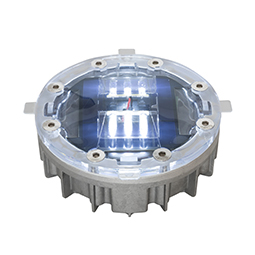
Addressing the six major industry trends for 2026 and differentiated global regional needs, HOAN’s four core traffic product series comprehensively cover various smart transportation, road renovation, and rural infrastructure projects worldwide. Embedded heavy-duty solar road studs, with a compression resistance of up to 25 metric tons and top-tier IP68 waterproofing, are suitable for heavy-load scenarios on highways and expressways worldwide; Square strobe solar road studs, featuring multi-color lighting and adjustable flash frequencies, are corrosion-resistant and weatherproof, making them a core product for smart city municipal upgrades.
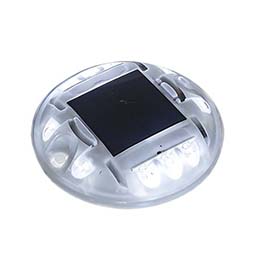
Economical round solar road studs, with stable battery life and exceptional value for money, are suitable for widespread deployment across extensive road networks in Latin America, Africa, and the Middle East; Ultra-thin, low-profile solar road studs, designed to prevent tripping and featuring an elegant appearance, are specifically tailored for niche scenarios such as pedestrian streets, scenic areas, and sidewalks. The entire product line has undergone 72-hour submersion, heavy-load, and high/low-temperature aging tests, making it suitable for extreme operating conditions worldwide. The products support personalized customization of light colors, flashing frequencies, and logos, and are backed by a full suite of international certifications, fully meeting engineering acceptance standards in various countries.
In 2026, the market is flooded with products of varying quality, including low-priced, substandard items and those with falsified specifications—which can easily lead to project acceptance failures and widespread malfunctions later on. Addressing these industry pain points, we have summarized the core procurement considerations: For tropical coastal projects, ensure IP68 waterproofing and a corrosion-resistant cast aluminum structure; in regions with extreme high or low temperatures, prioritize high-capacity, temperature-resistant batteries and verify continuous runtime specifications under overcast or rainy conditions; For high-end smart projects, prioritize compliant products that support intelligent interconnection and adjustable operating modes; for large-scale overseas projects, be sure to source directly from the manufacturer, conduct advance sample testing, and request a full set of certifications and quality inspection reports to mitigate procurement risks.
2026 marks a pivotal year for the standardization, intelligentization, and refinement of the solar road stud industry, with low-carbon energy efficiency, regional customization, smart iteration, and scenario-specific segmentation emerging as core market trends. Market demands vary significantly across different regions globally; precisely matching operating conditions with compliant and reliable products has become critical for project implementation and acceptance. Leveraging its comprehensive product portfolio, rigorous quality control system, and one-stop cross-border services, HOAN Traffic can fully support road safety upgrade projects in diverse regions and scenarios worldwide, facilitating the high-quality implementation of smart transportation and green infrastructure initiatives in various countries.
To obtain customized selection solutions tailored to your local market, product specifications with real-world photos, engineering case studies, and bulk purchase quotes, please visit the HOAN official website at haroadstud.com. There, you can request free samples, connect with professional engineering consultants, and find a one-stop solution to your global road infrastructure procurement challenges.

.png)