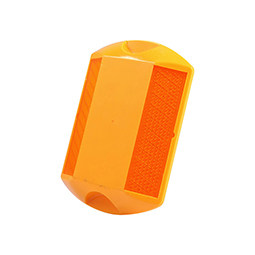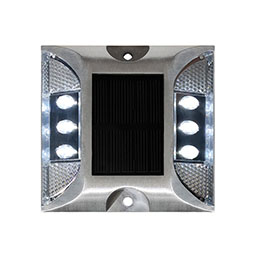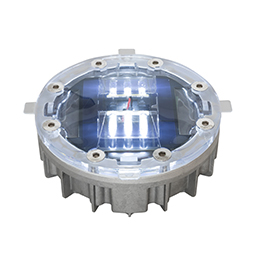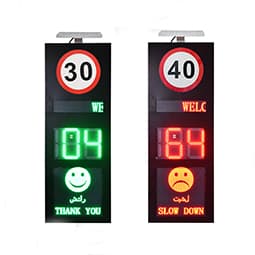
As the global push for smart roads and low-carbon infrastructure continues, traditional reflective road studs—which rely on vehicle headlights for visibility and have limited detection ranges at night and in foggy conditions—are being replaced by solar-powered active road studs, which are becoming essential equipment for lane guidance. At the same time, demand for overseas projects is clearly diversifying: desert highways must withstand high temperatures and sandstorms; roads in cold regions must avoid damage from snowplows; coastal roads must resist salt fog; and urban road networks are beginning to require networked, interconnected road studs.
Many engineering procurement professionals face the same dilemma when planning projects for 2027: Which solutions on the market are mature and available for mass production, and which are still in the laboratory phase? This article outlines the six core technological trends for solar road studs in 2027 to help highway general contractors, traffic engineering firms, and municipal procurement departments distinguish between conceptual technologies and practical solutions. It also provides product selection recommendations based on HOAN Traffic’s product iterations.
Conventional road studs flash independently, resulting in limited warning effectiveness and insufficient visual guidance on continuous curves, highway ramps, and sections with heavy fog. Wireless networking technologies based on LoRa and Bluetooth Low Energy are maturing. Multiple road studs can now flash in synchronized batches or create a flowing gradient effect. They can also integrate with weather sensors and vehicle detectors, eliminating the need for wiring and allowing for direct retrofitting of existing roads. HOAN’s synchronized cast-aluminum solar-powered road studs support wireless networking, and their flashing modes are customizable.
Next-generation road studs allow battery levels and lighting status to be read via the cloud; they automatically report faults and support remote parameter tuning, eliminating the need for operations and maintenance teams to conduct on-foot inspections along the entire route. Remote monitoring primarily relies on commercially mature solutions; when procuring, verify signal stability and fallback strategies for areas with no signal. Sensing road studs designed for V2X vehicle-to-infrastructure coordination can assist autonomous vehicles in identifying lane boundaries; however, this remains a medium- to long-term development and is not recommended as a mandatory requirement for bulk procurement.
New-generation photovoltaic panels offer improved low-light power generation capabilities and are better suited for overcast and rainy days as well as high-latitude winter regions with insufficient sunlight. On road sections with insufficient light—such as tunnel entrances or areas shaded by trees—hybrid solutions combining solar power with energy harvesting from vehicle vibrations can supplement power; however, these two types of solutions are currently limited to pilot projects and remain relatively costly.
Of particular note are high-temperature-resistant lithium iron phosphate (LiFePO₄) batteries. Desert surface temperatures often reach 60 to 70 degrees Celsius; under sustained high heat, conventional lithium-ion batteries bulge and experience rapid capacity degradation. Lithium iron phosphate batteries, however, have a wider operating temperature range, are less prone to bulging, and offer a longer cycle life. They are gradually becoming the default configuration in overseas engineering tenders, with the ability to remain on standby for over 72 hours on a full charge during continuous rainy weather now serving as a clear threshold for desert and Middle Eastern projects. The HOAN HA‑RS‑143N and HA‑RS‑150 come standard with high-temperature-resistant lithium iron phosphate batteries and have been field-tested and validated in desert projects in the Middle East.
In North America, Northern Europe, and other regions with snow-covered roads, a large number of road studs were previously damaged by snowplows, leading to frequent insurance claims. Snowplow-resistant road studs—featuring raised wear-resistant edges, recessed mounting, thickened die-cast aluminum housings, and curved, scratch-resistant profiles—are gradually becoming the industry standard. HOAN’s snowplow-resistant die-cast aluminum solar road studs were specifically developed for this scenario.
Ultrafine dust, dew, and salt fog can all seep into the interior through gaps and damage the circuitry. IP65 and IP67 ratings cannot effectively block these fine particles over the long term, making true IP68 fully sealed encapsulation a mandatory requirement for projects in the Middle Eastern deserts and coastal regions. In terms of materials, die-cast aluminum has become the mainstream choice for engineering enclosures, while standard ABS plastic is only suitable for indoor parking lots with extremely low traffic loads.
The modular design allows for the separate replacement of batteries or LED light sources without having to remove the entire road stud, thereby speeding up maintenance, reducing spare part costs, and aligning with low-carbon, circular infrastructure principles.
Brightness automatically dims during daylight hours to conserve energy, while it automatically increases at night and during foggy conditions; some versions support radar-based vehicle detection, providing high-intensity warnings only when a vehicle approaches, thereby extending battery life and reducing light pollution. Lighting logic has also become more sophisticated: white light for standard lanes, yellow light for cliff-edge curves, and dynamic red warning lights for roadwork zones.
Recyclable aluminum alloys and eco-friendly encapsulation materials are gradually replacing highly polluting solutions, aligning with green infrastructure and ESG project specifications in Europe, the U.S., and Australia. Procurement logic has shifted from comparing unit prices to evaluating five- and ten-year full life-cycle costs, which significantly benefits engineering-grade road studs.
(1) Highway Heavy-Duty Embedded Model: Suitable for arterial roads with heavy traffic and a high volume of heavy-duty trucks; representative model: HOAN HA‑RS‑143N.
(2) Surface-Mounted Economy Cast Aluminum Model: Suitable for urban side streets, parking lots, and scenic area roads; representative model: HOAN HA‑RS‑150.
(3) Portable Temporary Construction Road Studs: Used for maintenance operations and temporary road closures; easy to install and remove, and reusable.
Avoiding Pitfalls in 2027 Procurement: Distinguish Between Laboratory-Based New Technologies and Mature Solutions Capable of Stable, Mass Production
Q: Will the 2027 Smart Solar Road Studs completely replace traditional reflective road studs?
A: No, they will not completely replace them. Reflective road studs are low-cost and require no power supply, so they remain suitable for low-cost road sections; solar road studs will gradually replace them on key road sections due to their greater visibility distance and networking capabilities. The two will coexist in the long term.
Q: Can IoT solar road studs be used in desert areas with no signal?
A: Yes. In areas without signal coverage, the network connectivity automatically switches to standalone operation, and the road studs continue to emit light normally; remote monitoring provides added value on sections with network coverage.
Q: Can HOAN solar road studs form a wireless synchronized network?
A: Yes. HOAN’s synchronized cast-aluminum solar road studs support wireless networking and customizable flashing modes, making them suitable for coordinated warning systems on curves, ramps, and construction zones.
The key focus for solar road studs in 2027 is striking a balance between intelligence, long battery life, high reliability in extreme environments, and low lifecycle maintenance costs. If you need to select products for highway, desert, cold-climate, or smart road network projects, please visit haroadstud.com to request free samples and obtain project technical solutions.