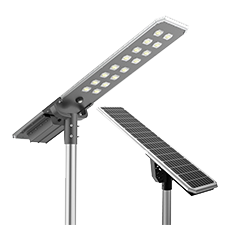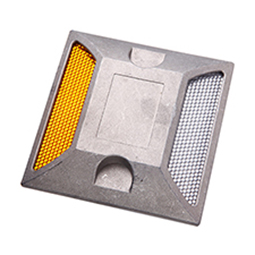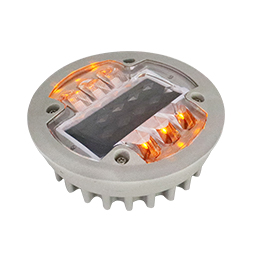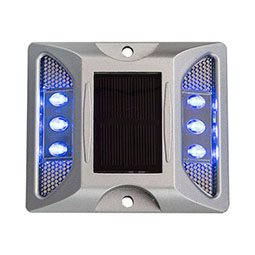
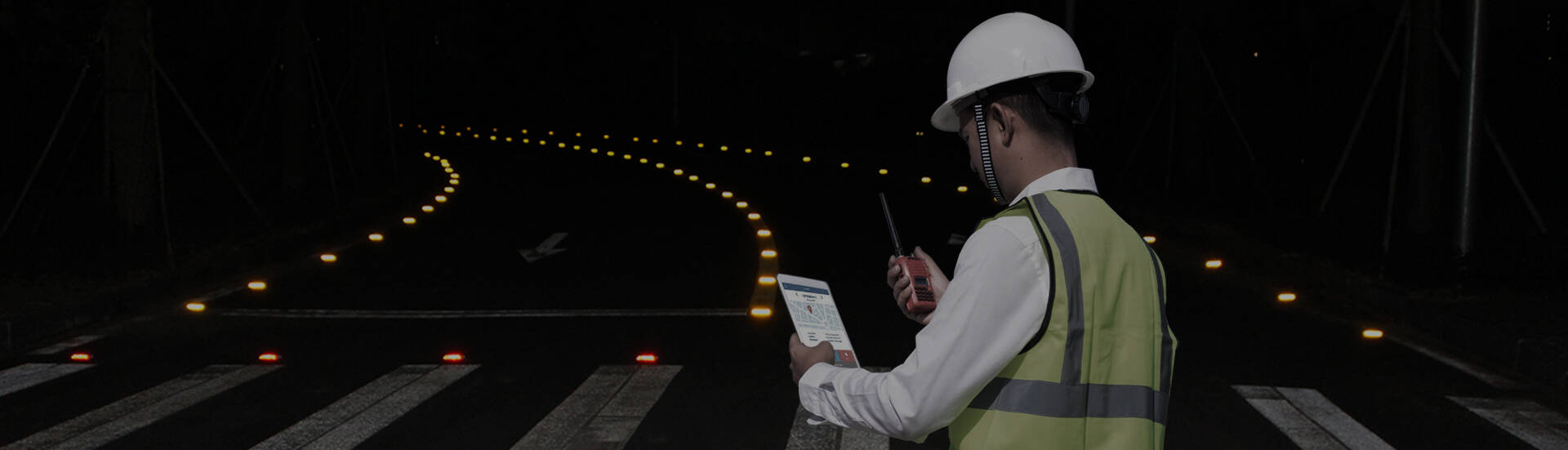
In projects involving the upgrading of municipal roads, highway renovations, rural road lighting, and mountain road safety improvements, the number of solar road studs to be installed is a key factor in project bidding, planning, and cost budgeting. Many contractors, procurement officers, and project engineers frequently face the same question: How many solar road studs should be installed per kilometer of road?
Unlike standardized building materials, there is no fixed, uniform number for the deployment of solar road studs per kilometer. The quantity can vary significantly depending on road classification, traffic speed, lane layout, the proportion of curves, weather conditions, and the specific deployment plan. Blindly applying a fixed number can easily lead to two major engineering issues: either overly dense deployment resulting in severe budget waste, or excessive spacing causing gaps in nighttime visibility and failing to meet safety guidance standards—which would result in the project failing acceptance inspection. To help overseas engineering teams accurately calculate project quantities, effectively control costs, and ensure compliant construction, this article will provide a detailed breakdown of the logic behind solar road stud deployment, usage standards per kilometer for different road types, rules for increased density on high-risk sections, and the most cost-effective mixed deployment schemes. It will also incorporate HOAN Traffic’s full range of road stud products to offer practical engineering calculation solutions ready for implementation.
To accurately calculate engineering quantities, one must first dispel the misconception that “all roads require the same quantity.” The total number of solar road studs installed per kilometer is determined by five core operational conditions, which also serve as the foundation for overseas project design.
First is the road classification and design speed. On expressways, where speeds are high, continuous nighttime visual guidance is required, necessitating closer spacing and a higher quantity of solar road studs; on rural low-speed roads, where speeds are slower, spacing can be appropriately widened, reducing the number of units needed. Second is the lane deployment method: the three deployment modes—single-side shoulder, double-side shoulder, and median strip—result in a twofold difference in usage; the vast majority of standard road projects adopt double-side deployment.
Third is the proportion of high-risk sections. Continuous curves, slopes, ramps, intersections, and tunnel entrances and exits all require denser installation, which directly increases the average usage per kilometer. Fourth is the regional climate and environment. In areas with frequent rain, fog, and overcast skies, visibility is poor, so installation spacing must be reduced overall to enhance lighting continuity. Fifth is the installation plan. There is a significant difference in equipment usage and budget between installing solar road studs along the entire route and a hybrid installation of solar road studs combined with reflective road studs; this is also a key factor in reducing project costs.
Based on international road construction standards and HOAN Traffic’s extensive portfolio of overseas projects, we have compiled standardized installation intervals and reference usage quantities per kilometer for expressways, municipal roads, and rural roads. All data is based on installation on both sides of the road and can be directly applied to project budgeting and bid preparation.
Highways feature high speeds and dense traffic, placing extremely high demands on the continuity of nighttime lane guidance; wide spacing is strictly prohibited. The standard spacing on straight sections is 10–15 meters, with a usage of approximately 130–200 units per kilometer on both sides. If the road includes a median strip, additional units must be installed in the center lane. For highway ramps, entrances/exits, and sharp curves, the spacing must be reduced to 5–8 meters to significantly enhance the warning effect. This scenario is suitable for the HOAN HA-RS-143N and HA-RS-150 cast aluminum heavy-duty solar road studs, which feature high compressive strength and stability, making them suitable for long-term, heavy-load rolling conditions on highways.
Urban municipal roads feature a mix of vehicular and pedestrian traffic, with a high density of intersections and crosswalks, requiring a balance between guidance and warning effects. On straight sections, the spacing should be maintained at 8–12 meters, with approximately 160–250 units required per kilometer on both sides. At high-risk locations such as intersections and crosswalks, the spacing should be further reduced to 3–5 meters to eliminate nighttime blind spots. With their smooth surfaces and moderate load requirements, these roadways are well-suited for the HOAN HA-RS-D3 surface-mounted solar road studs, which require no grooving and enable efficient installation, making them ideal for both urban road renovation and new construction projects.
Rural and mountainous roads feature numerous curves, steep gradients, a lack of street lighting, and extremely poor nighttime visibility, making them high-accident-risk sections. The standard spacing on straight sections is 8–12 meters; however, due to the high proportion of curves and steep slopes, the overall usage per kilometer still reaches 160–250 units. For mountainous sections prone to fog and rain, it is recommended to reduce the overall spacing by 20%–30% to ensure effective guidance during adverse weather conditions. To control project budgets, a cost-effective solution is recommended for mountainous roads: use solar-powered road studs on hazardous curves and slopes, and standard reflective road studs on long straight sections.
On some narrow roads or roads running along cliffs, installation on only one side is sufficient, which can halve the overall quantity required. However, this significantly reduces nighttime visual guidance and is only suitable for low-grade rural access roads; this approach is not recommended for main roads.
The average usage per kilometer serves only as a basis for budgeting; what truly determines the project’s acceptance rate is the increased density of installations on high-risk sections. Many projects fail inspection precisely because they uniformly apply the spacing used for straight sections, neglecting the warning requirements of special road segments.
On sections with consecutive sharp curves or winding mountain roads, the spacing must be reduced to 5–8 meters to guide drivers in anticipating lane changes through a continuous light trail; At tunnel entrances and exits, as well as highway ramps—where lighting conditions and vehicle speeds change abruptly—spacing should be controlled between 3 and 6 meters to provide a strong warning effect; at road intersections and crosswalk areas, where pedestrians and vehicles mix, dense installation is essential to eliminate blind spots and potential hazards. Additionally, in coastal regions with heavy rainfall and mountainous areas prone to fog, spacing along the entire route should be moderately increased to prevent gaps in lighting and guidance failure during rainy or foggy weather.
Practical Recommendations for Project Budgeting: When calculating the total quantity, set aside an additional 5%–10% as a reserve for future replacements due to damage and maintenance installations, thereby avoiding increased costs and project delays caused by having to restock later.
Installing solar road studs along the entire route offers the highest level of safety; however, for long-distance rural roads and secondary highway projects, this approach can result in budget wastage. For projects with medium-to-low budgets, a hybrid installation of solar road studs and reflective road studs is the most mainstream and cost-effective implementation solution in overseas projects.
The core logic of this solution is “illumination in key areas, reflectivity in standard areas.” On long, straight stretches of road, use low-cost HOAN HA-101 and HA-105 reflective road studs to provide basic guidance through the reflection of vehicle headlights; at sharp curves, steep slopes, intersections, tunnel entrances, and accident-prone locations, actively illuminated solar road studs are installed to enhance warnings on hazardous sections. This approach not only ensures core road safety and significantly reduces overall procurement costs but also fully complies with international road safety construction standards, making it suitable for long-distance, large-scale road renovation projects.
In the practical implementation of overseas projects, most errors in quantity estimation stem from misconceptions. First, applying fixed values to all roads
while ignoring differences in vehicle speed, curves, and climate leads to discrepancies in material usage; second, estimating quantities only for straight sections without accounting for increased density on high-risk sections results in construction interruptions due to insufficient on-site equipment; Third, installing solar road studs along the entire length of long, straight roads results in severe budget wastage; fourth, failing to set aside spare materials leaves no replacement parts available for later maintenance; fifth, blindly adopting construction standards from other countries without adapting them to local climate and traffic regulations. Avoiding these pitfalls can effectively improve project accuracy and control construction costs.
As a manufacturer, HOAN Traffic offers a comprehensive product portfolio of road studs, capable of fully meeting the installation needs of various road types—including highways, municipal roads, rural roads, and mountain roads—while providing free engineering quantity calculations and design services to overseas clients. The brand offers heavy-duty cast aluminum solar road studs, economical surface-mounted road studs, and multiple standard reflective road studs, supporting all engineering solutions, including fully solar-powered installations and hybrid installations.
Drawing on a vast number of global road installation case studies, our team is well-versed in construction standards across different countries and climates. Based on clients’ road blueprints and road condition parameters, we can accurately calculate the quantity required per kilometer, optimize installation plans, and balance safety effectiveness with project budgets. Our entire product line holds CE and RoHS international certifications, comes with complete test reports, and is suitable for overseas bidding projects. We also support sample testing, bulk customization, and comprehensive technical guidance.
In summary, there is no fixed standard answer for the usage per kilometer of solar road studs; the key factors depend on road classification, installation method, the proportion of high-risk sections, and climatic conditions. Expressways, municipal roads, and rural roads each have their own appropriate usage ranges; high-risk sections require denser installation, while hybrid installation schemes are the optimal solution for projects with medium to small budgets. Accurate quantity calculations and scientific layout planning not only ensure nighttime traffic safety and facilitate successful project acceptance but also help minimize project costs to the greatest extent possible.
To obtain a customized project layout plan, precise quantity calculations, and bulk purchase quotes, please visit the HOAN Traffic official website at haroadstud.com, submit your project’s road condition information, and receive a professional, customized engineering solution.