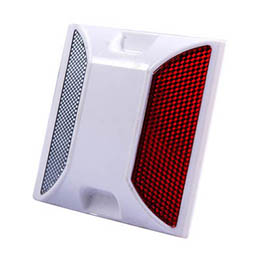

In upgrade and renovation projects for commercial complexes, industrial parks, residential communities, and public outdoor parking lots, poor nighttime visibility, indistinct lane markings, and unclear parking space boundaries are the most common safety concerns. Traditional underground wiring for buried lights involves cumbersome installation, high renovation costs, and complex maintenance. Meanwhile, standard reflective road studs rely solely on the reflection of vehicle headlights, resulting in significantly reduced warning effectiveness in low-light conditions—such as rainy nights, overcast days, and dusk—which can easily lead to safety incidents like vehicle scrapes, lane-crossing violations, and pedestrian collisions.
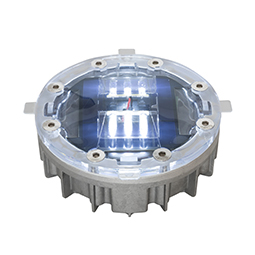
Thanks to their core advantages—no wiring, zero power consumption, active illumination, and easy installation—solar road studs have become the preferred solution for parking lot lighting and safety upgrades worldwide. They are particularly well-suited for the renovation of older parking lots, semi-shaded parking lots with canopies, and open-air parking lots, allowing for rapid upgrades to nighttime ground markings without the need for large-scale road excavation.
Compared to traditional in-ground lights and reflective road studs, solar-powered road studs offer irreplaceable advantages for parking lot scenarios, perfectly addressing the industry’s four major challenges: difficult construction, high costs, poor results, and cumbersome maintenance. First, regarding construction advantages, solar-powered road studs require no ground excavation or cable laying, significantly shortening the construction timeline. They are particularly suitable for renovating older, existing parking lots without disrupting normal operations.
Second, they offer enhanced safety performance. Unlike passive reflective products, solar road studs emit light autonomously. Even in the absence of streetlights, in low-light conditions, on rainy nights, or during dusty weather, they can still clearly outline the contours of lanes and parking spaces, thereby reducing parking errors, vehicle scrapes, and collisions between people and vehicles at the source. At the same time, they offer exceptional adaptability. Whether in fully exposed, sunlit parking lots or semi-shaded lots with canopies, they operate reliably and are suitable for the vast majority of commercial parking scenarios.
In terms of cost and operations and maintenance, solar road studs are self-powered by solar energy, incurring zero electricity costs. Over the long term, their cost-effectiveness far exceeds that of grid-powered in-ground lights. The entire unit is sealed to be waterproof and dustproof, resistant to vehicle碾压 and high-pressure water washing, requiring virtually no frequent maintenance. The only caveat is that solar road studs cannot be used in fully enclosed underground parking garages with no natural light; for such scenarios, wired ground marking products are recommended.
Parking lots are clearly divided into functional zones, and warning and guidance requirements vary by location. Deploying solar road studs as needed not only ensures traffic safety but also helps manage project budgets effectively while meeting precise construction standards.
Traffic is heavy on the main lanes of parking lots, and lane boundaries become unclear at night, leading to issues such as vehicles crossing lane lines, driving in the wrong lane, or scraping against objects while turning. Installing double-sided luminous solar road studs along both edges of the lanes clearly outlines the lane contours, guiding vehicles to travel in an orderly manner—whether in one or both directions—and standardizing driving routes. The HOAN HA-RS-D3 surface-mounted solar road studs are specifically designed for parking lots. Their adhesive installation requires no road excavation, and they emit a uniform, soft light, making them suitable for routine illumination and guidance on all types of parking lot lanes.
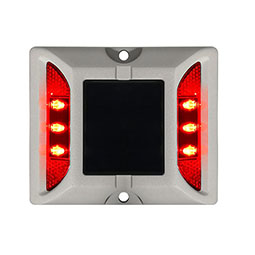
At night, dim lighting in parking lots makes it extremely easy for drivers to misjudge the location of parking spaces, leading to misaligned parking, vehicle scrapes, and parking across lane lines. By evenly installing single-sided solar-powered road studs at the four corners or along the edges of parking spaces, the boundaries of each space can be precisely marked. This allows drivers to clearly identify the scope of a parking space from a distance, standardizes parking order, significantly reduces the incidence of parking accidents, and improves the overall organization of the parking lot.
Corners and T-junctions in parking lots contain blind spots, posing a high risk of mixed traffic between pedestrians and vehicles and making them high-incidence accident zones. Solar-powered road studs should be densely installed in these areas and configured to switch to a strobe warning mode. Through dynamic lighting, they remind drivers to slow down and yield, effectively eliminating hazards caused by blind spots and preventing vehicle collisions and accidental injuries to pedestrians.
Parking lot entrances and exits feature alternating bright and dim lighting conditions. Vehicles enter and exit at rapidly changing speeds, and visibility is temporarily obstructed, making these areas highly prone to accidents. Uniformly installing road studs along the boundaries of entrances and exits clearly marks the entry and exit zones, reminding drivers to slow down. This also distinguishes between on-site and off-site areas, standardizes vehicle traffic flow, and enhances safety at these points.
In large commercial parking lots, there is significant mixing of pedestrian and vehicular traffic, and pedestrian pathways are often difficult to distinguish, making it impossible to guarantee pedestrian safety. Installing red and yellow warning road studs on both sides of pedestrian pathways and along the edges of crosswalks can clearly highlight pedestrian zones, remind passing vehicles to yield proactively, demarcate areas for pedestrians and vehicles, achieve separation of pedestrian and vehicular traffic, and significantly enhance parking lot safety.
Parking lots are categorized into different operating conditions, such as standard passenger vehicle lots, logistics truck lots, and open-air/semi-covered lots. Selection cannot be generalized; it must be precisely matched based on site load capacity, environmental conditions, and construction requirements to avoid waste or performance deficiencies.
Regarding installation methods, surface-adhesive road studs are the preferred choice for renovating standard parking lots, as they require no grooving, are quick to install, and do not damage the pavement; For new heavy-duty truck parking lots, embedded road studs are recommended, as they offer greater compressive strength and more secure fixation. Regarding compressive strength, standard models are sufficient for passenger car parking lots, while logistics and heavy-duty freight parking lots must use cast aluminum heavy-duty road studs to withstand the impact of heavy vehicles.
Protection rating is a core metric for open-air parking lots. Since these lots are constantly exposed to rain, snow, and high-pressure water jet cleaning, IP68 fully sealed, waterproof road studs must be used to prevent water ingress and short-circuit failures. For lighting configuration, use constant-on mode for lanes and parking spaces, with white or yellow lights suited for guidance; use strobe mode at intersections and in blind spots, with red lights to warn of no-entry zones. For semi-enclosed parking lots with canopies, products featuring high-efficiency solar panels and long-lasting batteries should be prioritized to ensure continuous charging in low-light conditions and normal illumination during cloudy or rainy weather.
Reasonable spacing is key to ensuring effective illumination and warning effects. Standard installation guidelines are as follows: for main vehicle lanes, install road studs at intervals of 5–8 meters; for parking space boundaries, install at intervals of 2–3 meters or at fixed points at each corner; in high-risk areas such as corners, intersections, and entrances/exits, increase the density of installation by reducing the spacing to 2–4 meters to enhance warning effectiveness.
Step 1: Survey and mark installation points, avoiding areas with permanent shade. Mark installation locations according to the construction drawings to ensure a neat and symmetrical layout; Step 2: Clean the surface, thoroughly removing dust, grease, and grit from the installation area to keep the surface dry and clean, preventing the stickers from peeling off; Step 3: Secure the installation. Use epoxy adhesive or screws for fastening; screw fastening provides greater stability and is suitable for areas with high traffic volume; Step 4: Compact and Trim: After application, firmly press down on the road studs and remove any excess adhesive to prevent it from obstructing the solar panels or LEDs; Step 5: Curing and Curing: Close the area to traffic for 6–12 hours to allow the adhesive to fully cure; Finally, conduct a power-on test to verify that the road studs’ automatic day-night on/off function operates normally.
Poor installation results and high failure rates in most parking lot projects stem from misconceptions regarding installation and product selection. First, it is strictly prohibited to install solar road studs in fully enclosed underground garages with no natural light, as this will prevent charging and cause them to fail completely; second, standard passenger vehicle parking lots do not require heavy-duty cast aluminum road studs designed for high-speed, heavy-load applications—avoid wasting the budget by selecting models based on actual needs; Third, the spacing between studs should not be too wide, as excessive spacing can result in gaps in illumination and reduced guidance effectiveness; at the same time, installation on damp or oily surfaces is prohibited, as this can easily cause the studs to detach; finally, for parking lots with semi-shaded canopies, never select products with low battery life or low luminous efficiency to prevent premature shutdown at night and loss of warning effectiveness.
HOAN Traffic has specialized in road safety equipment for many years. Addressing the project requirements for lightweight, easy-to-install, and highly adaptable solutions in parking lots, we have developed a dedicated series of solar road studs that are perfectly suited for commercial, industrial park, and municipal parking lot renovation projects worldwide. Our HA-RS-D3 parking lot-specific road stud features a surface-mounted design that requires no road cutting, ensuring efficient installation and making it ideal for renovating all types of older parking facilities.
The entire product line comes standard with IP68 fully sealed waterproofing, making it impervious to rain immersion, high-pressure washing, and prolonged outdoor exposure, ensuring exceptional weather resistance. With a wide variety of styles available, the products support multi-mode switching between constant-on and strobe modes, with white, yellow, and red light options to meet the signage and warning needs of different parking lot areas. They also comply with CE and RoHS international certifications, support sample testing and bulk customization, and provide comprehensive technical guidance throughout the installation process, balancing ease of installation, operational stability, and cost-effectiveness for projects.
Maintenance of solar parking lot studs is simple and requires no complex upkeep. Simply wipe dust and debris from the solar panel surface periodically to ensure normal light absorption and charging. Additionally, conduct annual inspections to check for loose studs or damaged LEDs; with timely and simple maintenance, these studs can provide long-term, stable performance.
Overall, solar road studs represent the most cost-effective solution for enhancing nighttime safety in open-air and partially shaded parking lots. With their advantages of no wiring, low cost, easy installation, and high safety, they completely resolve the various pain points associated with traditional signage equipment. By selecting appropriate models based on parking lot conditions, following standard layout guidelines, and ensuring proper installation, you can significantly improve nighttime traffic safety in parking lots while reducing operational and maintenance costs. For detailed specifications, layout plans, and bulk purchase quotes for solar road studs designed specifically for parking lots, please visit the HOAN Traffic official website at haroadstud.com to request free samples and receive a one-on-one customized engineering solution.