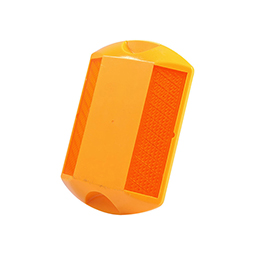
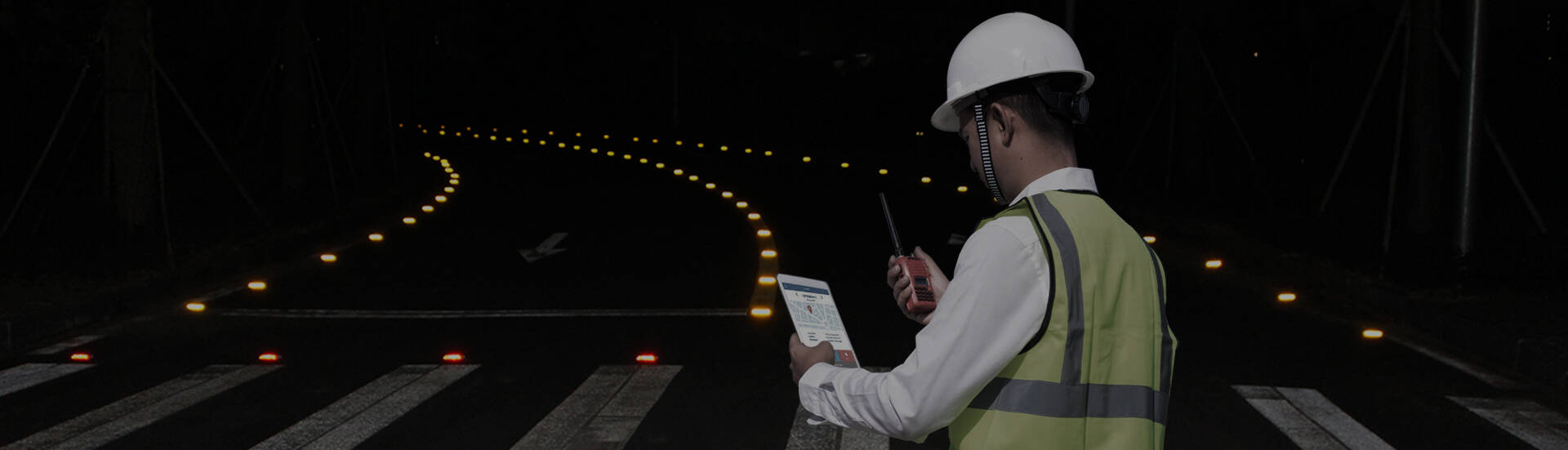
Crosswalks and zebra crossings, as key areas where pedestrians and vehicles intersect on urban roads, in school zones, and in residential neighborhoods, are high-risk locations for traffic accidents. Especially at night, in rainy or foggy conditions, or on unlit road sections, drivers’ visibility is obstructed, making it difficult to quickly identify pedestrians crossing the street. This greatly increases the risk of safety incidents such as failure to yield in a timely manner, crossing lane markings, and collisions between pedestrians and vehicles. Traditional roads rely on thermoplastic zebra crossings, standard reflective road studs, and fixed warning signs to provide traffic guidance. However, over time, these methods commonly suffer from wear and fading, become ineffective in severe weather, offer limited warning distances, and entail high retrofitting costs—failing to meet modern urban pedestrian safety standards.
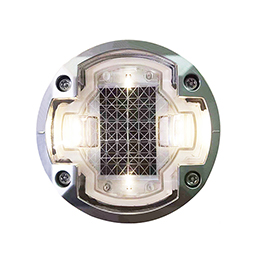
Pedestrian crossing studs, as core equipment for refined road safety upgrades, can clearly delineate crosswalk boundaries at close range and warn vehicles to slow down around the clock, significantly enhancing pedestrian safety. Among these, solar-powered pedestrian crossing studs—with their unique advantages of wireless installation, active illumination, soft anti-glare lighting, and ultra-low maintenance costs—have become the mainstream choice for municipal renovations, campus road upgrades, and community road network optimization overseas. HOAN Traffic specializes in the research and development of road safety markings and has created a full series of solar-powered road studs specifically designed for crosswalks, suitable for zebra crossing renovation projects in all scenarios. This article provides an in-depth analysis of the shortcomings of traditional crosswalk facilities, systematically outlines the core application advantages of pedestrian crossing studs, and offers precise selection solutions based on real-world implementation scenarios, providing professional guidance for engineering procurement and road infrastructure projects.
Currently, most older urban roads, rural roads, and ordinary residential communities still rely on traditional crosswalk warning facilities. These devices feature simple structures and outdated technology, presenting significant shortcomings in complex weather conditions and nighttime traffic scenarios, making it difficult to effectively ensure pedestrian safety when crossing the street.
Thermoplastic crosswalk markings are the most basic form of pedestrian crossing signage. Subjected to long-term vehicle traffic, rain erosion, and sun exposure, they are highly prone to fading, peeling, wear, and blurring. While they may be recognizable during daylight hours when visibility is good, their visibility drops significantly at night or in rainy or foggy conditions, making it impossible to clearly demarcate pedestrian areas and making it difficult for drivers to accurately judge the boundaries of the crosswalk. Additionally, these markings require repainting and renewal every year, incurring ongoing maintenance costs, and the construction work temporarily blocks traffic, disrupting normal road flow.
Conventional reflective road studs rely solely on passive reflection from vehicle headlights, making their warning effectiveness heavily dependent on external light sources. On unlit suburban roads or during heavy fog and torrential rain, their reflective effect is virtually nullified, with visibility reduced to less than 30 meters—leaving drivers insufficient time to slow down and yield. Furthermore, road mud, standing water, and dust easily cover the reflective layer, causing the markings to fail rapidly and requiring frequent inspections and replacements, which places a significant burden on operations and maintenance.
Traditional static warning signs are installed far from crosswalks, providing only broad, long-distance alerts. They cannot clearly define the boundaries of pedestrian crossings at close range, resulting in significant visual blind spots. Meanwhile, the few crosswalk markers powered by municipal electricity require road excavation, cable laying, and circuit modifications. Renovating older roads is difficult, time-consuming, and costly. Furthermore, underground wiring is prone to aging due to prolonged exposure to moisture, leading to short circuits and other safety hazards.
Compared to traditional pedestrian crossing warning facilities, HOAN Pedestrian Crossing Studs specifically address pain points across various scenarios. They represent a comprehensive upgrade across multiple dimensions—including visual warnings, scenario adaptability, construction costs, long-term maintenance, and safety protection—making them essential equipment for crosswalk safety upgrades with extremely high engineering application value.
.jpg)
Vehicle and pedestrian traffic, as well as environmental and climatic conditions, vary significantly across different crosswalks. Selecting the right product based on specific scenario requirements is essential to maximize the safety benefits of the equipment and ensure compliance with municipal engineering acceptance standards. HOAN has developed specialized pedestrian crossing studs for all scenarios; the standardized selection guidelines are as follows.
Crosswalks on Major Urban Arterial Roads: Characterized by heavy traffic, high vehicle speeds, and wide intersection spans, these locations demand long warning distances and high crush resistance. We recommend HOAN’s double-sided illuminated, embedded solar-powered road studs. With double-sided high-brightness illumination, long-distance visibility, and high resistance to crushing and rolling, they regulate traffic flow around the clock and ensure safe passage on major arterial roads.
Pedestrian crossings at school entrances and exits: With high concentrations of students and pedestrians, and a need to eliminate light pollution, HOAN’s soft-light, ultra-thin solar pedestrian studs are the optimal choice. Their low profile prevents tripping hazards, and their soft, flashing light is non-glaring. Safe and eco-friendly, they align with campus-wide security upgrades to safeguard students crossing the street.
Crosswalks within Residential Areas: Designed for low light pollution, high cost-effectiveness, and long-term stability, these areas are best suited for economical round solar-powered crosswalk studs. Ideal for large-scale, bulk renovations in communities, they provide low-cost sidewalk illumination and safety upgrades to meet residents’ daily travel needs.
Suburban crosswalks without streetlights: With no municipal power supply, pitch-black nights, and significant safety hazards, choose integrated, self-powered solar pedestrian studs. No wiring and zero electricity costs; they illuminate crosswalks autonomously, filling the gap in nighttime safety along suburban roads.
Crosswalks in rainy coastal cities: With year-round rainfall and severe salt fog corrosion, we recommend IP68 fully sealed cast aluminum solar pedestrian studs. Waterproof, corrosion-resistant, rust-proof, and moisture-resistant, they withstand harsh weather conditions and maintain stable, long-lasting warning illumination.
The entire HOAN series of pedestrian crossing studs supports customization of light color, strobe modes, and dimensions. They hold CE and RoHS international certifications, come with complete engineering acceptance documentation and construction drawings, and support sample testing as well as full-container bulk exports, making them suitable for municipal road renovation projects both domestically and internationally.
When compared across four core dimensions—visibility, installation difficulty, operation and maintenance costs, and safety performance—pedestrian crossing studs comprehensively outperform traditional facilities. In terms of visibility, thermoplastic markings and standard reflective road studs become largely ineffective in rain, fog, and darkness, whereas solar-powered road studs actively emit light, providing clear warnings around the clock. Regarding installation, grid-powered equipment requires cumbersome excavation and wiring, resulting in high renovation costs; solar-powered road studs require no wiring and can be installed simply by adhering them to the surface, ensuring efficient installation. In terms of operation and maintenance, traditional markings require annual repainting and frequent equipment replacement, while solar-powered road studs offer exceptional durability and are virtually maintenance-free; In terms of safety, static markings provide weak warnings, whereas luminous road studs dynamically delineate crosswalk areas, reducing pedestrian-vehicle accidents at their source and serving as the optimal solution for upgrading crosswalk safety.
To ensure project effectiveness and a high acceptance rate, procurement and installation must be precisely tailored to the specific environment. In school zones and residential areas, prioritize soft-light, anti-glare models to eliminate light pollution; In rainy coastal cities, IP68 waterproof and corrosion-resistant cast aluminum models are essential; at intersections with heavy traffic on major urban thoroughfares, use double-sided luminous, high-compression-resistant embedded road studs; on foggy stretches, increase the installation density to create a continuous luminous warning strip. For overseas municipal projects, it is recommended to request samples in advance to conduct on-site testing of lighting effects, compression resistance, and waterproof performance, and to verify the full set of certification documents before bulk procurement to mitigate project implementation risks.
Pedestrian crossing studs are a core safety device designed to address poor nighttime visibility on crosswalks, weak warning signals in rain and fog, and high rates of pedestrian-vehicle accidents. With eight key advantages—clear demarcation, all-weather warning, wireless and easy installation, soft light and anti-glare features, ultra-low maintenance costs, and adaptability to all scenarios—they perfectly compensate for the numerous shortcomings of traditional thermoplastic markings, reflective studs, and grid-powered devices. Whether for urban road renovations, campus safety upgrades, community road network improvements, or infrastructure projects in suburban and coastal areas, HOAN solar-powered pedestrian crossing studs can effectively enhance pedestrian safety and reduce municipal maintenance costs, making them the preferred choice for the refined upgrading of modern smart transportation systems.
To obtain customized crosswalk installation plans, detailed product specifications, real-world road renovation case studies, and bulk purchase quotes, visit the official HOAN website at haroadstud.com. You can request free product samples, connect one-on-one with professional engineering consultants, and customize your own road safety lighting solutions.