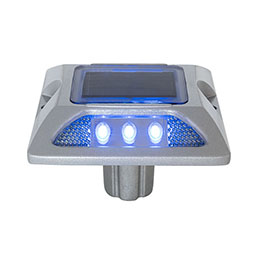
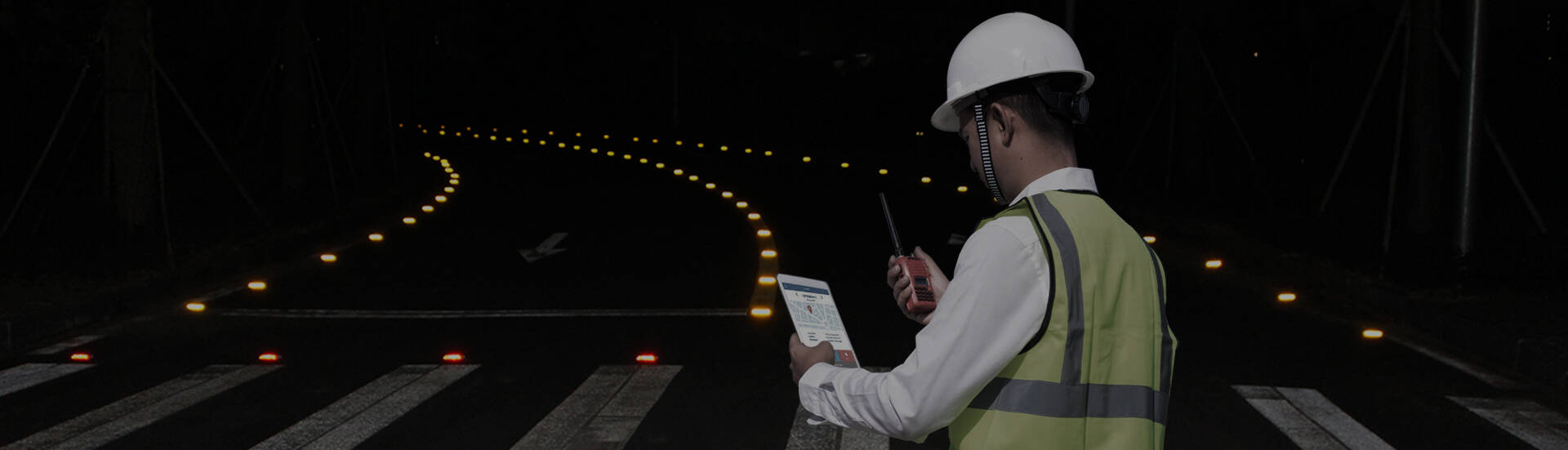
Insufficient visibility on roads at night or in rainy or foggy weather is a key factor contributing to lane departures, vehicle rollovers, pedestrian collisions, and rear-end collisions. Whether on unmarked rural roads, mountain roads with hairpin turns along cliffs, residential sidewalks, scenic area pedestrian paths, or highway ramps, traditional road markings generally suffer from issues such as large blind spots, failure in adverse weather conditions, and poor nighttime visibility. Conventional thermoplastic markings are prone to fading over time due to tire abrasion and rain erosion, while standard reflective road studs rely solely on passive reflection from vehicle headlights—rendering them virtually ineffective in dense fog, heavy rain, or pitch-black nights, and failing to provide effective road contour guidance for drivers and pedestrians.
In modern road safety upgrade projects, solar-powered road studs have emerged as the key solution to the problem of low road surface visibility. With their core features—self-illuminating, wiring-free, and all-weather adaptability—they thoroughly address the shortcomings of traditional road markings, comprehensively enhancing the visibility and safety of all types of roadways. HOAN Traffic specializes in the R&D of road safety and lighting equipment, offering a full range of highly adaptable solar-powered road studs that cover all scenarios, including heavy-duty highways, mountainous fog-prone areas, community walkways, and coastal roads. These products are the preferred choice for road safety upgrades and walkway lighting projects both domestically and internationally. This article provides an in-depth analysis of the safety shortcomings of traditional road markings and details the core principles, practical advantages, and scenario-based selection solutions for solar road studs in enhancing road visibility, offering professional guidance for engineering procurement and project implementation.
Currently, the vast majority of roads still rely on three traditional lighting solutions: thermoplastic markings, standard reflective road studs, and municipal streetlights. However, in practical application, these solutions all have significant limitations; they fail to ensure all-weather visibility, thereby creating numerous road safety hazards.
Thermoplastic road markings are the most basic form of road signage and are clearly visible only during daylight hours when there is sufficient light. Subjected to long-term vehicle traffic, rain erosion, and sun exposure, these markings quickly fade, become blurred, and peel off. At night, without artificial lighting, the markings completely lose their guiding function, fail to delineate lane boundaries, and can easily cause drivers to veer out of their lanes.
Conventional reflective road studs rely on vehicle headlights for passive reflection, making their visibility heavily dependent on external light sources. During fog, heavy rain, or sandstorms, light penetration is significantly reduced, shortening visibility to less than 50 meters. On high-risk sections such as mountain curves or steep slopes near cliffs, drivers may not have enough time to react and avoid danger, leading to a sharp increase in the risk of accidents.
The biggest shortcoming of municipal streetlight illumination solutions is the high cost of wiring and incomplete coverage. Remote villages, mountain trails, and scenic area paths lack access to the municipal power grid, making it impossible to install streetlights; furthermore, the large spacing between streetlights creates numerous blind spots on the road surface, making it impossible to precisely outline lane boundaries and difficult to address the issue of detailed road visibility. Overall, construction costs are high and operation and maintenance are cumbersome, making this approach unsuitable for niche, scattered roadways.
In summary, traditional road markings cannot meet the demands for all-weather, all-scenario, and high-visibility road safety. Solar road studs, however, with their self-illuminating, wiring-free, high-penetration, and fully automated operation, address the issue of road visibility blind spots at the source, making them essential equipment for road safety upgrades.
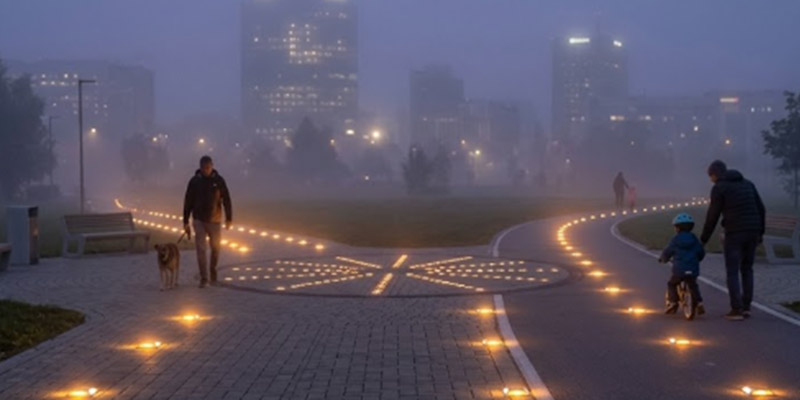
Unlike traditional passive road markings, HOAN solar road studs feature an active LED illumination design, paired with an intelligent light-sensing control system and a high-strength protective structure. They comprehensively enhance road safety across multiple dimensions—including visibility distance, weather adaptability, scenario adaptability, and long-term stability—making them suitable for all types of complex road conditions.
Traffic volume, pedestrian flow, climatic conditions, and visibility requirements vary greatly across different road surfaces. Targeted selection and deployment are essential to maximize the safety benefits of solar road studs and meet the acceptance standards for various engineering projects. Based on HOAN’s comprehensive product portfolio, the standardized selection solutions for major scenarios are as follows.
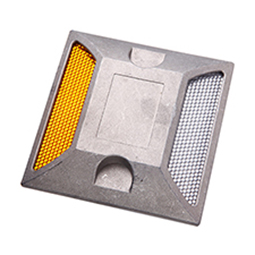
Mountainous Cliff-Edge and Winding Roads: These sections feature numerous curves, heavy fog, and steep gradients, placing extremely high demands on light penetration and stability. We recommend HOAN’s recessed heavy-duty solar road studs. With dual-sided illumination and a high-frequency strobe mode, they remain effective even in foggy or rainy weather, clearly outlining curve contours. Their high compressive strength and durability make them ideal for long-term use on high-risk mountainous road conditions.
Off-grid rural roads: Rural roads are scattered, lack municipal power supply, and have limited project budgets, making them ideal for large-scale, bulk installation. The HOAN Economy Series Round Solar Road Studs are the preferred choice—they require no wiring, incur zero electricity costs, and are easy to install. They can quickly form continuous illuminated markings, eliminating nighttime visibility blind spots on rural roads and enabling low-cost safety upgrades.
Residential Sidewalks: With high pedestrian traffic and a need for comfortable, glare-free lighting, choose HOAN’s ultra-thin, low-profile solar road studs. Their low profile prevents tripping and does not obstruct pedestrian flow. They emit soft, even light to enhance nighttime visibility on sidewalks while eliminating glare that disturbs residents, making them ideal for detailed safety upgrades in residential communities.
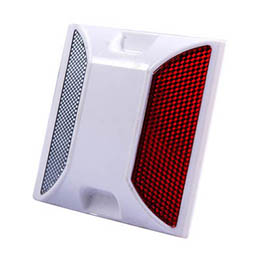
Highway Ramps and Long Downhill Lanes: With heavy traffic and high speeds on highways, rear-end collisions are highly likely. We recommend square, double-sided flashing solar road studs. They provide 360° visibility with no blind spots, deliver long-distance flashing warnings, clearly demarcate lane boundaries, and remind drivers to slow down and drive safely, thereby mitigating highway risks.
Scenic Area Slow-Paced Walking Trails: Scenic area paths must balance safety and aesthetics, making ultra-thin, integrated trail-specific road studs the ideal choice. Their slim, minimalist design preserves the natural landscape, while soft lighting suits the leisurely walking environment, effectively combining trail illumination, safety warnings, and scenic beauty.
Coastal Roads with High Salt Fog and Rain: Coastal road sections are constantly exposed to rain erosion and salt fog corrosion. IP68 fully sealed cast aluminum solar road studs are selected for these conditions. Corrosion- and rust-resistant, as well as waterproof and dustproof, they can withstand harsh weather conditions over the long term, maintain stable lighting performance, and are suitable for complex coastal environments.
The entire HOAN series of solar road studs supports customization of light color, flashing modes, and dimensions. They hold CE and RoHS international certifications, come with complete engineering acceptance documentation, and support both small-order samples and full-container bulk exports, making them suitable for various road engineering projects both domestically and internationally.
When compared across four core dimensions—visibility, installation costs, operational and maintenance complexity, and suitability for different scenarios—solar road studs demonstrate comprehensive advantages. In terms of visibility, traditional reflective markers become largely ineffective in rain, fog, and darkness, whereas solar road studs actively emit light and provide high-definition visibility around the clock. Regarding installation, streetlight wiring is costly and subject to location restrictions, while solar road studs require no wiring and can be installed simply by mounting the studs, making them suitable for all road surfaces without existing electrical infrastructure. In terms of operation and maintenance, thermoplastic markings require annual repainting, and reflective road studs are prone to damage, whereas solar road studs offer an exceptionally long battery life and require minimal maintenance; In terms of adaptability to different scenarios, traditional equipment cannot cover remote or rural roadways, whereas solar road studs are universally applicable across all scenarios, making them the optimal solution for enhancing all-weather road visibility and reducing accident rates.
To ensure effective road illumination and safety improvements, procurement and installation must be precisely tailored to the specific scenario. On mountain roads, in foggy areas, and on curved sections, the spacing between strobe-type road studs should be reduced to create a continuous warning light strip; In residential communities and scenic area walkways, prioritize soft-light, ultra-thin models to avoid glare issues; on coastal roads with heavy rainfall, be sure to select IP68-rated, corrosion-resistant cast aluminum models to prevent water ingress and device failure; for large-scale rural renovations, choose economical models to balance project budgets with safety outcomes. For overseas projects, it is recommended to request samples first, test visibility in rain and fog on-site, and then proceed with bulk procurement to mitigate project implementation risks.
Whether on high-risk mountain curves, rural roads without electricity, highway ramps, or community sidewalks and scenic area pedestrian paths, poor nighttime and rain/fog visibility on road surfaces remains a core challenge to road safety. Traditional road markings cannot provide all-weather protection. In contrast, HOAN solar road studs—with their multiple advantages, including active illumination, strong penetration and weather resistance, wireless and easy installation, ultra-low maintenance costs, and glare-free operation—comprehensively enhance visibility on all types of road surfaces, precisely eliminate visual blind spots, and reduce traffic accidents at their source. They are the premier choice for modern road safety upgrades and pedestrian path illumination projects.
To obtain scenario-based deployment plans, detailed product specifications, real-world road renovation case studies, and bulk purchase quotes, visit the HOAN official website at haroadstud.com. You can request free samples, connect one-on-one with professional engineering consultants, and customize a tailored road safety and lighting solution.