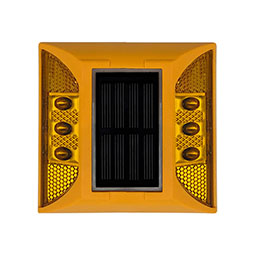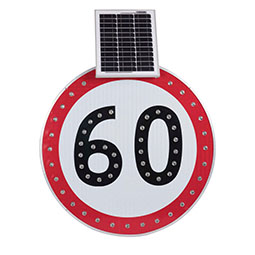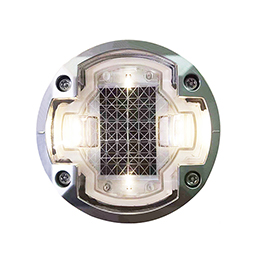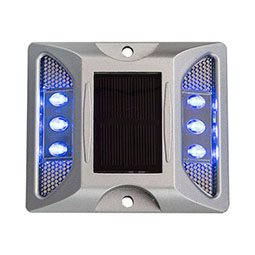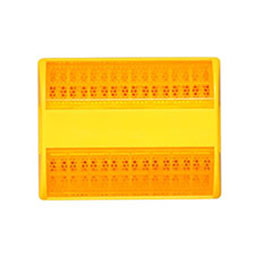
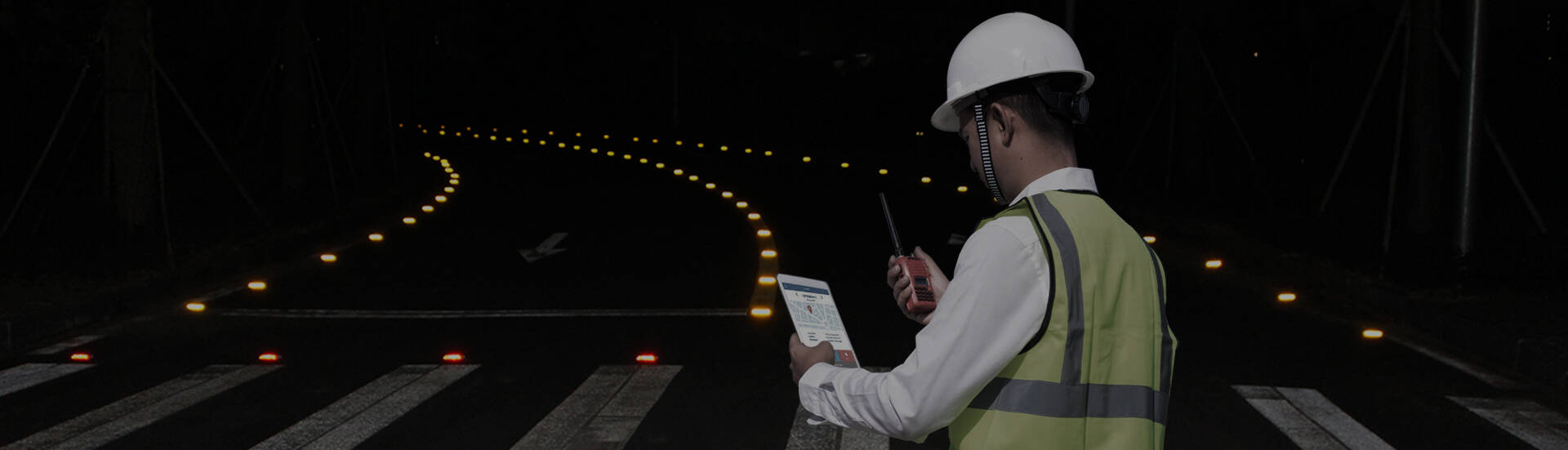
Thanks to their advantages—such as no wiring required, self-illuminating capabilities, and low energy consumption—solar road studs are widely used in various engineering projects, including highways, major urban thoroughfares, mountain roads, and parking lots. However, many construction contractors and road maintenance teams encounter difficult-to-resolve malfunctions after these projects are implemented: after a period of use—especially following the rainy season or prolonged rainfall—water enters the solar road studs, causing fogging and flickering lights; in severe cases, circuit board short circuits render the entire unit inoperable. In rainy coastal regions and areas with year-round humidity, the likelihood of such failures increases further, leading to widespread equipment damage and the failure of road markings. This results in replacement and rework, additional material and labor costs, and can even affect the overall project acceptance.
Many buyers wonder: If the product specifications clearly state a waterproof rating, why do water ingress failures still occur? Is it due to a quality defect in the product itself, or improper on-site installation? This article will address the common industry pain point of water ingress in solar road studs by outlining the various failure symptoms caused by water ingress, analyzing the three core causes of water ingress, teaching readers how to quickly identify the root cause of the problem, and providing practical solutions for product selection, on-site installation, and post-installation maintenance. HOAN Traffic specializes in developing truly IP68 fully sealed cast aluminum solar road studs, reducing the risk of water ingress at the product structural level and making them suitable for road projects in rainy and humid regions worldwide.
Once moisture penetrates the interior of the road stud, it gradually damages the internal components. Failure symptoms manifest progressively from mild to severe, causing damage to road safety infrastructure.
First, fogging and water droplets form inside the light housing. When rainwater or moisture seeps in, fog forms on the inner walls of the lens, significantly reducing the brightness of the road stud. This diminishes its ability to provide warning and guidance on the road at night. Water droplets and moisture are clearly visible to the naked eye inside the lens—this is the most easily identifiable sign in the early stages of water ingress.
Second, damage to the LED chips. Prolonged exposure to moisture erodes the LED lighting components, causing the light to flicker or alternate between bright and dim, with some chips failing entirely. This results in an incomplete lighting effect, preventing the road studs from fulfilling their intended warning function on high-risk road sections.
Third, short circuits and burnout of the circuit board. As a precision electronic component, the circuit board is highly susceptible to short circuits when exposed to water, directly causing the road studs to stop lighting up entirely and rendering the device completely inoperable. If this failure occurs on a large scale, it will directly result in the absence of nighttime guidance markers along road sections, creating potential road traffic safety hazards.
Fourth, corrosion and swelling of the built-in battery. Moisture intrusion corrodes the storage battery, causing rapid capacity degradation. This leads to a sharp decline in battery life during rainy weather, preventing the road studs from illuminating properly on rainy nights; in severe cases, battery corrosion and swelling further damage the internal structure of the road studs.
In addition, widespread water damage to the devices requires lane closures, the removal of old road studs, and the procurement and installation of new ones, resulting in high rework costs. In overseas road projects, if a large number of devices fail to provide adequate waterproofing, it can lead to a chain of problems such as returns, replacements, and project delays, causing both financial and reputational losses for the contractor.
Water ingress in solar road studs is not caused by a single factor. It can be broadly categorized into three main types: product design and quality defects, non-standard on-site installation practices, and long-term environmental aging and external damage. In many projects, multiple factors often combine to ultimately trigger water ingress failures.
A large number of low-cost solar road studs on the market have misrepresented waterproofing specifications. While product nameplates claim an IP68 rating, the actual hardware only meets IP65 or IP67 standards, making them unable to withstand prolonged immersion in standing water on the road surface.
Some manufacturers rely solely on simple adhesive sealing; however, after exposure to sun, rain, and temperature fluctuations, the adhesive ages and cracks, allowing moisture to seep into the enclosure through the gaps. The plastic housing material itself undergoes significant thermal expansion and contraction; repeated vehicle rolling causes the gaps in the housing to widen, compromising the seal. Furthermore, many products lack sealing gaskets around screw holes and cable entry points, creating inherent structural flaws. Rainwater flows directly into the device through these holes and gaps, and no matter how properly installed, water ingress failures will still occur over time.
Even high-quality IP68-rated solar road studs can experience water ingress if on-site installation procedures are not followed correctly. If the road surface is uneven, the road stud base may be left suspended. When heavy vehicles roll over it, the housing deforms under stress, causing the joints to crack and form gaps through which water seeps; if insufficient adhesive is applied around the base, the gaps are not fully sealed, allowing rainwater to penetrate along the seam between the base and the road surface. After installation, if traffic is allowed before the adhesive has fully cured, vehicle traffic can cause the road studs to shift, compromising the seal. Additionally, during drilling and installation, if standing water in the installation grooves is not properly drained, the continuous saturation of the road stud bases increases the likelihood of water ingress.
Roads are subject to high-wear outdoor conditions. Significant day-to-night temperature fluctuations cause the sealant to continuously expand and contract with heat and cold. Over the years, the sealing material gradually ages, and its sealing performance deteriorates. On highways, the repeated rolling and impact from heavy-duty trucks can cause microscopic cracks in the housing that are difficult to detect with the naked eye, allowing rainwater to slowly seep into the cavity. Corrosive substances in road de-icing agents and rainwater also accelerate the aging of sealing components, further increasing the risk of water ingress.
For engineering projects, distinguishing the causes of faults helps clarify responsibility and facilitates targeted corrective actions.
First, examine the failure pattern: If a large number of road studs in the same project simultaneously exhibit water ingress, fogging, or failure to illuminate, this constitutes a batch failure and is most likely due to defects in the product’s waterproofing structure or falsely labeled protection ratings. If damage is limited to scattered, isolated locations while the vast majority of devices operate normally, the issue is generally caused by improper on-site installation.
Second, inspect the hardware’s appearance: Carefully examine the casings of the faulty road studs to check for cracks in the housing, as well as any cracks or damage around screw holes or casing seams. You can also conduct a concentrated inspection after rainfall; immediately assess the condition of the road studs once the rain has stopped, observe locations where the lens is fogged or the light is off, and quickly pinpoint the problem.
It is important to note that even high-quality road studs with a genuine IP68 protection rating can suffer water ingress failures due to improper installation. Reliable road safety infrastructure is achieved through a combination of high-quality products and standardized installation practices.
To reduce water ingress failures at the source, a three-pronged approach must be taken simultaneously: procurement and product selection, on-site installation standards, and regular post-installation inspection and maintenance.
For road projects in rainy and humid regions, prioritize solar road studs with a fully sealed IP68 structure. Do not rely solely on parameter labels; verify whether the product uses a simple adhesive sealing process. Cast aluminum one-piece housings offer greater resistance to deformation compared to plastic housings, making them less prone to cracking under vehicle traffic and ensuring long-term seal integrity. During procurement, verify that screw holes and all other openings are equipped with sealing gaskets to block any potential water ingress points.
HOAN Traffic’s cast aluminum solar road studs utilize a fully encapsulated sealing process, with a complete set of sealing gaskets covering all openings. This ensures genuine IP68 water and dust resistance, enabling them to withstand prolonged submersion in standing water and making them suitable for various road projects in rainy and coastal areas with high humidity.
During the construction phase, ensure the installation surface is level and solid to prevent the base from being suspended in mid-air; fill all gaps around the base evenly with adhesive, leaving no gaps; strictly wait until the adhesive has fully cured before allowing vehicle traffic; for drill-hole installations, ensure proper drainage at the hole locations to prevent the base from being submerged in standing water for extended periods.
Conduct random inspections before and after the rainy season. If any road studs with cracked housings or fogged lens covers are discovered, replace them promptly to prevent continued moisture intrusion and further consequential damage.
Many procurement personnel are prone to falling into misconceptions about waterproofing when selecting products, which ultimately creates hidden risks for projects.
Misconception 1: An IP67 protection rating is sufficient for road use. IP67 only withstands brief immersion, whereas road environments often involve prolonged standing water on the surface, compounded by the impact of heavy-duty vehicles. Highway projects should prioritize products with an IP68 protection rating.
Misconception 2: As long as a product meets the corresponding IP rating, it will not let water in regardless of how it is installed. IP ratings describe the hardware performance of a product in its factory-new state; once the seal is compromised during installation, even equipment with the highest protection rating will allow water to enter.
Misconception 3: Plastic housings can also provide long-term, stable IP68 waterproofing. Plastic materials are prone to significant thermal expansion and contraction; when continuously subjected to the impact of vehicle rolling, the seal structure can easily fail, making them unsuitable for long-term use on heavy-duty highways.
Water ingress failures in solar road studs result from a combination of factors, including product structural defects, non-standard installation practices, and subsequent aging and wear caused by external forces. To avoid such issues, road projects in rainy and humid regions should prioritize the use of genuine IP68 fully sealed cast aluminum solar road studs. At the same time, strictly follow standardized installation procedures and conduct regular inspections and maintenance to reduce water ingress damage at the source, lower future rework and operational costs, and ensure the long-term, stable operation of road lighting markers.
HOAN Traffic’s fully sealed solar road studs are designed for rainy and high-humidity conditions and are suitable for a variety of scenarios, including highways, urban roads, and mountain roads. Visit our official website at haroadstud.com to view complete product specifications and project case studies, request bulk pricing quotes, and apply for sample testing.