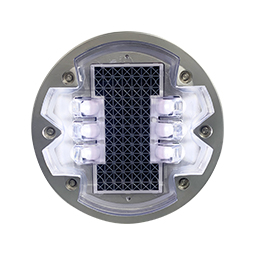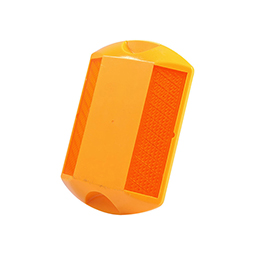
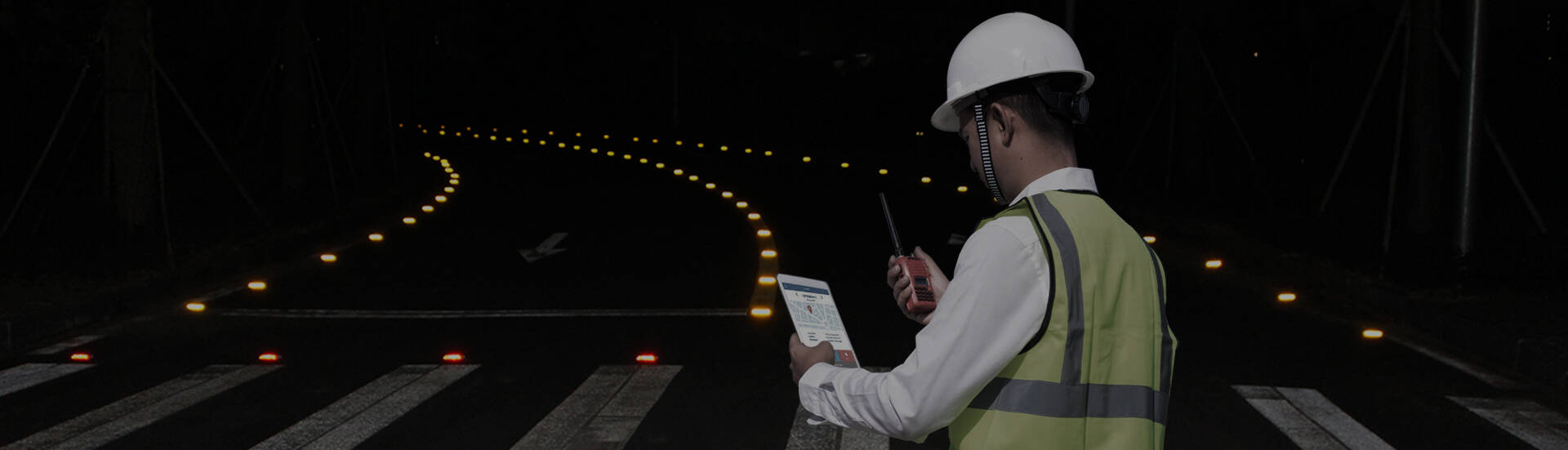
Solar-powered road studs are widely used in highway, urban road, rural road, and parking lot projects due to their advantages, such as no wiring required, active illumination, and low energy consumption. However, when evaluating solar solutions, many project procurers’ first reaction is often a question: Can solar road studs still function normally on overcast or rainy days when there is no sunlight? Clients in the UK, Northern Europe, Southeast Asia, and other coastal regions with high rainfall are particularly concerned that prolonged periods of overcast or rainy weather will prevent the studs from charging, causing them to fail to illuminate at night and creating safety hazards. As a result, some clients abandon solar solutions altogether, or lose trust in these products after purchasing low-quality items that malfunction during rainy weather.
In fact, whether solar road studs can operate reliably during overcast and rainy weather depends on four key performance indicators: battery capacity design, solar panel conversion efficiency, energy management capabilities, and waterproof reliability. This article will analyze the underlying principles behind the reliable operation of solar road studs in overcast and rainy weather, outline the core parameters that must be verified when selecting products for rainy regions, and provide verification methods based on actual sample testing. HOAN Traffic’s solar road studs utilize high-efficiency monocrystalline silicon solar panels, high-capacity lithium iron phosphate batteries, and an IP68 fully sealed structure to provide reliable photovoltaic road marking solutions for road projects in regions worldwide characterized by heavy rainfall, fog, and low sunlight.
The United Kingdom, Ireland, Northern Europe, Southeast Asia, and numerous coastal nations have a large number of roads requiring illuminated signage. These regions experience high proportions of rainy and cloudy weather and short daylight hours in winter, placing higher demands on solar equipment’s ability to charge under low-light conditions and maintain operation during rainy periods.
Some low-cost solar road studs on the market feature reduced battery capacity and low solar panel conversion efficiency. After three to five consecutive days of rain, they fail to illuminate, leading customers to mistakenly believe that “solar road studs are unsuitable for rainy regions.”
Whether solar road studs can function normally in rainy weather depends primarily on four key metrics: battery capacity design, solar panel efficiency, energy consumption management, and waterproof reliability—not on the single factor of “whether the sun is shining.”
Many people mistakenly believe that solar panels produce “zero output” on cloudy days. In reality, diffused light is still present on cloudy days, and high-efficiency monocrystalline silicon solar panels continue to charge even in low-light conditions—though the charging current is lower than on sunny days. The key lies in whether the charging circuit can function effectively under low-current conditions—high-quality products can still replenish a significant portion of their charge on cloudy days.
The battery systems in standard solar road studs are designed for “continuous rainy weather operation”: electricity accumulated on sunny days is stored in high-capacity batteries. Standard models can support normal illumination for 3 to 7 consecutive rainy nights, while high-end models can even last for more than 10 consecutive rainy nights. When purchasing, you should directly verify the core parameter of “number of consecutive rainy nights of operation” rather than focusing solely on the solar panel’s power rating.
High-efficiency LEDs significantly reduce power consumption per unit of brightness; intelligent light-sensing circuits automatically turn off or reduce output when ambient light is sufficient, conserving energy for nighttime use; some models automatically switch to a low-power constant-on mode at night, further extending battery life during rainy periods.
In environments with continuous rainfall or standing water on the road, only a fully sealed IP68 structure can protect the battery and circuit board from moisture damage. In fact, the true cause of many “malfunctions during rainy weather” is battery corrosion and circuit short-circuits resulting from failed waterproofing—not insufficient charging.
Battery capacity (mAh) directly determines endurance during rainy weather; lithium iron phosphate (LiFePO₄) batteries are preferred due to their wider operating temperature range and longer cycle life. Additionally, verify the actual number of days of endurance during continuous rainy weather—do not blindly trust marketing claims.
High-efficiency monocrystalline silicon solar panels are preferred, as they perform better in low-light charging conditions than polycrystalline silicon panels; the higher the conversion efficiency, the greater the charging yield on cloudy days.
Clarify the product’s rated number of consecutive rainy days (e.g., 3, 5, 7, or 10+ days), and, based on meteorological data for the project location, select a model with a runtime exceeding the longest consecutive rainy period in that area.
In rainy and coastal regions, products with an IP68 protection rating must be selected; avoid products falsely labeled as IP65 or IP67. Inspect the overall potting and sealing gasket processes to ensure there are no gaps allowing water infiltration at the cutout locations. The mandatory selection criteria for rainy regions are listed in the table below:
|
Selection Criteria |
Mandatory requirements for rainy areas |
Key points to check |
|
Battery capacity |
High-capacity lithium iron phosphate |
Confirmed data from continuous rainy weather. |
|
Solar panels |
High-efficiency monocrystalline silicon |
Low-light charging performance is better |
|
Rainy weather |
No less than the longest continuous |
Reserve a safety margin |
|
Protection level |
IP68Fully sealed structure |
Inspect the potting and sealing gasket process |
|
Certification Report |
CE/RoHSand waterproof test report |
Requires traceability of third-party testing reports |
Misconception 1: Solar panels do not charge at all on cloudy days. In fact, scattered light is present on cloudy days, and high-efficiency monocrystalline silicon panels continue to charge, albeit at a reduced rate.
Misconception 2: Solar road studs are not waterproof and cannot be used in rainy regions. In fact, fully sealed IP68 products are specifically designed for conditions involving prolonged water accumulation and continuous rainfall; the issue lies in the inadequate waterproof rating of some products.
Misconception 3: The larger the battery capacity, the better. A comprehensive design that balances battery quality, charging efficiency, and energy management is required; low-quality, high-capacity batteries will still degrade rapidly and fail.
Misconception 4: All solar road studs have the same battery life during cloudy or rainy weather. There are significant differences between models; it is essential to verify actual test parameters rather than relying on general marketing claims.
Solar road studs can function normally on cloudy and rainy days—provided the product possesses four core capabilities: efficient low-light charging, high-capacity battery storage, low-power consumption management, and IP68 waterproof reliability. When selecting products for projects in rainy regions, verify the continuous operation parameters under prolonged rainy conditions based on local climate data and validate them through actual sample testing, rather than being constrained by the preconceived notion that “solar power is entirely dependent on the weather.”
If you need to select reliable solar road studs for road projects in rainy or foggy regions, visit haroadstud.com to view detailed technical specifications, endurance data under overcast and rainy conditions, and project case studies. You can also request free samples for testing in real-world weather conditions and obtain quotes for bulk projects.