When selecting appropriate solutions for road safety upgrades, new infrastructure projects, and road maintenance, solar-powered road studs have become the primary warning devices, replacing traditional reflective markings and passive road studs. Thanks to their active illumination, wireless installation, zero energy consumption, and all-weather visibility, they are widely used in various settings, including highways, urban roads, rural roads, mining roads, and coastal roads. However, a common misconception exists in most project procurements: purchasing the same model of solar road studs for all road sections, while ignoring differences in traffic volume, load pressure, climate, sunlight conditions, and budgets across various road types.
Blindly selecting a one-size-fits-all solution can easily lead to problems such as solar road studs being crushed by heavy vehicles on expressways, equipment failing due to water ingress in rainy coastal areas, over-specification wasting budgets on rural roads, and insufficient warning brightness in foggy areas. These issues directly result in ineffective road warnings, project rework, failure to pass acceptance inspections, and skyrocketing long-term operation and maintenance costs. To balance engineering safety, compliance standards, and cost-effectiveness, products must be precisely matched to the specific road project scenario. This article will analyze the core selection parameters of solar road studs based on real-world conditions across various road projects, provide tailored solutions for each scenario, and offer strategies for combined deployment of solar and reflective road studs. It aims to provide highly practical selection guidelines for all types of road projects and, leveraging HOAN Traffic’s full range of road marking products, resolve selection challenges across various engineering projects.
Many purchasers mistakenly believe that solar road studs are standardized, generic products—that a single model can be used on all roads. This misconception is the core reason behind the frequent malfunctions experienced in the later stages of most road signage projects. Operating conditions vary greatly across different road projects, resulting in vastly different requirements for road studs in terms of compression resistance, waterproofing ratings, battery life, lighting modes, materials, and manufacturing processes.
In terms of load conditions, highways and mining area roads see heavy traffic from heavy-duty trucks, placing extremely high demands on the road stud casing’s compression and impact resistance; ordinary plastic road studs are highly prone to cracking and becoming inoperable. In contrast, rural roads and urban walkways are primarily used by small vehicles and do not require ultra-high compression resistance. In terms of climate and environment, coastal areas with salt fog and mountainous regions with heavy rain and fog place a heavy emphasis on the devices’ waterproofing, corrosion resistance, and battery life during overcast and rainy conditions, whereas dry inland areas prioritize conventional stability.
At the same time, lighting conditions, budget standards, and construction requirements vary significantly across different projects. Areas with frequent overcast and rainy weather require long-lasting energy storage configurations, while regions with ample sunlight can be adequately served by standard versions; long-distance rural roads require strict budget control, while high-risk highway sections prioritize safety performance. Furthermore, professional road engineering projects all adopt a combined installation model of “active solar-powered road studs + passive reflective road studs.” Using only solar-powered road studs along the entire route would result in significant budget waste, while relying solely on reflective road studs fails to meet warning requirements during severe weather; a scientifically balanced combination is the optimal engineering solution.
The application scenario forms the basis for selection, while core parameters are key to ensuring the long-term, stable operation of road studs. Project procurement must avoid the misconception of focusing solely on price or appearance; instead, it should prioritize verification of the five core parameters to precisely match project conditions and prevent equipment failures at the source.
The housing material directly determines the service life and suitability of the road studs. A one-piece die-cast aluminum housing features high hardness, strong compressive strength, impact resistance, and corrosion resistance. It can withstand repeated rolling by heavy-duty trucks and is suitable for harsh, heavy-load conditions such as highways and mining areas; PC engineering plastic housings are lightweight and cost-effective, making them suitable for light-load scenarios such as urban roads and park walkways; whereas low-quality ABS plastic housings have extremely poor pressure resistance and must never be used on main thoroughfares—they are only suitable for temporary, makeshift road surfaces.
Outdoor roads are constantly exposed to prolonged rain exposure, dust accumulation, and snow cover, making protection ratings a key indicator of durability. According to industry standards, IP68 is the highest fully sealed protection rating, capable of withstanding prolonged exposure to rain and dust intrusion, making it suitable for rainy, coastal, and low-lying areas prone to water accumulation; IP67 only withstands brief submersion and cannot handle prolonged water accumulation, making it suitable only for dry, inland roads; protection ratings of IP65 and below are not recommended for formal road construction projects, as they are highly susceptible to water ingress, short circuits, and damage.
Battery quality determines a road stud’s ability to operate in all weather conditions. High-quality, engineering-grade solar road studs are equipped with lithium iron phosphate (LiFePO₄) batteries, which are resistant to high and low temperatures, have a long cycle life, and provide stable energy storage, making them suitable for outdoor environments with large temperature fluctuations and harsh climates. When purchasing, consider the local weather conditions of the project site. In areas with frequent rain, fog, or overcast skies, a long-range battery configuration is essential to ensure continuous illumination during prolonged periods of rain or overcast weather without any gaps in lighting; in areas with ample sunlight, a standard-range configuration is sufficient to meet daily operational needs.
Different road types require different lighting modes. Double-sided luminous road studs are suitable for two-way roads, while single-sided luminous studs are suitable for one-way traffic sections; the constant-on mode is suitable for standard urban roads, providing soft light and consistent warning; fast and slow flashing, as well as synchronized strobe modes, are suitable for high-risk sections such as highway curves, ramps, and tunnel entrances and exits, enhancing visual warnings to remind drivers to slow down and avoid the risk of lane deviation.
Installation methods are primarily divided into two types: surface-mounted and embedded. Surface-mounted installation is convenient and requires no large-scale road excavation, making it suitable for retrofitting older roads and temporary road upgrade projects; embedded road studs lie flush with the road surface, are resistant to displacement, offer superior resistance to rolling, and provide excellent stability, making them commonly used in new highway construction and high-standard municipal road projects.
By addressing the operational challenges, safety requirements, and budget constraints of different road types, and combining them with HOAN Traffic’s full range of road marking products, we provide targeted recommendations for optimal models and deployment plans that balance safety, stability, and cost-effectiveness.
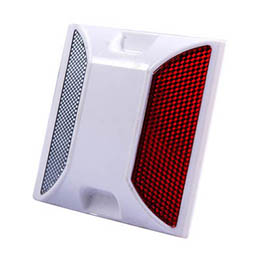
Highways feature high speeds and heavy traffic from heavy-duty trucks. Curves, ramps, fog-prone areas, and long downhill sections are high-risk accident zones, placing extremely high demands on road studs in terms of crush resistance, water resistance, and warning performance. The preferred models are the HOAN HA-RS-143N and HA-RS-150 cast aluminum heavy-duty solar road studs, which feature IP68 fully sealed protection, a highly crush-resistant body, and high-brightness illumination on both sides. A combined installation approach is adopted: solar road studs are densely installed on curves, ramps, and in fog-prone areas, with strobe mode activated to enhance visibility; on long, straight sections, HA-101 reflective road studs are used to ensure safety while effectively managing the project budget.
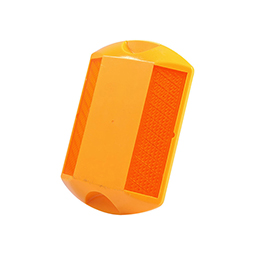
Urban roads feature mixed pedestrian and vehicular traffic with steady traffic flow. Most sections are equipped with basic streetlights, and the key requirements are supplementary lighting for warning purposes, glare prevention, and stability and durability. Since ultra-high compression resistance and heavy-duty configurations are unnecessary, the HOAN HA-RS-D3 adhesive solar road studs are the preferred choice. Available in single- or double-sided illumination options with a constant-on soft-light mode, they are suitable for urban intersections, crosswalks, and service roads. Standard lanes are equipped with economical reflective road studs, while high-risk intersections and traffic convergence points are fitted with solar road studs to eliminate nighttime lighting blind spots.
Rural roads lack municipal power supply, have limited maintenance conditions, and operate on tight project budgets. Traffic consists primarily of small vehicles, and mountainous sections are often foggy with numerous curves. The key selection criteria are long battery life, ease of installation, and low cost. The HOAN economical integrated solar road studs are recommended—they require no wiring, are simple to install, and maintain stable performance even during cloudy or rainy weather. Deployment Plan: Install solar road studs at hazardous locations such as sharp curves, intersections, and slopes. On ordinary straight sections, deploy HA-105 reflective road studs in bulk to maximize cost savings and meet rural infrastructure needs.
Mining area roads are subject to frequent heavy vehicle traffic, bumpy surfaces, and extreme dust, making equipment highly susceptible to damage from impacts and dust accumulation. It is essential to select heavy-duty solar road studs made of thickened cast aluminum, featuring ultra-high compressive strength, IP68 fully sealed dustproof and waterproof design, and resistance to gravel impact and vibration. These are suited for the high-intensity, high-wear conditions of mining areas, ensuring long-term stable operation and significantly reducing maintenance costs associated with frequent replacements.
Coastal areas experience year-round humidity and heavy rainfall, leading to severe salt fog corrosion. Ordinary road studs are prone to housing corrosion, seal failure, and water ingress. The HOAN corrosion-resistant IP68 solar road studs are designed for these conditions. Their cast aluminum bodies undergo special anti-salt fog and UV-resistant treatments, and they are paired with stainless steel fasteners. The fully sealed structure prevents the intrusion of moisture and salt fog, making them suitable for long-term operation in the harsh conditions of coastal roads.
Most project failures stem from mistakes in product selection. First, it is strictly prohibited to use low-cost plastic road studs on major expressways or mining area roads, as they are highly susceptible to being crushed by heavy vehicles, resulting in missing road markings. Second, in rainy coastal regions, products with an IP rating of 67 or lower must not be used, as they will allow water ingress and cause short circuits within a short period of use; Many projects blindly install solar road studs along the entire route without combining them with reflective road studs, resulting in significant budget waste. At the same time, neglecting local overcast and rainy weather conditions as well as sunlight exposure leads to insufficient battery life and the studs turning off during inclement weather. On major expressways, using simple adhesive-backed road studs without reinforcement measures causes them to shift or fall off over time due to the impact of heavy traffic. Avoiding these pitfalls is essential to ensuring project quality and reducing operation and maintenance costs.
Professional road engineering never relies on a single type of road stud; a scientifically combined layout offers the best cost-effectiveness and performance. At high-risk locations on expressways—such as curves, ramps, and fog-prone areas—prioritize the installation of active-emitting solar road studs, while pairing them with reflective road studs on straight sections; on rural roads, use solar road studs at sharp curves and intersections, and supplement signage with reflective road studs on ordinary sections; on urban roads, install solar road studs at crosswalks and traffic intersections, while using reflective road studs primarily on regular lanes. Before bulk procurement for any project, we recommend requesting samples for field testing to verify brightness, water resistance, and compression resistance, ensuring suitability for on-site conditions.
HOAN Traffic has specialized in road safety equipment for many years and offers a comprehensive product portfolio of solar-powered and reflective road studs, capable of fully meeting engineering needs across all scenarios—including highways, municipal roads, rural roads, mining areas, and coastal regions. Our entire line of heavy-duty road studs utilizes a one-piece cast aluminum manufacturing process and features top-tier IP68 protection, equipped with long-lasting energy storage batteries. Their weather resistance and stability far exceed those of standard industry products. All products hold a full suite of international compliance certifications, including CE and RoHS, making them suitable for global bidding projects and export customs clearance standards. We also support customization of lighting modes, light colors, and logos, and can provide one-on-one installation plans tailored to project conditions, free sample testing, reliable bulk delivery, and comprehensive technical after-sales support, making us a trusted partner for road infrastructure projects worldwide.
There is no one-size-fits-all solution for selecting solar road studs. The key lies in combining four core factors—road load, regional climate, sunlight conditions, and project budget—to match product specifications and installation patterns to specific needs. By moving away from a one-size-fits-all approach to selection and instead employing a scientific combination of active solar-powered road studs and passive reflective road studs, we can ensure driving safety in harsh weather and on high-risk road sections while effectively controlling project costs and mitigating the risk of future failures and rework.
Whether for new road construction, reconstruction, expansion, or maintenance and upgrade projects, HOAN Traffic can provide scenario-based, customized road marking solutions. To obtain precise selection plans, detailed product specifications, or bulk purchase quotes, please visit the HOAN Traffic official website at haroadstud.com to request free product samples and consult with professional engineering advisors.