In outdoor lighting projects such as municipal road upgrades, rural infrastructure development, industrial park renovations, and parking lot construction, solar street lights have gradually replaced traditional grid-connected street lights and become the mainstream choice for outdoor lighting projects worldwide, thanks to their core advantages of no wiring required, zero electricity costs, low-carbon energy efficiency, and low operation and maintenance costs. However, in actual project procurement, most project owners commonly fall into selection pitfalls: relying solely on power ratings and low prices when comparing options, while neglecting project-specific scenarios, local climate conditions, actual brightness levels, battery life, and compliance standards.
Incorrect selection can easily lead to a series of engineering issues, including insufficient nighttime illumination, lights turning off prematurely due to insufficient battery life on cloudy or rainy days, equipment corrosion and damage in high-temperature and salt-fog environments, failure to pass project acceptance inspections, and soaring maintenance costs due to frequent replacements later on. To create a highly stable, cost-effective, and long-term maintenance-free outdoor lighting project, a scientific and systematic approach to product selection is crucial. HOAN Traffic has specialized in traffic lighting and outdoor security for many years. Leveraging a mature, integrated portfolio of solar streetlight products, we cater to projects across all scenarios, including municipal areas, rural communities, industrial parks, parking lots, and coastal regions.
Solar street lights are not standardized, one-size-fits-all products. The appropriate models vary significantly depending on operating conditions, climate, and budget. The accuracy of product selection directly determines the user experience, compliance pass rate, and total life-cycle cost of the project, making it the core factor in the successful implementation of any project.
From a safety perspective, improper selection can directly lead to lighting hazards. If the luminaire’s brightness falls short of standards or the illumination is uneven, it can create blind spots in nighttime road lighting, compromising the safety of vehicles and pedestrians. Insufficient battery capacity and poor endurance can result in streetlights turning off prematurely or experiencing outages during prolonged periods of rain, completely eliminating basic lighting functionality.
From a regulatory compliance perspective, international tenders and municipal standardization projects have explicit specifications regarding streetlight protection ratings, materials, certifications, and brightness parameters. Substandard, non-compliant products often feature falsified specifications and lack the required certifications, making them ineligible for road authority acceptance and customs clearance. This directly leads to project delays, rework, and rectification efforts, resulting in additional financial losses.
From a cost-control perspective, low-priced, substandard solar street lights may appear to have lower upfront procurement costs, but they suffer from issues such as rapid battery degradation, prone-to-corrosion housings, and fragile lighting fixtures. These require frequent repairs and replacements within just 1–2 years. When combined with labor costs for maintenance and operational support, as well as the costs of secondary construction work, the long-term total cost far exceeds that of high-quality, engineering-grade street lights. Scientific product selection ensures a one-time installation and years of stable operation, significantly reducing the operational and maintenance burden throughout the project’s entire lifecycle.
When selecting professional, engineering-grade solar street lights, one must move beyond a narrow focus on power-to-price ratios. Instead, a comprehensive evaluation based on five core dimensions—scenario suitability, climate suitability, actual performance, smart features, and budget compliance—ensures precise alignment with the project’s real needs and helps avoid various engineering risks.
Lighting requirements vary greatly across different engineering projects, making scenario suitability the primary criterion for selection. Municipal arterial roads, with heavy traffic and long operating hours, require streetlights that provide high-lumen, wide-range, and long-lasting stable illumination to ensure road safety; in remote rural areas without grid access, the core requirements are wireless installation, ease of setup, strong battery life during cloudy or rainy weather, and ultra-low O&M costs—all tailored to unmanned operations in remote regions; In parking lots and park walkways where pedestrians and vehicles mix, high-brightness lighting isn’t required around the clock; energy-efficient streetlights with motion sensors and smart dimming are suitable, balancing illumination with energy savings; in industrial parks and coastal areas with severe dust and salt fog corrosion, heavy-duty streetlights with high protection ratings, corrosion resistance, and aging resistance must be selected to withstand harsh outdoor environments.
Regional climate directly determines a streetlight’s operational endurance and service life. In arid and high-altitude regions with ample sunlight, standard streetlights can meet daily lighting needs; in areas with heavy rainfall, frequent fog, and prolonged overcast conditions, battery capacity and energy storage configurations must be significantly upgraded to ensure continuous illumination during extended periods of rain; in coastal areas with high salt fog, where corrosion is severe, die-cast aluminum corrosion-resistant housings and fully sealed structures must be used to prevent equipment corrosion and aging; In areas with significant temperature fluctuations, wide-temperature-range lithium-ion batteries must be installed to prevent power loss at low temperatures and battery swelling or failure at high temperatures.
Most low-cost streetlights on the market have inflated power and brightness ratings. When purchasing, do not rely solely on rated power; instead, focus on the actual parameters of core hardware. Prioritize checking the luminaire’s actual lumen output to assess the true illumination effect on the road surface; Verify the solar panel’s conversion efficiency to ensure rapid energy storage during the day; check the battery type and cycle life—the higher the number of charge cycles for a lithium-ion battery, the longer its service life; strictly ensure compliance with the IP65 waterproof and dustproof rating to ensure suitability for all-weather outdoor use and prevent failures caused by water ingress or dust accumulation.
Modern engineering-grade solar street lights are equipped with smart control systems, with different smart modes tailored to various scenarios. Light-controlled automatic on/off functionality suits the vast majority of road projects, automatically turning the lights on and off based on ambient brightness without manual intervention; motion-sensing dimming mode is suitable for parking lots and park walkways, operating in low-power standby mode when unoccupied and automatically switching to high brightness when people or vehicles pass by, significantly saving energy and reducing consumption; timer control mode allows for customizable lighting durations, catering to special lighting needs in industrial parks, scenic areas, and other locations to achieve intelligent and precise lighting.
For international exports and municipal bidding projects, a full suite of international certifications—including CE and RoHS—is mandatory to ensure smooth customs clearance and compliant project acceptance. At the same time, it is essential to balance the initial procurement budget with long-term operation and maintenance costs. For standard scenarios with limited budgets, standard all-in-one street lights can be selected; for high-risk, remote, or harsh operating conditions, prioritize upgrading to high-spec engineering models to reduce future rework and replacement costs.
Leveraging a comprehensive product portfolio, HOAN Traffic develops differentiated solar street light solutions tailored to various engineering scenarios, climatic conditions, and budget requirements, providing one-stop solutions for all types of outdoor lighting projects.
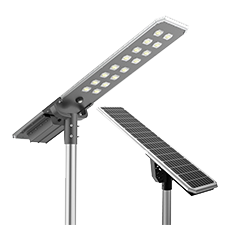
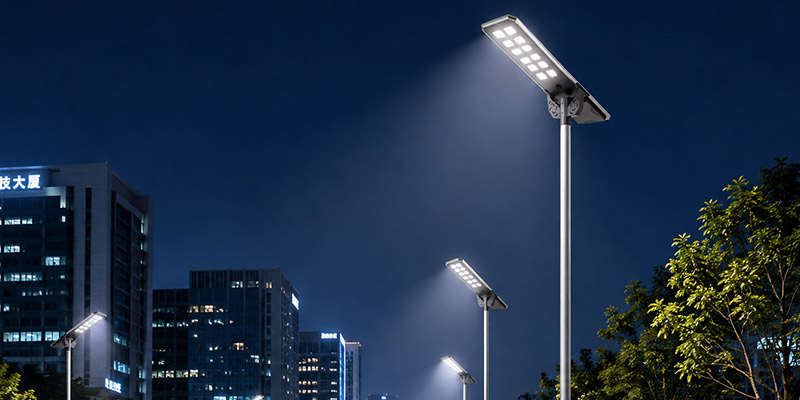
Municipal roads impose extremely high requirements for lighting brightness, uniformity, stability, and compliance. HOAN’s high-spec integrated solar street lights utilize high-efficiency photovoltaic panels and high-lumen LED light sources to provide wide coverage and uniform brightness. Equipped with a sturdy die-cast aluminum body and IP65 waterproof protection, they deliver stable lighting around the clock and fully comply with municipal engineering acceptance standards, making them suitable for standardized construction on urban arterial roads and suburban roads.
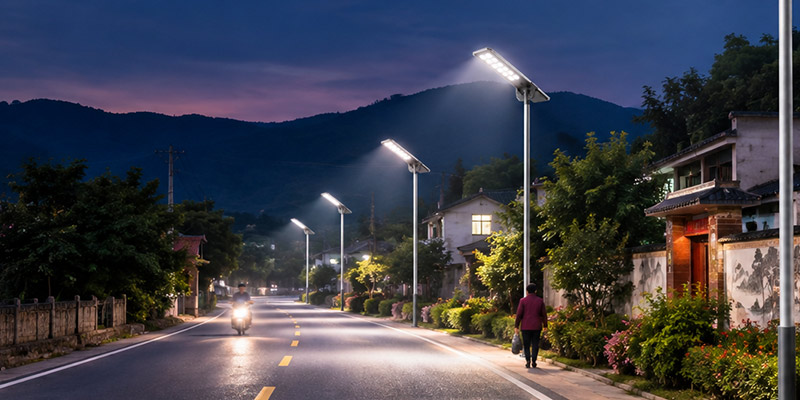
Rural roads lack access to the municipal power grid and have limited operational and maintenance resources; therefore, these projects prioritize wireless installation, ease of setup, long battery life, and low maintenance. HOAN’s solar street lights, specifically designed for rural areas, feature an integrated design that requires no complex construction and can be directly mounted on existing light poles or walls. With ample energy storage capacity, they remain reliable even during cloudy or rainy weather, ensuring long-term, stable illumination while significantly reducing construction and operational costs for rural lighting projects.
Lighting schedules for parking lots and industrial park walkways are flexible, and energy-saving requirements are paramount. HOAN’s smart sensor-equipped solar streetlights feature a motion-sensing system that turns lights on when people approach and dims them when people leave, while intelligently adjusting brightness. This ensures safe passage while minimizing energy consumption, making them ideal for large-scale deployment in extensive industrial parks and parking lots.
Designed to withstand coastal salt fog, industrial dust, and extreme high and low temperatures, HOAN’s heavy-duty, corrosion-resistant solar street lights feature a fully sealed, waterproof, and dustproof structure. The body undergoes special UV-resistant and anti-corrosion treatments, making it resistant to aging, salt fog, and vibration. These lights are capable of withstanding harsh outdoor conditions over the long term, eliminating issues such as equipment corrosion, damage, and failure.
Most cases of lighting failures, equipment scrapping, and failed acceptance inspections in later project stages stem from errors in procurement and product selection. Focusing solely on rated power while neglecting actual brightness is the most common issue, which can easily result in road lighting that fails to meet standards; ignoring regional climate differences—such as failing to equip high-capacity batteries in rainy areas or selecting non-corrosion-resistant housings in coastal regions—can lead to rapid equipment failure; Ignoring certification requirements can lead to obstacles in export clearance and municipal acceptance; blindly pursuing low prices by selecting substandard batteries and housings may save money in the short term but result in frequent rework in the long run, significantly driving up overall costs. Additionally, some procurement teams neglect to match installation spacing with pole height, leading to uneven road illumination and compromising the overall project outcome.
Before project implementation, prioritize surveying on-site light conditions, the number of cloudy and rainy days, and environmental conditions to determine battery life and protection specifications; match lumens to pole height and installation spacing to ensure uniform lighting without blind spots; uniformly select IP65 corrosion-resistant and waterproof models for coastal, high-humidity, and dusty areas; prioritize integrated street lights for off-grid, remote projects to simplify the construction process; For bulk overseas purchases, request samples in advance for field testing to verify certification qualifications and product performance, ensuring the project is implemented in compliance with regulations.
HOAN Traffic has years of experience in the R&D and engineering implementation of traffic lighting equipment. Our solar street light products cover all engineering scenarios and are perfectly suited for various projects, including municipal, rural, industrial parks, parking lots, and coastal areas. The entire product line features high-efficiency photovoltaic modules, long-lasting lithium batteries, and corrosion-resistant die-cast aluminum housings, with IP65 water and dust resistance as standard, ensuring stable and durable performance; They support multiple smart modes—including light control, motion sensing, and timers—to accommodate diverse lighting needs; they come with a full suite of international compliance certifications, supporting global tenders and cross-border exports. We also provide free samples, one-on-one engineering selection plans, bulk pricing, and comprehensive technical guidance to help ensure the efficient implementation and long-term, stable operation of all types of lighting projects.
Selecting solar street lights is not merely a matter of comparing specifications or purchasing at the lowest price; rather, it is a comprehensive engineering decision that takes into account the specific application conditions, regional climate, actual performance, smart features, and compliance budget. A scientifically sound selection plan can thoroughly resolve industry pain points such as insufficient lighting, inadequate battery life, equipment fragility, and failed project acceptance, thereby improving project quality, reducing costs, and increasing efficiency. Whether for rural infrastructure development, municipal upgrades, or industrial park renovations, selecting HOAN’s integrated solar street lights tailored to specific needs ensures the creation of stable, energy-efficient, and maintenance-free high-quality outdoor lighting projects.
To obtain project-specific selection plans, detailed product specifications, project case studies, and bulk purchase quotes, visit the official HOAN Traffic website at haroadstud.com. There, you can request free product samples, consult with professional engineering advisors, and customize solar lighting solutions suited to a wide range of scenarios.