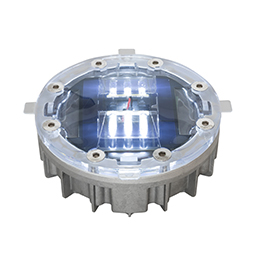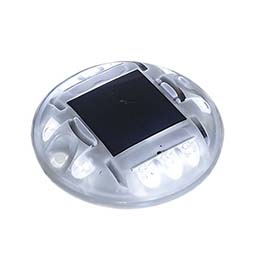
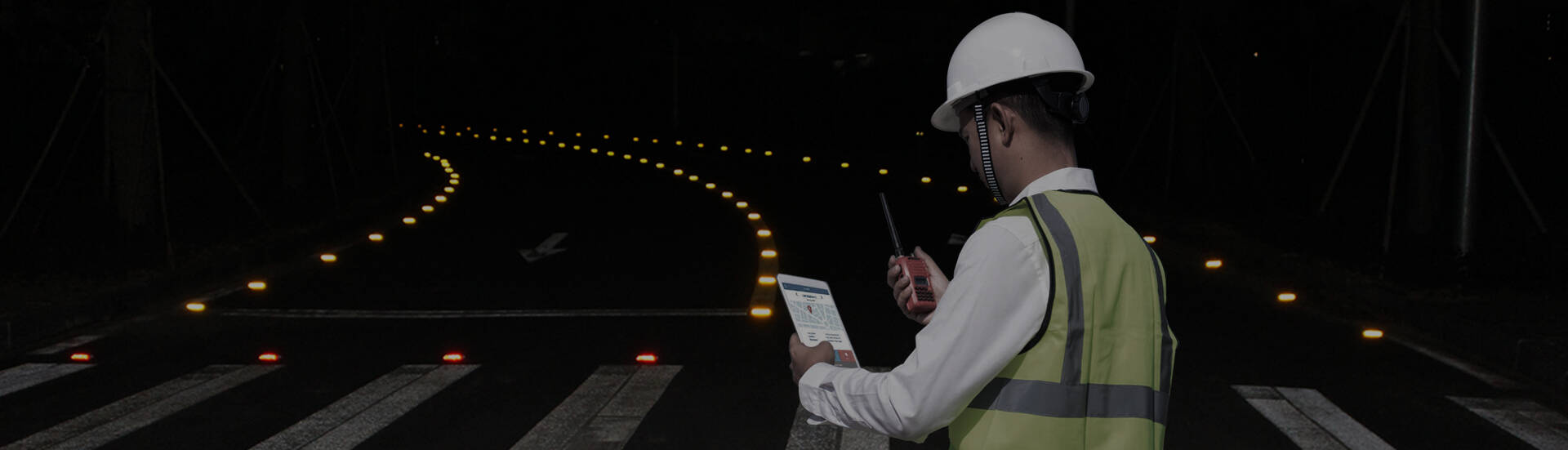
In bidding processes for overseas road projects, solar road studs are often categorized as “minor ancillary products.” They rank behind road panels and guardrails, and during bid evaluation, they’re pushed to the very last round—wherever the lowest bid is submitted, that’s the contract winner.
The problems only surface after the road opens to traffic. We’ve worked on numerous projects in the Middle East and Southeast Asia where the client discovered, just one month before final acceptance, that half of the newly installed road studs weren’t lighting up: cracked housings, yellowed reflective sheets, and water seeping from the encapsulation. Contractors scramble to restock, while owners rush to complete the project—and the money saved on the initial price difference ends up being paid back many times over in the form of road closures and rework.
This article does not include a technical specifications table; instead, it breaks down the expenses not listed on the bid sheet using the cost-calculation methods typical of engineering professionals.
Recycled ABS housings have wall thicknesses one or two millimeters thinner than specified; aluminum housings are made of thin stamped sheets that dent easily under pressure; reflective sheets turn yellow and become cloudy after just
two summers of exposure to the sun—differences become apparent within three months of being embedded in the road surface.
Photovoltaic panels use Grade B scrap, which barely charge in low-light conditions; batteries labeled at 4,000 mAh but measured at less than 2,500; circuit boards lack overcharge and over-discharge protection, leading to common issues like battery swelling and burned-out LEDs.
Instead of being fully encapsulated, the housing and cover are simply sealed with a ring of adhesive around the seam. While they pass factory testing, the adhesive layer cracks after being jostled during transport to the construction site and subjected to several cycles of thermal expansion and contraction from the road surface, allowing water and sand to seep in through the cracks. This is even more pronounced in coastal areas, where salt fog causes the circuitry to rust and break within two or three months.
The manufacturer cannot provide load, aging, or salt spray test reports corresponding to the model, or they use certificates from other companies. While this might slip through during bidding, it becomes a major flaw during customs inspections and supervisory reviews.
Three to six months after traffic begins, sporadic malfunctions occur, followed by widespread failures. Maintenance crews must close the road again, reroute traffic, and deploy personnel and machinery for shifts. Overseas labor costs are often several times the product’s price, and the expense of a single small-batch replacement frequently exceeds the original purchase price of that batch of road studs.
During pre-completion inspections by the supervising engineer, large sections may be found to be non-illuminated or failing to meet retroreflectivity standards, resulting in failure to pass acceptance. This delays the payment of the final installment and the release of the retention deposit. Late payment penalties are calculated on a daily basis, easily eroding profits on low-margin contract segments. A record of corrective actions remains on file locally, which can negatively impact qualification scores in future bidding rounds.
When lights fail to illuminate as intended during nighttime, rain, or fog, the probability of vehicles veering off course or misjudging lane boundaries increases. During accident investigations, defects in signage and lighting infrastructure are often listed as contributing factors, leading to safety liability, higher insurance premiums, and third-party claims. On roads where rescue operations are difficult—such as desert highways and mining area roads—the cost of a single incident far exceeds the budget for the entire section’s road studs.
Poor batch consistency and erratic failures—three may fail today, five next month—force companies to maintain large stockpiles of spare parts and assign dedicated personnel to inspect and log locations. These labor costs go unaccounted for during routine operations but add up significantly by year-end. With reliable products, failure rates stabilize, inspection cycles can be extended, and maintaining a 5–10% spare parts reserve is sufficient.
If delivered projects frequently encounter problems, clients will likely not hire you for their next project. The overseas market is small, and news of issues spreads faster than promotional messages.
Take a main thoroughfare in an industrial park as an example. For the same road section, spacing, and quantity, the client received two quotes: a low-cost, unbranded option and HOAN’s cast-aluminum heavy-duty model. The initial price difference was about 30 percent, giving the low-cost option the advantage at this stage.
Extend the timeframe to two or three years: assuming a 30% annual replacement rate for the low-cost option—meaning a full replacement every two years—the cumulative costs, including road closures, labor, machinery, and logistics for each replacement, will eventually exceed those of the HOAN option. Factor in the additional costs of rectifications required during acceptance inspections due to malfunctioning lights, and the gap becomes even more pronounced. The difference lies in these details: which option requires fewer replacements, causes fewer road closures, and passes acceptance inspections on the first try.
Quotations only reflect the purchase price; what truly matters is comparing the total risks associated with procurement, replacement, installation, and acceptance over a three- to five-year period. Have suppliers clearly specify the warranty period and procedures for handling defective parts—only then does price comparison become meaningful.
Solar panels, energy storage batteries, and sealing structures. These three factors determine whether the system can charge in low-light conditions, withstand extreme temperatures, and keep out water and sand. Specification sheets can be embellished, but a closer look reveals the truth.
Load, aging, and salt spray test results must correspond to the exact model of the product being purchased. Using certificates for other models will inevitably lead to problems during bidding and customs clearance.
Test samples locally for 30 to 60 days: subject them to actual road traffic on heavy-duty routes, expose them to salt fog in coastal areas, and monitor nighttime brightness and daytime charging recovery in high-temperature regions.
Check the warranty period, how defective parts are replaced, whether the supplier will assist with acceptance documentation, and if technical support is available. Small suppliers often ship products without providing follow-up support.
The housing and seals are made of high-strength aluminum alloy and engineering-grade ABS, molded as a single, hermetically sealed unit—not merely glued together. In operating conditions such as high desert temperatures, coastal salt fog, and heavy-duty industrial sites, water ingress and crushing are the most common causes of failure. By thoroughly addressing these two issues, the failure rate is significantly reduced.
Internally, we use Class A solar panels paired with stable lithium batteries, and the mainboard features overcharge and over-discharge protection—the difference is particularly noticeable in low-light and rainy regions.
Test documentation is comprehensive, with model-specific records for load testing, high/low-temperature testing, and salt spray testing—all of which are essential for municipal projects, highway bids, and customs clearance. Batch consistency is strictly controlled, making failures predictable. Sample support, technical solutions, bulk delivery, and warranty responses are all well-coordinated to minimize communication friction. More solutions can be found at haroadstud.com.
(1) How long will it last?
The standard cast aluminum model has a design life of around five years, with an actual lifespan of three to five years; lower-priced models often don’t last more than a year and a half. The difference lies in battery cycle life and the reliability of the seals.
(2) How can I tell if the seal is good?
Check whether it features one-piece potting and an independent sealing structure. Submerging a sample in water for 24 hours and then inspecting it for water ingress marks is more telling than any written description.
(3) What is an appropriate warranty period?
One to three years is common in the industry. For heavy-duty applications and high-temperature regions, negotiate longer warranties for batteries and LEDs, and include the replacement rate for defective parts in the contract.
(4) Which components are most prone to failure in high desert temperatures?
Batteries are the first to fail; once capacity degrades, they won’t stay lit through the entire night. next, the sealing compound cracks due to thermal expansion and contraction, allowing fine sand to enter and wear down the circuitry.
(5) What documentation is required for overseas bids?
Load and aging test reports matching the model, material specifications, and certification documents; some projects also require a track record of similar operating conditions. The completeness of this documentation directly affects the qualification review.
Solar road studs are not disposable, low-value consumables; they are part of road safety infrastructure. Procurement decisions should be based on total cost, not just the quoted price at first glance. Money saved through low prices will be recouped through replacements, rework, acceptance inspections, and liability for accidents; savings from stability and durability, however, translate to optimized maintenance schedules, project timelines, and client trust.
If you are planning a highway, industrial park, mining area, or cross-border road project and wish to calculate the cost of road studs based on their full life cycle, visit haroadstud.com to contact the HOAN team and obtain samples, test data, and installation plans.