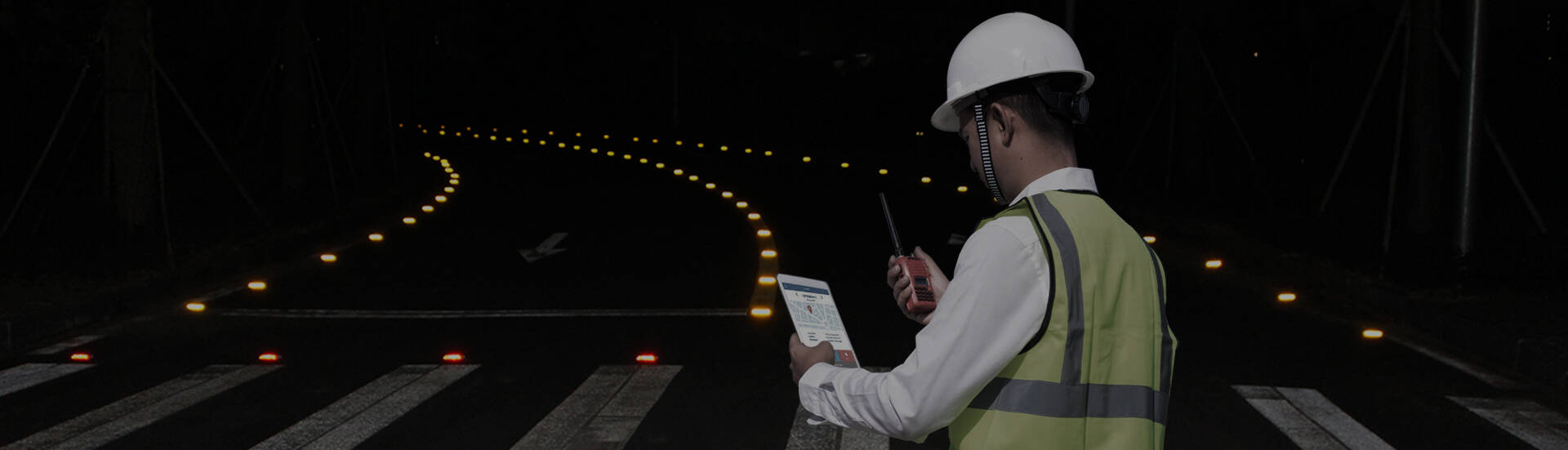
As the primary mode of transportation for long-distance freight and intercity travel, expressways are characterized by high speeds, heavy traffic, round-the-clock operation, and a high proportion of heavy-duty vehicles. Compared to urban roads, the highway network generally features long stretches without streetlights, winding roads with long downhill slopes, transitions between light and dark sections in tunnels, and frequent rain and fog. These conditions result in significant blind spots and poor lane visibility at night, making it highly prone to major traffic accidents such as lane departures, rear-end collisions, and vehicles crashing through guardrails. Traditional thermoplastic road markings are constantly subjected to the pressure of heavy-duty vehicles, rain erosion, and intense UV exposure, making them highly prone to fading and peeling, and unable to provide stable, long-term road guidance.
Reflective road studs, as a fundamental and core passive safety warning facility on expressways, continuously delineate lane contours, road edges, and curve alignments thanks to their high reflectivity, high compressive strength, low maintenance requirements, and wide adaptability. They compensate for the visibility shortcomings of traditional road markings and have become a standard product in expressway construction, maintenance, and upgrades worldwide. HOAN Traffic specializes in the field of highway traffic safety, developing a full range of highway-specific reflective road studs and upgraded solar-powered road studs designed to adapt to various highway conditions and climatic environments.
Speeds on expressways are generally higher than on urban roads. Drivers have a shorter reaction time and very little margin for error, placing extremely high demands on the clarity and continuity of road markings. Most rural and mountainous expressways lack continuous street lighting; at night, they rely solely on vehicle headlights, making lane boundaries difficult to discern from a distance. At the same time, rain, fog, standing water on rainy nights, and conditions with strong backlighting or glare can completely diminish the visual effectiveness of traditional thermoplastic markings, making drivers highly susceptible to visual fatigue and lane misjudgment. Furthermore, expressways experience dense traffic of heavy-duty vehicles, which cause long-term wear and tear on road markings through repeated rolling. The annual costs of repainting and maintaining conventional markings are exorbitant, making them unable to meet the long-term safety requirements for traffic flow.
Reflective road studs utilize the principle of high-refractive-index reflection to efficiently reflect vehicle headlights, forming a continuous and clear visual guidance strip at night and in low-light conditions, precisely delineating lane dividers, road edges, and curve contours. Compared to conventional thermoplastic markings, reflective road studs offer greater visibility at longer distances, superior wear resistance, and higher stability. They effectively correct drivers’ trajectories and reduce lane-departure accidents. At the same time, their ultra-low operational and maintenance costs, low overall cost, and ease of installation make them ideally suited for the long-distance, large-scale deployment requirements of expressways, making them the optimal foundational solution for lightweight safety upgrades on expressways.
Straight sections of expressways feature high traffic speeds and predictable driving trajectories, making them the most fundamental installation scenario. The continuous and uniform installation of reflective road studs clearly delineates lane dividers and the road edges on both sides, resolving the issue of blurred lane markings on unlit sections at night. This prevents vehicles from crossing lane lines or encroaching into adjacent lanes, standardizes traffic flow on expressways, and significantly reduces the likelihood of rear-end collisions involving vehicles traveling in the same direction. This solution is suitable for large-scale, standardized deployment on conventional plain-area expressways and intercity expressways.
Curves, long downhill sections, and interchange ramps are high-risk sections prone to highway accidents, where obstructed visibility, excessive speed, and insufficient route anticipation are the primary hazards. On such sections, the spacing between reflective road studs must be reduced. By utilizing high-brightness reflectivity to clearly outline road curves and gradient changes in advance, drivers are prompted to slow down early and change lanes smoothly. Particularly on continuous curves in mountainous expressways, reflective road studs can effectively eliminate blind spots and prevent major accidents such as vehicles veering off the lane or rolling over.
The contrast between light inside and outside tunnels is extreme, and there is a noticeable visual adaptation process at the entrances and exits. Drivers are unable to quickly adjust to these changes in visibility within a short period of time, making accidents highly likely. Reflective road studs can bridge the gap between road markings inside and outside the tunnel, provide continuous guidance along the road’s contour, mitigate the visual disruption caused by the change in lighting, ensure vehicles enter and exit the tunnel smoothly, and enhance traffic safety on these special sections.
At highway interchange divergence zones and toll stations, traffic flows intermingle, lane changes are frequent, and road conditions are complex; emergency lanes serve as lifelines and must maintain clearly defined boundaries at all times. Reflective road studs can precisely demarcate the boundaries of divergence lanes and emergency lanes, warn vehicles against illegally occupying emergency lanes, guide traffic to change lanes and diverge in an orderly manner, and regulate traffic flow at critical highway junctions.
Conventional purely reflective road studs are passive warning devices that rely entirely on the reflection of vehicle headlights to emit light. In extreme conditions such as dense fog, heavy rain, or the absence of vehicle headlights, their warning effectiveness is significantly reduced or even lost. At the same time, due to prolonged exposure to being run over by highway vehicles, erosion from gravel and sand, and intense UV radiation, the reflective sheeting is highly susceptible to wear, aging, and peeling, causing its reflectivity to diminish year by year. Ordinary plastic road studs have poor compression resistance, are prone to cracking, and offer weak water resistance; they cannot withstand the heavy loads and complex, all-weather conditions of highways, requiring frequent maintenance and replacement, which results in persistently high long-term operational and maintenance costs.
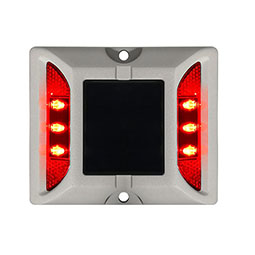
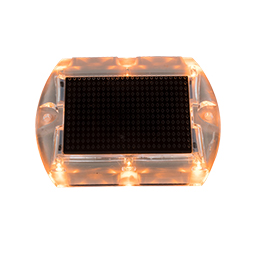
Basic, purely reflective road studs are inexpensive and suitable for large-scale, standardized installation on flat, straight sections of road. They meet basic warning requirements for conventional road segments and are suitable for standard highway maintenance projects with limited budgets. However, for high-risk sections such as mountain curves, long downhill slopes, fog-prone areas, and tunnel entrances, passive reflective devices have significant safety shortcomings. HOAN’s highway-specific solar road studs emit light actively, without relying on vehicle headlights. They provide consistently high-intensity warnings in rain, fog, darkness, and overcast conditions, with a visibility range far exceeding that of traditional reflective road studs. Additionally, they feature a heavy-duty cast aluminum body and IP68 fully sealed waterproof construction, offering excellent resistance to compression, abrasion, and weathering. They are perfectly suited for high-risk and complex highway sections, serving as an advanced upgrade to traditional reflective road studs. HOAN’s comprehensive product portfolio meets the differentiated project requirements of expressways, enabling “low-cost deployment on standard sections and enhanced upgrades on high-risk sections.”

Given the high frequency of heavy-duty trucks and buses on expressways, compressive strength is a core selection criterion. High-quality highway road studs are primarily made of cast aluminum alloy, with a compression resistance of over 40 metric tons. They are impact-resistant, deformation-resistant, and crush-resistant, ensuring they will not shatter or detach even under long-term heavy traffic. Compared to ordinary ABS plastic road studs, cast aluminum offers superior resistance to aging, corrosion, and extreme temperatures—both high and low—making it well-suited for the all-weather, high-load conditions of expressways and the preferred material for highway project acceptance.
Due to high driving speeds on expressways, drivers need to anticipate road conditions from a distance. Expressway-specific road studs are equipped with high-refractive-index microprism reflective lenses. Compared to ordinary glass microsphere reflectors, these offer higher reflectivity and a wider viewing angle, with a nighttime visibility distance of 150–300 meters, fully meeting the anticipation needs of expressway driving. Additionally, the lenses are wear- and scratch-resistant and do not peel off easily, maintaining high-brightness reflectivity over the long term and reducing the frequency of subsequent maintenance.
Exposed to the elements on highways, these road studs are constantly subjected to heavy rain, snow accumulation, intense sunlight, and salt fog corrosion, requiring high-level waterproofing and dustproofing performance. High-quality highway road studs feature a one-piece sealed structure that meets protection rating standards and can withstand rain immersion, snow compaction, and UV aging. They are also compatible with various highway pavement types, including asphalt and concrete, and support multiple installation methods—such as adhesive and embedded—making them suitable for both new and existing highway construction, maintenance, and renovation projects.
On straight sections of highway, standard spacing should be used for uniform placement to ensure continuity of road guidance; on high-risk sections such as curves, slopes, ramps, and tunnel entrances/exits, spacing should be reduced to enhance dynamic visual alerts and provide early warnings of road condition changes. Before installation, the road surface must be cleared of dust, oil stains, and standing water to ensure a secure bond, prevent detachment due to vehicle traffic, and guarantee that construction quality meets highway engineering standards.
Reflective road studs are easy to maintain and require minimal upkeep; they only need periodic cleaning of surface dust and grime to restore their reflectivity. Routine inspections should focus on identifying studs that are damaged, dislodged, or have aged and failed reflective elements, and faulty equipment should be replaced promptly. This ensures that highway road markings remain complete and clear at all times, mitigates road safety hazards caused by missing markings, and safeguards long-term safe highway traffic.
Drawing on years of experience in traffic safety engineering, HOAN Traffic has established a comprehensive road stud product system tailored to highway projects worldwide. This system includes economical reflective highway road studs, heavy-duty cast aluminum road studs, and solar-powered active-emitting road studs specifically designed for highways, enabling precise alignment with highway construction and maintenance needs across different road sections, budgets, and risk levels. All products strictly adhere to international highway engineering standards, offering high compressive strength, wear resistance, high brightness, weather resistance, and compliance with export regulations, making them suitable for various overseas highway bidding projects.
Compared to ordinary products on the market, HOAN highway road studs balance basic safety with long-term durability. They can meet the needs of large-scale, low-cost, standardized installation while also enabling safety upgrades on high-risk road sections. Additionally, we provide one-stop services including product selection, installation guidance, bulk customization, and after-sales technical support, helping highway contractors reduce costs, improve efficiency, and successfully implement projects.
Reflective road studs are an indispensable basic safety feature on highways. With their low cost, high adaptability, and minimal maintenance requirements, they effectively address the visibility shortcomings of traditional road markings, help regulate vehicle trajectories, and reduce the rate of nighttime accidents. They are widely used across all scenarios, including straight highway lanes, curved sections, ramps, tunnel entrances and exits, and emergency lanes. While traditional reflective road studs are suitable for standard road sections, high-risk fog-prone areas and mountainous sections still require an upgrade to active-lighting solar-powered road studs to ensure all-weather, all-road-condition safety protection.
Leveraging its comprehensive product portfolio, HOAN Traffic provides differentiated and customized road marking solutions for highway projects worldwide, balancing engineering quality, project budgets, and long-term maintenance requirements. For detailed specifications on highway road studs, engineering deployment plans, or bulk purchase quotes, please visit the HOAN official website at haroadstud.com to consult with professional engineering advisors free of charge and request product samples for field testing.