In engineering projects such as road safety upgrades, municipal infrastructure, rural road improvements, and parking lot planning, road studs—as a core form of road marking—directly determine nighttime traffic safety and the quality of project acceptance. Currently, the mainstream products on the market fall into two major categories: plastic reflective road studs and solar-powered active-emitting road studs. Many project purchasers and road general contractors often face a dilemma when selecting the right type: plastic road studs have a lower unit price but are prone to frequent damage and offer poor warning effectiveness; solar-powered road studs require a slightly higher initial investment, but many people struggle to determine whether they are suitable for the project’s conditions or whether they can save costs in the long run.
In reality, the difference between solar-powered road studs and plastic road studs goes far beyond mere price; it represents a comprehensive generational gap in terms of illumination principles, safety performance, service life, and applicable scenarios. Blindly selecting a product not only leads to skyrocketing maintenance costs later on but also results in ineffective road markings, a high incidence of traffic accidents, and project acceptance failures. HOAN Traffic has dedicated many years to the research and development of road safety markings and has developed a full range of solar-powered road stud products tailored to various road conditions. We will comprehensively compare solar-powered road studs and plastic road studs across six key dimensions—core operating principles, all-weather performance, durability, operation and maintenance costs, and suitable applications—to help engineering firms make precise selections, mitigate project risks, and meet the implementation needs of various road projects both domestically and internationally.
To accurately distinguish the suitable scenarios for these two types of road studs, we must first clarify their core operating principles, which are the root cause of the performance gap between them.
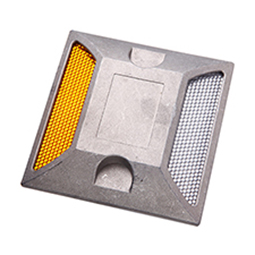
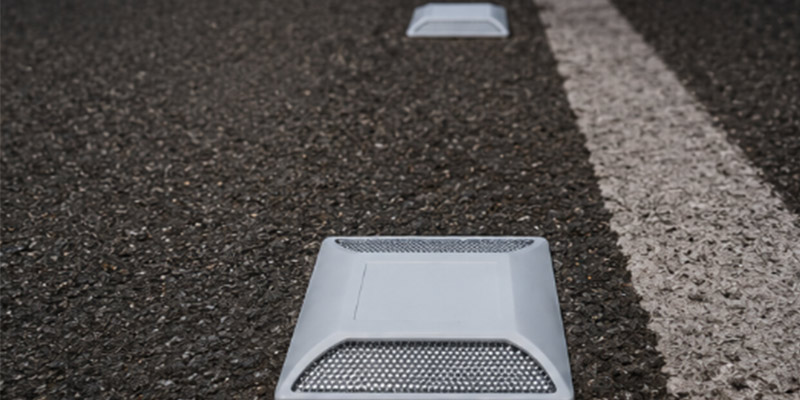
Conventional plastic road studs are passive reflective road markings. They are made entirely of ABS and PC plastics and contain no circuitry, light sources, or energy-storage structures. Their warning effect relies entirely on the direct reflection of vehicle headlights off the reflective film; the outline of the marker is only visible within the range of the headlights. In sections without streetlights, in pitch-dark environments late at night, or during rainy or foggy weather, the reflective effect diminishes significantly or even fails completely, making them suitable only for basic marking needs during daylight hours and in well-lit conditions.
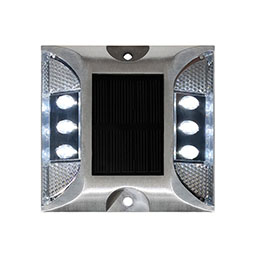
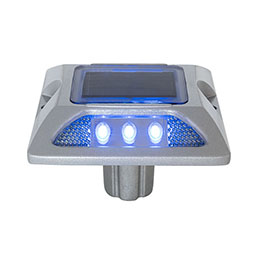
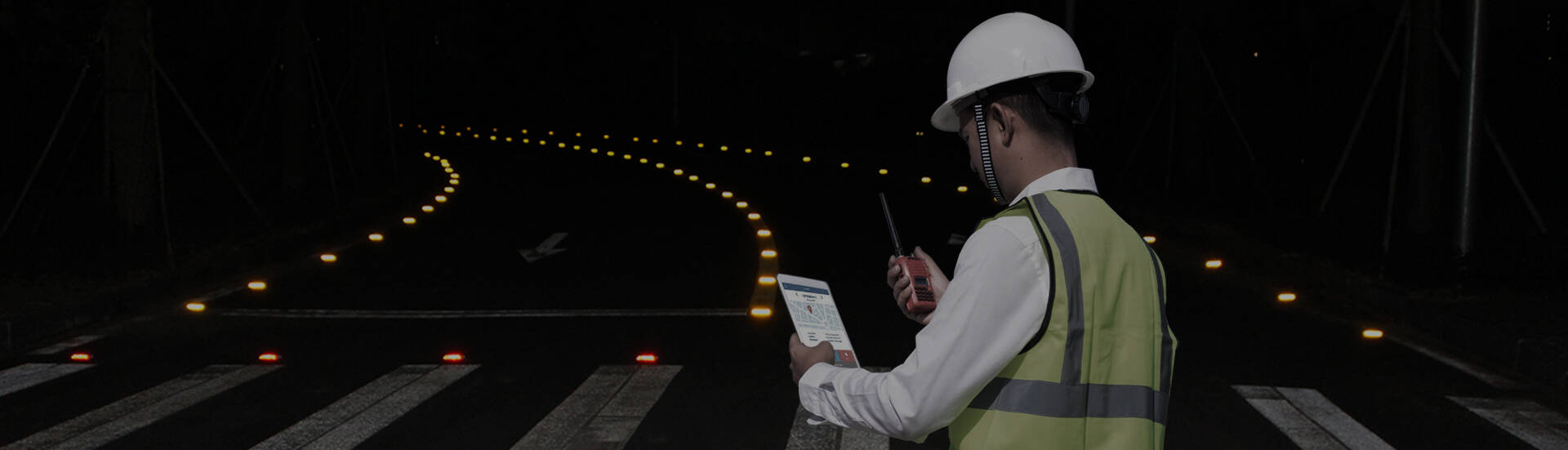
Solar-powered road studs are active, self-illuminating smart road markings, typified by HOAN’s cast aluminum solar road studs. They are equipped with solar photovoltaic panels, lithium-ion batteries for energy storage, high-brightness LED light sources, and an intelligent light-sensing system. During the day, they autonomously absorb and store solar energy; at night or in overcast, rainy, or low-light conditions, they automatically illuminate. They support both constant-on and high-frequency strobe modes, providing fully autonomous illumination without relying on vehicle headlights or municipal power supplies. They clearly delineate lane boundaries without requiring external light sources, fundamentally resolving the warning blind spots associated with traditional plastic road studs during nighttime and inclement weather.
Simply put, plastic road studs “passively wait to be illuminated,” while solar-powered road studs “actively illuminate the road.” This difference in principle directly determines their respective safety levels and engineering applicability.
Based on key considerations for engineering implementation, this section provides a comprehensive comparison of the actual performance of both products across six core dimensions—all-weather visibility, compressive strength and durability, water resistance and weather resistance, installation conditions, service life, and total lifecycle cost—to offer precise guidance for project selection.
Objectively speaking, plastic road studs are not entirely without value; they offer a certain level of cost-effectiveness under specific low-load, short-term conditions and are suitable for low-standard, temporary road projects.
Their core applications include: non-motorized vehicle lanes in residential parking lots, pedestrian and bicycle paths within campuses, temporary construction warning zones in urban areas, simple roads undergoing short-term renovations, and rural side roads with extremely low pedestrian and vehicle traffic. In these scenarios—where there is no heavy vehicle traffic, nighttime traffic is low, and project durations are short—plastic road studs can meet basic daytime marking requirements.
Key pitfalls to avoid: Plastic road studs must never be used in high-risk scenarios such as major expressways, mountain curves in foggy areas, heavy-duty freight roads, remote roads without streetlights, or crosswalks on school campuses. These road sections demand extremely high levels of warning effectiveness and durability; plastic road studs are highly prone to failure in such conditions, creating significant safety hazards and resulting in project acceptance failure.
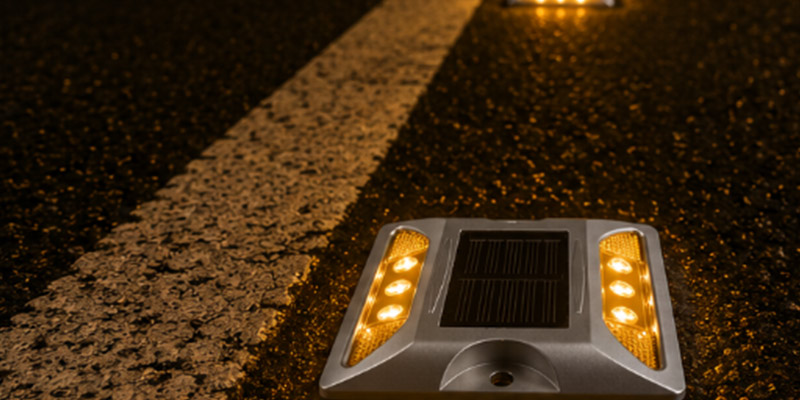
For road projects with high standards, permanent installation, and stringent safety requirements, solar road studs are the irreplaceable solution of choice. Based on specific application conditions, HOAN offers precise product selection to meet the demands of various complex road environments.
Highways, urban arterial roads, and heavy-duty freight routes: With heavy traffic, high speeds, and frequent heavy-load rolling, we recommend HOAN’s embedded cast aluminum solar road studs. Featuring ultra-high compressive strength, dual-sided illumination, and long-distance warning capabilities, they are ideally suited for high-frequency, heavy-load traffic.
Mountainous curves and foggy rural roads without electricity: With no lighting at night, frequent rain and fog, and extensive blind spots, choose double-sided strobe solar road studs. Their intense light penetrates the fog, continuously outlining the road’s path to prevent accidents on curves.
School crosswalks and pedestrian crossings: With high pedestrian traffic and a need for comfortable lighting, HOAN’s soft-light, ultra-thin solar road studs are ideal. Their low profile prevents tripping, eliminates glare, and gently alerts vehicles to slow down, ensuring pedestrian safety.
Coastal, rainy, and high-humidity roads: With severe salt fog corrosion and prolonged exposure to rainwater, IP68 fully sealed waterproof solar road studs are the optimal choice. They are corrosion- and rust-resistant with excellent weather resistance, making them suitable for long-term use in harsh climates.
Scenic trail paths and remote wilderness roads: In areas without municipal power supply and where maintenance is inconvenient, economical solar road studs eliminate the need for wiring and require minimal maintenance, enabling low-cost upgrades to nighttime road lighting.
The entire HOAN series of solar road studs supports customization of light color, strobe modes, and dimensions. They hold CE and RoHS international certifications, come with complete engineering documentation, and support sample testing and bulk export, making them suitable for various municipal, transportation, and infrastructure projects both domestically and internationally.
Based on the performance differences between the two product types, we have summarized five key engineering selection criteria to help purchasers make quick and accurate decisions. First, on roads with heavy truck traffic, cast aluminum solar road studs must be used to prevent damage caused by being run over; second, in areas with harsh weather conditions—such as heavy rain, fog, or coastal regions—prioritize active-emitting solar road studs to ensure all-weather warning effectiveness; third, on remote roads without streetlights or power grids, solar road studs must be used to address the shortcoming of plastic road studs failing at night; Fourth, for permanent municipal roads and key security sections, prioritize solar road studs to reduce long-term operation and maintenance costs; fifth, for temporary construction sites, low-traffic walkways, and short-term projects with extremely tight budgets, plastic road studs may be used to control costs.
Overall, due to their low cost, plastic road studs are only suitable for simple road scenarios with light traffic, temporary use, and low safety standards; they cannot meet the safety requirements of modern permanent roads. Solar-powered road studs, on the other hand, offer multiple advantages—including active illumination, all-weather visibility, heavy-load compression resistance, waterproofing and weather resistance, ultra-low O&M costs, and an exceptionally long service life—perfectly addressing the various shortcomings of plastic road studs. They are the core equipment for high-standard road upgrades across all scenarios, including highways, mountainous areas, rural areas, coastal regions, and campuses. For projects seeking long-term safety, low maintenance costs, and successful project acceptance, HOAN solar road studs are undoubtedly the optimal choice, offering both value for money and practicality.
To access more road stud selection guides, detailed product specifications, project case studies, and bulk purchase quotes, visit the official HOAN website at haroadstud.com. There, you can request free product samples, consult with professional engineering advisors one-on-one, and customize a tailored road safety solution.