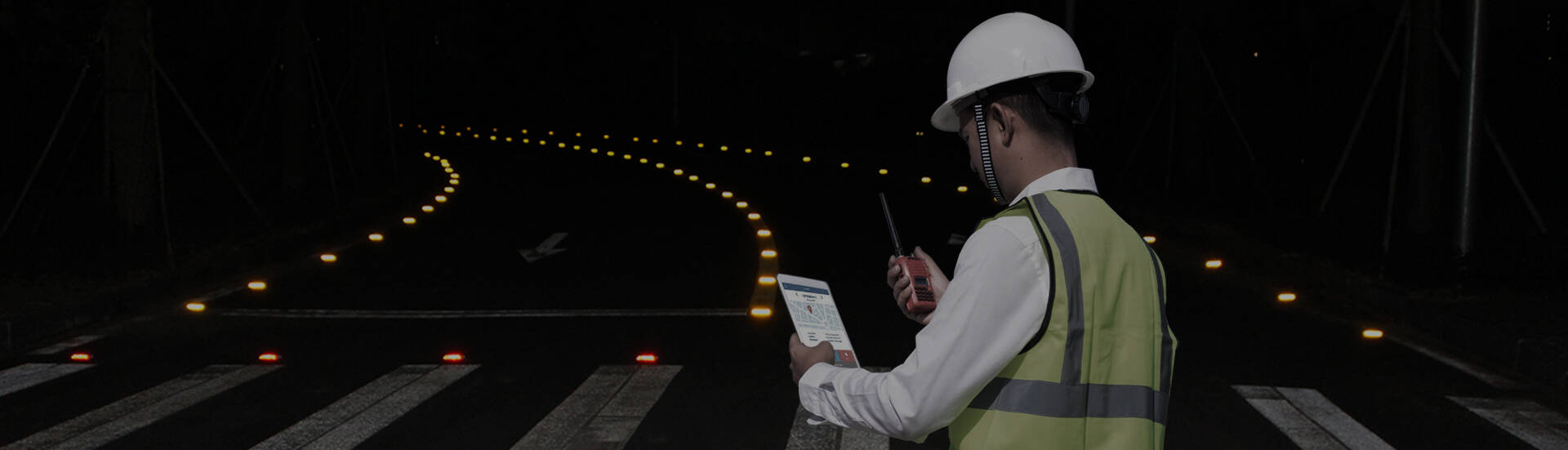
South Africa’s road transportation system has distinct regional characteristics; its vast rural road network, winding mountain passes, and mining transport routes scattered throughout the country form the core of the local transportation network. However, due to the dispersed road network, complex terrain, and unique climate, South African roads have long faced challenges such as poor nighttime visibility, inadequate supporting infrastructure, and significant operational and maintenance pressures. Most remote rural roads lack access to the municipal power grid, making it impossible to install traditional streetlights or grid-powered illuminated signs. Concentrated summer downpours and year-round fog in mountainous areas cause ordinary reflective road studs and thermoplastic markings to fail rapidly. Additionally, frequent passage of heavy-duty vehicles in mining areas easily leads to the damage and failure of conventional road markings. Traditional road marking solutions—which are costly, ineffective, and require cumbersome maintenance—have long failed to meet South Africa’s road safety upgrade needs.
In South African municipal road renovation, rural infrastructure, and mining road upgrade projects, solar road studs have emerged as the optimal road safety solution thanks to their core advantages: off-grid self-powering, all-weather high visibility, heavy-duty durability, and ultra-low maintenance. HOAN Traffic has deeply penetrated the African transportation infrastructure market. Tailored to South Africa’s unique road conditions—including high temperatures, torrential rains, frequent fog, heavy traffic, and the absence of a power grid—the company has developed a full range of customized solar road studs. These are widely used in rural roads, mountain curves, mining access roads, and coastal road renovation projects across South Africa.
Unlike standardized urban road networks, South Africa’s mainstream road environments face four major inherent challenges. Combined with the technical limitations of traditional road markings, these factors have led to persistently high rates of nighttime accidents, severely hindering local traffic safety upgrades.
First, South Africa has an extensive network of remote rural roads that are scattered and cover a vast area, with the vast majority of regions lacking municipal power grid coverage. Traditional grid-powered lighting equipment requires road excavation, cable laying, and the installation of power distribution systems. The construction workload is substantial and the overall cost is prohibitively high, making it completely unsuitable for upgrading large swaths of rural roads. As a result, a vast number of rural roads have long remained without nighttime lighting or active warning systems.
Second, South Africa’s climate is complex, with frequent seasonal downpours and dense mountain fog, placing extremely high demands on the weather resistance and visibility of road markings. Ordinary thermoplastic road markings are highly susceptible to fading, peeling, and blurring due to prolonged exposure to rain and sun; conventional reflective road studs rely on passive reflection from vehicle headlights, but rainwater pooling on the road surface or fog can directly obscure the reflective layer, drastically reducing visibility. As a result, drivers are unable to identify road contours in a timely manner, leading to frequent accidents on curves and sections near cliffs.
At the same time, South Africa is rich in mineral resources, and numerous mining transport routes see year-round traffic from heavy-duty freight trucks, which carry heavy loads and exert intense impact forces. Conventional plastic road studs and thin road markings on the market are easily crushed or dislodged by this traffic, resulting in an extremely short service life that requires frequent replacement, thereby significantly increasing road maintenance costs.
Finally, maintenance resources for remote roads in South Africa are limited, and maintenance personnel are widely dispersed, making it difficult to conduct frequent inspections and repairs. Traditional road markings wear out quickly and have high failure rates; the ongoing replacement of equipment and road repairs place enormous manpower and financial pressure on local highway authorities, keeping long-term maintenance budgets persistently high. Overall, traditional reflective markers, grid-powered lighting, and thermoplastic markings are all ill-suited for South Africa’s complex road conditions, creating an urgent need for specialized road safety equipment tailored to local conditions.

HOAN solar road studs are deeply adapted to the characteristics of South Africa’s road network and climate, specifically addressing core challenges such as the absence of a power grid, frequent heavy rains, fog, heavy traffic loads, and difficult maintenance. They are currently the product offering the best value, practicality, and stability for road safety upgrades in South Africa, with six irreplaceable localized advantages.
Road conditions, traffic volume, climate, and usage requirements vary significantly across different roads in South Africa. Only by precisely matching the appropriate solar road stud models can the value of the equipment be maximized and compliance with various engineering acceptance standards—including those for municipal, mining, and rural projects—be ensured. Leveraging HOAN’s comprehensive product line, we provide standardized selection solutions for South Africa’s five core road scenarios.
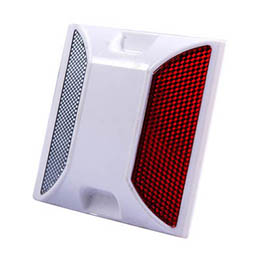
Rural Roads in South Africa: With a dispersed rural road network, no access to the power grid, and limited project budgets, these areas are ideal for large-scale, bulk installation. We recommend HOAN’s economical round solar road studs, which offer high cost-effectiveness, easy installation, and stable battery life. Requiring no wiring modifications, they enable rapid nighttime lighting upgrades for rural roads, addressing safety gaps at low cost.
Mountain Passes and Winding Roads: These road sections are often foggy, feature steep gradients, and have dense curves, making them high-accident areas that demand exceptional visibility and light penetration. We recommend HOAN double-sided strobe embedded solar road studs, which provide all-around illumination with no blind spots. Their strobe lights offer strong penetration, clearly outlining the curve’s path from a distance to alert drivers in advance to slow down and avoid hazards, thereby significantly reducing the accident rate on mountain roads.
Mining Area Freight Corridors: With heavy-duty trucks passing frequently and roads suffering severe wear and tear from rough terrain, the HOAN Heavy-Duty Cast Aluminum Embedded Solar Road Studs are the preferred choice. Featuring ultra-high compression resistance, impact resistance, and crush resistance, they are designed for the high-intensity traffic conditions of mining areas. They ensure long-term stable operation without the need for frequent replacement, meeting the long-term infrastructure needs of mining areas.

Suburban Communities and Crosswalks: With dense pedestrian traffic and concentrated residential areas, these environments require a balance between safety warnings and a comfortable experience. We recommend HOAN ultra-thin, soft-light solar road studs. Their low profile prevents pedestrians from tripping, while the directional soft-light design eliminates glare and light pollution. They effectively alert vehicles to slow down and yield without disturbing residents or pedestrians, making them ideal for refined community safety upgrades.
South African Coastal Roads: Coastal areas feature high humidity and severe salt fog corrosion, making equipment prone to rust and deterioration. We recommend IP68 corrosion-resistant cast aluminum solar road studs. Their proprietary anti-corrosion coating resists salt fog and moisture erosion, offering waterproofing, rust prevention, and exceptional weather resistance—ideal for the long-term, complex outdoor conditions of coastal roads.
The entire HOAN series of solar road studs is compatible with South African specifications. They support personalized customization of red, yellow, and white lights as well as strobe modes. Certified to international CE and RoHS standards, we provide a full set of import customs clearance and project acceptance documentation, and support both sample testing and full-container bulk exports, making them fully compatible with all types of road infrastructure projects in South Africa.
Considering local conditions in South Africa, solar road studs demonstrate comprehensive advantages across four key dimensions: power supply reliance, installation costs, climate adaptability, and long-term operation and maintenance. In terms of power supply, traditional grid-powered markings rely on the power grid and fail immediately during power outages, while reflective road studs depend on vehicle headlights. Solar road studs, however, utilize independent energy storage and are completely unaffected by external power sources; In terms of installation, wiring for grid-powered lighting is costly and unsuitable for remote, long stretches of road, whereas solar road studs feature an adhesive installation method that requires no civil engineering modifications, resulting in extremely low implementation costs; regarding climate, traditional devices quickly fail in rainy or foggy weather, while solar road studs actively emit light, providing stable warnings around the clock; In terms of operation and maintenance, traditional markers wear out quickly and require frequent replacement, whereas solar road studs are exceptionally durable and maintenance-free, making them perfectly suited to South Africa’s current maintenance conditions and the optimal choice for local road upgrades.
To ensure the effectiveness and long-term stability of projects in South Africa, procurement and deployment must be precisely tailored to local operating conditions. During the rainy season and in coastal areas, prioritize IP68 waterproof and corrosion-resistant models to prevent damage from rainwater and salt fog; on heavy-duty roads in mining areas, cast aluminum models with high compressive strength must be used to prevent damage caused by substandard plastic road studs; on foggy mountain roads, increase the installation density and activate the strobe mode to create a continuous warning light strip; for large-scale rural road renovations, prioritize economical models to strictly control project budgets. For imported products, request samples in advance to test performance under local high-temperature and rainy conditions and verify the full set of certification documents to mitigate project acceptance risks.
South African roads feature a large number of rural road networks without electricity, foggy mountain passes, and heavy-duty mining access routes. The complex climate and road conditions make it difficult for traditional reflective markers, grid-powered lighting equipment, and thermoplastic road markings to meet long-term safety requirements. HOAN solar road studs, with their core advantages of off-grid self-powering, high visibility in rain and fog, heavy-load compression resistance, weather resistance in extreme climates, and ultra-low O&M costs, precisely address the pain points of South African roads—such as poor nighttime visibility, high retrofitting costs, equipment susceptibility to damage, and heavy O&M burdens. They are fully compatible with various projects, including municipal retrofits, rural infrastructure development, and mining road upgrades in South Africa, effectively enhancing road safety standards while reducing long-term construction and maintenance costs.
To obtain road layout solutions tailored for South Africa, detailed product specifications, case studies of projects in Africa, and bulk purchase quotes, please visit the official HOAN website at haroadstud.com. There, you can request free product samples, connect one-on-one with professional engineering consultants, and customize road lighting solutions suited to South African road conditions.