The Application of Solar-Powered Road Studs on Urban Roads: A Smart City Road Safety Upgrade Solution As global smart city development continues to advance, urban road traffic safety, refined management, and low-carbon, energy-efficient upgrades have become core priorities for municipal infrastructure. Urban road networks are complex, encompassing diverse scenarios such as main thoroughfares, intersections, crosswalks, roundabouts, elevated ramps, and neighborhood side streets. They are characterized by dense mixed pedestrian-vehicle traffic, high vehicle speeds, frequent rain and fog, and challenging nighttime visibility. Traditional thermoplastic markings, standard reflective road studs, and grid-powered lighting systems have long suffered from significant shortcomings, including poor nighttime visibility, susceptibility to failure in rainy conditions, high maintenance costs, and cumbersome installation and retrofitting processes, making it difficult to meet the safety standards and smart infrastructure requirements of modern urban transportation.
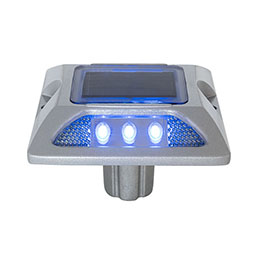
Solar-powered road studs, with their self-powered active illumination, wiring-free installation, all-weather durability, and ultra-low operating and maintenance costs, have become the core smart road marking equipment for urban road upgrades. HOAN Traffic has developed a full series of municipal-grade solar road studs specifically tailored to urban road conditions—featuring ultra-thin trip-resistant designs, heavy-duty load-bearing capacity, synchronized strobe lighting, and IP68 full waterproofing—to perfectly address the multifaceted needs of urban pedestrian traffic, heavy vehicle flow, aesthetic lighting, and low-carbon energy efficiency.
Unlike roads in sparsely populated suburban or mining areas, urban roads have higher requirements for safety, aesthetics, user experience, operational efficiency, and low-carbon energy conservation. Traditional road markings and lighting equipment can no longer meet the refined construction standards of smart cities, presenting five major challenges.
Urban crosswalks, bicycle lanes, and residential complex entrances experience dense pedestrian and vehicle traffic, with severe intermingling of pedestrians and vehicles during morning and evening rush hours. Ordinary reflective road studs and thermoplastic markings rely solely on the passive reflection of vehicle headlights and offer no active warning effect. Under dim street lighting, backlighting, or at night without vehicle headlights, pedestrians and non-motorized vehicles are difficult to spot in advance, making them highly susceptible to vehicle scrapes and pedestrian collisions.
Cities experience frequent rain and morning fog. On rainy days, standing water on the road surface covers thermoplastic markings and reflective film, causing traditional road markings to become instantly ineffective. At critical traffic junctions such as intersections, ramps, and roundabouts, drivers are unable to quickly identify lane boundaries, turning contours, and stop lines. This leads to frequent instances of cutting in, crossing lane lines, and illegal lane changes, making these areas high-risk zones for urban traffic accidents.
Modern smart city development emphasizes low-energy consumption, intelligent, and visual traffic management. Traditional, high-energy-consuming circuit-powered lights and passive static markings cannot provide dynamic warnings, intelligent coordination, or low-carbon energy efficiency, and thus do not align with the trend toward smart and green urban upgrades.
HOAN’s municipal-grade solar road studs have been deeply optimized for specific urban road conditions, covering all scenarios—including major urban thoroughfares, intersections, crosswalks, roundabouts, elevated ramps, and residential side streets—to precisely address safety shortcomings in different road sections and adapt to various urban renovation projects.
Urban arterial roads feature high speeds and heavy traffic, with frequent passage of large buses and freight vehicles, placing extremely high demands on the load-bearing capacity and stability of road studs. HOAN’s cast aluminum heavy-duty solar-powered road studs can withstand loads of up to 40 metric tons and feature IP68 fully sealed waterproofing, ensuring long-term resistance to heavy vehicle rolling, sun exposure, and rain. When installed in a continuous pattern, they form clear, illuminated lane markings that effectively guide vehicle trajectories, reducing nighttime lane-crossing, lane-changing, and rear-end collisions, thereby improving traffic order on main thoroughfares.
Intersections feature intersecting traffic flows and complex turns; in rainy weather, visibility is poor and blind spots are extensive, making them high-risk areas for minor collisions in urban areas. HOAN’s multi-color adjustable solar-powered road studs can be configured with white, yellow, or red lights based on lane function, clearly delineating stop lines, directional lanes, and intersection outlines. The active illumination has strong penetration, remaining clearly visible even on rainy nights or in foggy conditions, prompting vehicles to slow down and yield in advance, thereby eliminating the risk of cutting in.
Traditional road studs protrude too high, making it easy for pedestrians to trip over them or for electric bikes to scrape against them, rendering them unsuitable for crosswalks. HOAN’s ultra-thin, low-profile solar-powered road studs have an extremely low overall height, lying flush with the road surface to ensure unobstructed passage. Paired with soft, anti-glare lighting that glows gently at night, they effectively alert motorists to yield to pedestrians without causing light pollution, making them ideal for upgrading smart crosswalks in schools, commercial districts, and residential areas.
At urban roundabouts, traffic flows interweave in a circular pattern. At night, lane boundaries become blurred, making it easy for vehicles to drive against traffic, encroach on lanes, or cause scrapes and collisions. HOAN’s wireless synchronized strobe solar road studs enable synchronized flashing across the entire area, forming a continuous, orderly dynamic light strip that clearly outlines the roundabout’s traffic path. This dynamically guides traffic to flow in an orderly manner, significantly improving roundabout traffic efficiency and safety.
Urban elevated highways and on/off ramps are often dimly lit, feature significant elevation changes, and experience frequent traffic merging—conditions that make it extremely easy for drivers to make errors in judgment due to poor visibility. HOAN’s double-sided, high-brightness solar-powered road studs emit light in both directions with a wide angle and long visibility range. They provide early warnings of curves, lane changes, and on/off ramp locations, prompting drivers to slow down in advance, change lanes in accordance with traffic regulations, and avoid accidents caused by merging traffic on ramps.
In older urban areas, side streets and residential complex entrances typically suffer from dim streetlights and incomplete road markings, yet renovation budgets are limited. HOAN’s economical, lightweight solar road studs offer outstanding value for money. Requiring no wiring and featuring quick installation, they enable low-cost upgrades to road markings on side streets, addressing visibility issues caused by mixed pedestrian and vehicle traffic on narrow roads, and are well-suited for urban micro-renovation projects.
Compared to standard road studs and traditional municipal signage, HOAN’s urban-specific solar-powered road studs are specifically optimized to meet the core urban needs of safety, aesthetics, energy efficiency, and low maintenance costs, offering seven key differentiating advantages.
First, an ultra-thin, user-friendly design ensures zero safety hazards for pedestrians and vehicles. The low-profile, flush structure prevents pedestrians from tripping and vehicles from scraping against the studs, fully meeting the traffic standards for sidewalks and crosswalks, and is suitable for urban areas with dense pedestrian traffic.
Second, dual-material options provide full coverage and adapt to all road conditions and loads. The cast aluminum heavy-duty model is suitable for main roads and elevated highways with heavy traffic, while the lightweight PC model is suitable for side streets and sidewalks, balancing engineering quality with project budgets.
Third, IP68 fully sealed and weather-resistant, suitable for complex urban environments. It withstands immersion in heavy rainwater, corrosion from road cleaning agents, high temperatures, and freezing conditions, ensuring stable year-round operation without water ingress, short circuits, or damage.
Fourth, intelligent dimming eliminates light pollution. Equipped with a built-in light sensor for automatic on/off operation—sleeping during the day and illuminating at night—it supports multiple modes including constant-on, slow flashing, and synchronized strobe. The soft light is easy on the eyes and does not disturb residents’ nighttime rest.
Fifth, wiring-free and quick installation, saving renovation costs. No need to excavate road surfaces or lay cables; the adhesive-based installation is quick and does not disrupt urban traffic, significantly shortening construction time and reducing civil engineering costs.
Sixth, low-carbon and zero-energy consumption, suitable for smart city development. Powered entirely by solar energy, it incurs zero electricity costs and produces zero emissions. It can integrate with smart traffic systems for intelligent coordination and meets green city construction standards.
Seventh, they offer an ultra-long service life with low O&M costs. With a service life of 5–8 years, they require no frequent replacement or refurbishment—only simple cleaning and maintenance—significantly reducing annual municipal maintenance budgets.
Across four dimensions—visibility, user experience, installation costs, and full-lifecycle O&M—solar road studs comprehensively outperform traditional solutions. Traditional reflective markings provide only passive reflection and become completely ineffective in rainy or foggy conditions; solar road studs actively emit light, providing all-weather, long-distance warning visibility. Traditional high-profile road studs pose safety hazards to pedestrians, whereas HOAN’s ultra-thin models are ideally suited for urban pedestrian environments. Traditional grid-powered lighting installations are cumbersome and energy-intensive, whereas solar road studs require no wiring and incur zero electricity costs. Traditional markings require annual repainting, resulting in high hidden costs, while solar road studs offer long-term stability and significant cost-effectiveness over their entire lifecycle.
Precise product selection for municipal projects is essential to ensure compliance with acceptance standards and long-term stability. For main roads and elevated ramps, prioritize cast aluminum heavy-duty models and install them evenly to ensure safe passage for heavy vehicles; at intersections and crosswalks, select ultra-thin, soft-light, trip-resistant models to enhance pedestrian safety; For urban roundabouts, uniformly adopt synchronized strobe models to create a neat, dynamic warning light strip; on older side streets and community roads, select economical models to strictly control project budgets. For overseas urban projects, it is recommended to request samples in advance for field testing and verify light colors and strobe modes against local traffic regulations to ensure compliant implementation.
Many municipal renovation projects fail inspection or experience frequent malfunctions later on due to improper product selection. Do not use high-profile general-purpose road studs on crosswalks to prevent the risk of pedestrians tripping; strictly prohibit the use of low-compressive-strength plastic road studs on main roads to prevent damage from heavy vehicle traffic; prioritize products with an IP68 waterproof rating to avoid short circuits caused by urban flooding; For roundabouts, be sure to select synchronized strobe models to prevent chaotic lighting from compromising guidance effectiveness.
Amid the broader trend toward smart cities and refined urban transportation upgrades, traditional thermoplastic markings, reflective road studs, and grid-powered lighting facilities can no longer meet modern cities’ construction requirements for all-weather safety, low-carbon energy efficiency, and low maintenance costs. HOAN’s solar-powered road studs, designed specifically for urban environments, offer multiple advantages—including an ultra-thin safety design, heavy-load compression resistance, all-weather durability, wiring-free and low-cost installation, and intelligent, glare-free warning capabilities. They are fully compatible with all urban scenarios, including main thoroughfares, intersections, crosswalks, roundabouts, elevated roads, and residential side streets. By effectively reducing urban traffic accident rates and saving on municipal construction and maintenance costs, they represent the preferred solution for smart traffic upgrades in cities worldwide.
To obtain customized urban road deployment plans, detailed product specifications, municipal engineering case studies, and bulk purchase quotes, please visit the official HOAN website at haroadstud.com. There, you can request free product samples, consult with engineering advisors one-on-one, and customize professional urban road safety and lighting solutions.