South Africa’s road transportation system exhibits distinct regional characteristics, featuring not only major urban thoroughfares and a nationwide highway network that span the country, but also extensive remote rural roads, winding mountain roads in foggy mountainous areas, and high-traffic dedicated transport routes in mining regions. Due to the subtropical climate, a decentralized road network, limited infrastructure budgets, and constraints on maintenance personnel, South African roads have long suffered from prominent issues such as poor nighttime visibility, a high incidence of accidents during rainy and foggy weather, a lack of lighting on remote sections, damage to traditional signage, and high operation and maintenance costs.
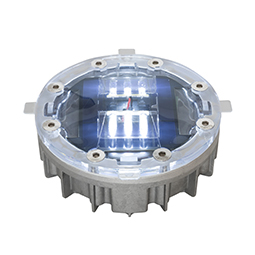
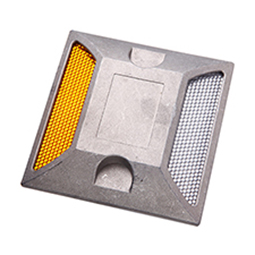
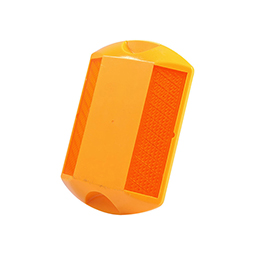
Traditional traffic facilities—such as thermoplastic road markings, standard plastic reflective road studs, and grid-connected streetlights—are ill-suited to South Africa’s complex road conditions and variable climate. They commonly suffer from shortcomings such as failure during rainy nights, fading under intense sunlight, high wiring costs, and unsuitability for long stretches of rural roads. Against this backdrop, solar-powered road studs—with their advantages of no wiring required, active illumination, all-weather durability, heavy-load resistance, and ultra-low maintenance—have become a core, essential product for upgrading road safety in South Africa. HOAN Traffic has specifically developed a series of solar-powered road studs tailored to South African conditions, providing an optimal solution for rural, mountainous, mining, and coastal road environments.
South Africa’s unique geographical environment and road network structure have created road safety challenges distinct from those in other countries. Traditional road signage equipment struggles to be deployed stably over the long term, with issues primarily concentrated in four key scenarios.
South Africa’s vast rural, suburban, and border roads are scattered and span extremely long distances, with most sections lacking coverage by the municipal power grid. Implementing traditional streetlights or grid-powered signage would require large-scale road excavation, cable laying, and the construction of power distribution systems. The lengthy construction periods and extremely high civil engineering costs are beyond the means of most grassroots projects, leaving a large number of rural roads in a long-term state of safety vulnerability—with no warnings or lighting at night.
South Africa experiences concentrated rainfall during the summer, and coastal and mountainous areas are characterized by year-round fog and high humidity. Ordinary reflective road studs rely on passive reflection from vehicle headlights, and their reflective effectiveness is virtually nullified during heavy rain, dense fog, or on waterlogged road surfaces; thermoplastic road markings, when constantly exposed to rain and UV radiation, are highly prone to peeling and fading, requiring repeated repainting each year and thus failing to provide stable road guidance.
As a major mineral-rich country, South Africa has a vast network of dedicated mining transport routes that see year-round traffic from heavy-duty mining trucks and heavily loaded freight vehicles, subjecting the road surface to extreme compaction loads. Conventional plastic road studs and thin, lightweight reflective road studs available on the market have poor compression resistance. Prolonged, high-frequency rolling causes them to crack, fall off, or deform easily, resulting in high failure rates and frequent replacements, which severely impact road safety in mining areas and compliance with project acceptance standards.
South Africa’s road network covers a vast area, and maintenance personnel are scattered, limiting the efficiency of road inspections and repairs. Traditional road markings are high-wear items; once they fail, fade, or become damaged, they require ongoing investments in labor, materials, and construction costs. The long-term accumulation of O&M expenses places a heavy burden on road administration departments and mining infrastructure teams.
Tailored to South Africa’s diverse road conditions and climatic characteristics, HOAN solar road studs are fully adaptable to all scenarios. They can be precisely deployed in five major settings—rural areas, mountainous regions, mining areas, arterial roads, and coastal roads—to specifically address various road safety hazards.
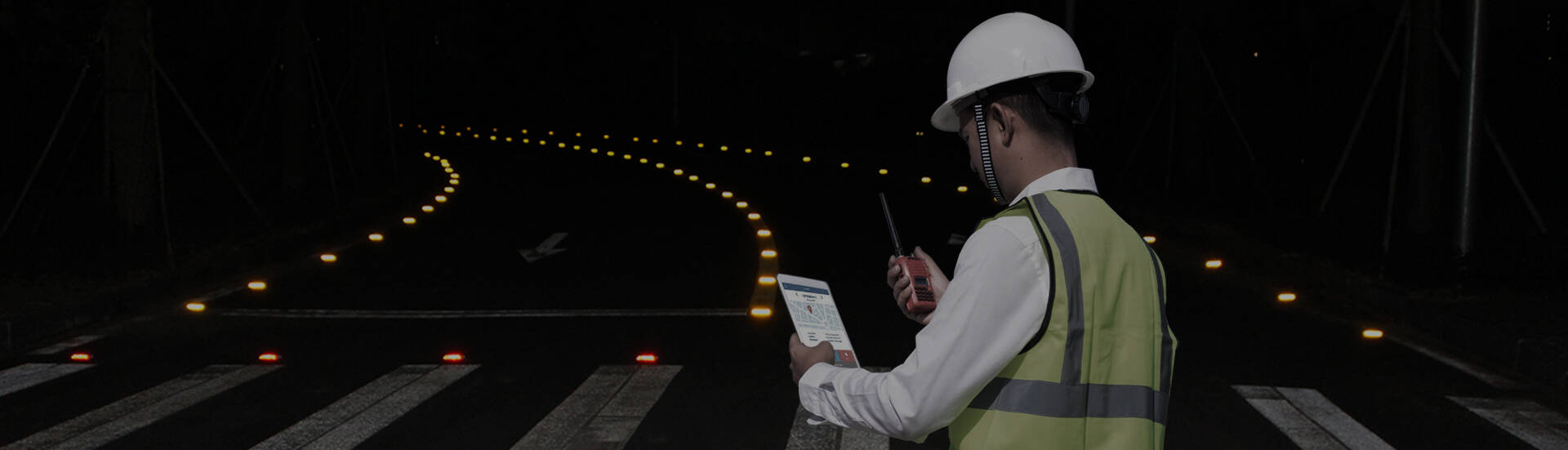
The greatest challenge in upgrading South Africa’s rural roads is the lack of a power grid and the high cost of wiring. HOAN’s economical solar road studs feature a photovoltaic self-storage design that operates completely independently of the municipal power grid. They store energy autonomously during the day and illuminate automatically at night, requiring no wiring, no electricity consumption, and no large-scale excavation work. The devices support large-scale, batch installation, filling the gap in nighttime road safety on rural roads at an extremely low renovation cost. They represent the optimal solution for upgrading South Africa’s rural road network.
South Africa’s inland mountainous regions feature dense curves, steep gradients, and year-round fog, making them high-risk areas for traffic accidents. Traditional passive reflective markers have a visibility range of less than 30 meters in foggy conditions, preventing drivers from anticipating road conditions in advance. HOAN double-sided flashing solar road studs feature powerful, penetrating LED lighting that emits light from both sides across the entire surface and flashes at a high frequency. In dense fog or at night, they can outline the contours of curves, steep slopes, and cliff edges from a distance, effectively eliminating visual blind spots and significantly reducing the likelihood of accidents such as rollovers and lane departures.
Mining area roads experience heavy vehicle loads and severe road surface vibrations, placing extremely high demands on the structural strength and compression resistance of road studs. HOAN heavy-duty embedded solar road studs utilize a one-piece cast aluminum process, offering high compression resistance, impact resistance, and deformation resistance. They can withstand repeated rolling by heavy mining trucks over the long term without breaking or falling off, significantly reducing equipment replacement frequency and meeting the all-weather, high-intensity traffic demands of mining areas.
On arterial roads and highways in and around South African cities, high speeds and dense traffic often lead to issues such as visual fatigue and lane encroachment during nighttime driving. The continuous installation of HOAN solar road studs creates a seamless, illuminated lane boundary and road outline, clearly defining lane boundaries and standardizing driving paths. This reduces rear-end collisions and illegal lane changes, thereby improving traffic order and efficiency on major thoroughfares.
Coastal roads in South Africa are constantly exposed to heavy rainfall and corrosive, high-humidity salt fog. Ordinary road studs are highly susceptible to water ingress, short circuits, aging, and rust. HOAN’s IP68 fully sealed, waterproof solar road studs feature a hermetically sealed, corrosion-resistant design that withstands rain immersion, salt fog erosion, and intense heat, ensuring stable year-round operation and making them perfectly suited for harsh coastal climates.
Compared to traditional reflective road studs and grid-powered lighting equipment, HOAN solar road studs are deeply tailored to South Africa’s local road conditions, climate, and O&M realities. With six key localized advantages, they have become the product of choice for South African road engineering contractors.
First, they are optimized for South Africa’s abundant sunlight, ensuring stable and reliable energy storage. South Africa enjoys plentiful sunlight, and when combined with HOAN’s high-efficiency photovoltaic charging modules—which feature high photovoltaic conversion efficiency—the system rapidly stores energy on sunny days and maintains normal illumination during overcast days and the rainy season, unaffected by short-term adverse weather conditions.
Second, they are all-weather resistant and adaptable to complex environments. The product can withstand summer heat and intense sunlight, persistent heavy rains during the rainy season, and low temperatures and frost in mountainous areas. Its housing is resistant to aging, corrosion, and fading, ensuring stable performance year-round.
Third, it requires no excavation, significantly reducing retrofitting costs. There is no need to lay cables or damage the road surface; the adhesive-based rapid installation method ensures a short construction period and minimal disruption to traffic, making it ideal for low-cost retrofits of long rural roads and aging road networks.
Fourth, heavy-duty compression resistance, suitable for high-intensity traffic in mining areas. The one-piece cast aluminum structure addresses the shortcomings of ordinary road studs—which are prone to cracking and cannot withstand heavy rolling—making it suitable for heavy-load transportation conditions in South African mining areas.
Fifth, ultra-low maintenance costs, suitable for South Africa’s limited maintenance infrastructure. With a service life of 5–8 years, the product requires no frequent repairs or replacements—only simple cleaning and maintenance—greatly reducing the long-term operational and maintenance burden on road authorities.
Sixth, active luminous warning ensures all-weather safety. Eliminating reliance on vehicle headlights, these markers provide consistently high-intensity warnings during nighttime, rain, fog, and dust storms, fundamentally enhancing road safety.
To address the varying operational conditions across different road scenarios in South Africa, HOAN offers standardized solution selection plans that balance engineering effectiveness, durability, and project budgets.
The entire HOAN product line holds CE and RoHS international certifications. We support customization of light colors and strobe modes, provide complete export documentation and project acceptance files, and facilitate both sample testing and full-container bulk exports. Our products are suitable for various municipal, mining, and rural infrastructure projects in South Africa.
When compared across four key dimensions—visibility, installation costs, climate adaptability, and full-lifecycle operation and maintenance—solar-powered road studs offer significant advantages. Traditional reflective markings only reflect light passively and become completely ineffective in rainy or foggy conditions, whereas solar-powered road studs actively emit light and remain visible around the clock; Installing grid-powered lighting is cumbersome and costly, whereas solar road studs require no wiring, incur zero electricity costs, and have low implementation costs; thermoplastic markings and ordinary road studs are prone to aging and damage, while HOAN road studs are resistant to rain, fog, high temperatures, and corrosion; traditional equipment requires frequent replacement and incurs high hidden costs, whereas solar road studs offer ultra-long maintenance-free operation, delivering far better cost-effectiveness over their entire lifecycle compared to traditional solutions.
To ensure project effectiveness and successful acceptance, road renovation projects in South Africa should follow standardized installation guidelines: In mountainous and foggy areas, as well as on sharp curves and steep slopes, increase the spacing between road studs and activate the strobe mode to enhance dynamic warning effects; the use of lightweight plastic road studs is strictly prohibited on mining roads—heavy-duty cast aluminum models must be used uniformly; for coastal sections during the rainy season, prioritize IP68 waterproof and corrosion-resistant models; for large-scale rural renovations, select cost-effective products to strictly control the budget. It is also recommended that overseas purchasers request samples in advance, conduct field tests under local conditions—including high temperatures, heavy rain, and fog—and proceed with bulk procurement only after verifying product qualifications to mitigate acceptance risks.
South African roads face inherent challenges such as lack of grid coverage, frequent rain and fog, heavy vehicle traffic, and limited maintenance resources; traditional road markings cannot meet modern safety requirements. HOAN solar road studs are precisely tailored to all road conditions in South Africa. With core advantages such as off-grid self-powering, all-weather durability, heavy-load resistance, ultra-low O&M costs, and rapid installation, they perfectly address safety challenges in rural areas, mountainous regions, mining zones, arterial roads, and coastal roads. They effectively enhance road safety while reducing construction and long-term maintenance costs, making them the preferred solution for the smart upgrade and safety enhancement of South African roads.
To obtain road layout plans tailored for South Africa, detailed product specifications, case studies of projects implemented across Africa, and bulk purchase quotes, please visit the official HOAN website at haroadstud.com. There, you can request free product samples, consult with professional engineering advisors one-on-one, and customize road lighting solutions suited to South African road conditions.