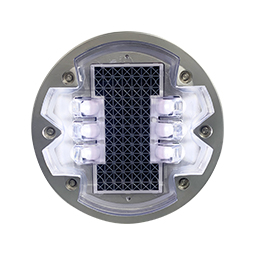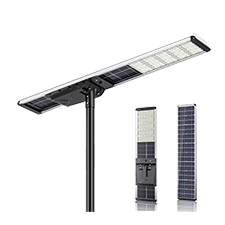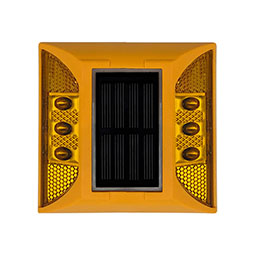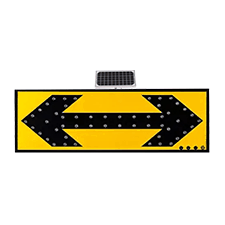

General-purpose solar-powered road studs are difficult to adapt to complex and diverse practical application scenarios. For instance, in special road conditions such as steep slopes, sharp bends, and densely populated pedestrian crossings, there are specific requirements for the luminous Angle and brightness of road studs. The climate varies significantly among different regions. Environments with heavy rain, severe cold and high temperatures require road studs to have targeted protective performance.
In addition, specific projects also have personalized demands. For instance, the construction of smart cities requires road studs to have intelligent linkage functions, while the renovation of scenic spots demands that road studs be integrated into landscape design. Customization can not only solve these adaptation problems, but also enhance road safety efficiency, reduce later maintenance costs, and increase the overall value of the project.
If the core considerations are ignored during the customization process, a series of problems may arise. The most direct issue is that the product does not match the demand and fails to meet the actual usage requirements, resulting in a significant reduction in safety performance.
Unreasonable customized solutions can also lead to cost overruns, with unnecessary increases in R&D and production costs. Unclear requirements or immature technical solutions may delay production progress and affect project delivery. What is more serious is that if the product does not meet the national or regional standards, it will face the compliance risk of project acceptance failure.
This guide aims to systematically sort out the key factors to be considered throughout the entire process of customizing solar-powered road studs, providing practical guidance for relevant groups such as purchasers and engineering parties.
By clarifying the core points of each link, it helps readers avoid customization pitfalls, accurately match demands and solutions, and ultimately customize high-quality, cost-effective and compliant solar road studs.

First of all, it is necessary to precisely define the type of road to be applied, whether it is a main urban road, a rural road, a highway, or a scenic area walkway, a temporary construction road, etc. The traffic conditions on different roads vary greatly. It is necessary to further clarify the traffic flow (high/medium/low), the types of vehicles passing through (sedans/heavy trucks), and the density of pedestrians.
Secondly, it is necessary to sort out the core functional requirements. Do they only need basic light guidance, or do they require advanced functions such as radar/infrared intelligent sensing, synchronized flashing with traffic lights, and remote monitoring? At the same time, it is necessary to clarify the expected service life of the road studs, whether it is the conventional requirement of 3 to 5 years or the high-standard requirement of 5 to 8 years.
The upper limit of the total budget should be determined in advance. The budget should cover the costs of all links including research and development, sample production, mass production and transportation. In terms of cost control, it is necessary to clarify the core direction: whether to prioritize optimizing the cost of core components or to implement cost control over the overall solution.
The delivery time nodes also need to be clearly defined, including the sample delivery time, the completion time of batch production and the on-site arrival time. At the same time, emergency plans should be formulated to deal with possible delivery delays to ensure that the project progress is not affected.
Identify the key stakeholders of the project, including the purchasing party, the engineering design party, the on-site construction party, the quality inspection department, etc. The demands of different stakeholders have different focuses. It is necessary to establish an effective demand confirmation process to coordinate the opinions of all parties and avoid the reduction of customization efficiency due to repeated changes in demands.
In addition, clear sample approval standards should be established, specifying the assessment indicators for sample performance, appearance and other aspects to ensure that the sample approval process is efficient and orderly.
Brightness is one of the core indicators. The appropriate brightness range (200cd-800cd) should be determined based on traffic speed and visibility requirements. For instance, on expressways where vehicle speeds are high, high-brightness road studs should be selected. For pedestrian walkways, products with moderate brightness can be selected.
The color of the light emission can be selected from the conventional white, yellow, red, green and other colors, or customized color matching can be done according to the special requirements of the project. There are multiple options for the lighting mode, such as constant illumination, flashing (with adjustable frequency), and intelligent sensing (automatically adjusting brightness), which need to be adapted to the scene requirements. At the same time, it is necessary to ensure that the road studs can reach the specified visible distance (50m-300m) under different weather conditions.
The customization of solar panels requires attention to material selection (monocrystalline silicon/polycrystalline silicon), conversion efficiency (≥18%-≥22%), size and installation Angle, as these parameters directly affect the energy collection efficiency. Monocrystalline silicon solar panels perform better in low-light conditions and are suitable for northern winters or mountainous areas with dense trees.
In terms of batteries, it is necessary to select the appropriate type (lithium battery/lead-acid battery), capacity (600mAh-2000mAh), and determine the battery life on rainy days (3-15 days) based on the local rainfall. At the same time, overcharge, overdischarge, short circuit and other charging protection functions should be equipped to enhance the safety and service life of the energy storage system.
The product types can be customized according to the scene requirements, including raised type, buried type, temporary type (suction cup/counterweight design), etc. The raised installation is convenient and suitable for regular roads. Buried type is flush with the ground, has strong resistance to rolling pressure, and is suitable for high-traffic main roads and pedestrian crossings.
The size and shape need to be customized in accordance with the road space and installation requirements. The shell material can be selected from engineering plastics (ABS/PC), stainless steel, aluminum alloy, etc. The performance such as corrosion resistance, UV resistance and impact resistance should be comprehensively considered. In addition, the compressive strength grade (20t-80t) should be determined based on the vehicle load to ensure that the road studs can withstand the pressure of passing vehicles.
If the project involves the construction of smart transportation, relevant intelligent functions can be customized. For instance, installing radar/infrared sensing modules to achieve "on-demand light emission" can enhance energy-saving effects. Equipped with remote monitoring function, it can monitor battery power and working status in real time, and alarm promptly when a fault occurs.
It can also be customized with synchronous control functions to achieve coordinated operation with traffic signals, street lamps and other facilities. Select the appropriate communication protocol (LoRa/NB-IoT), complete the data connection with the smart city system, and enhance the intelligent level of traffic management.
For different climatic conditions, targeted customized plans need to be formulated. In areas with heavy rainfall or along the coast, it is crucial to enhance the waterproof rating of road studs (IP67-IP68) to prevent rainwater from seeping in and causing malfunctions. In tropical regions, materials and components that can withstand high temperatures (≥60℃) should be selected, while in cold regions, it is necessary to ensure that the road studs can operate normally in low-temperature environments (≤-30℃).
In deserts or windy areas, additional designs for sand and dust prevention should be added. In high-altitude areas, the intensity of ultraviolet rays is high. Materials with excellent UV resistance should be selected to extend the service life of road studs.
The type of road surface directly determines the installation method and the selection of fixed components. Different road surfaces such as asphalt, cement, brick and stone, and dirt roads have significantly different installation plans. The smoothness of the road surface also needs to be taken into account. The structure design of the road studs should be adjusted to avoid unstable installation due to uneven road surface.
Construction conditions can also affect the customized plan, such as whether the road surface is allowed to be cut and whether the construction period is tight. In addition, it is necessary to check whether there are any obstructions such as street lamps or trees at the installation site that may affect the lighting of the solar panels. If there are obstructions, the installation position or Angle of the solar panels should be optimized.
Different special scenarios have unique customization requirements. The scenic area scenes should pay attention to low glare design, making the road studs blend into the landscape, and the color matching should be soft and harmonious. Near schools and residential areas, road studs should have low noise and anti-collision performance, and at the same time adopt a child-friendly and safe design.
For cross-border projects, it is necessary to fully adapt to the road standards and climate characteristics of the target country or region to ensure that the products can be used in compliance with local regulations.
Customized solar-powered road studs must strictly comply with the corresponding national or regional road safety standards. Domestic projects must comply with relevant national standards for road reflective materials, light-emitting devices, etc. (such as GB/T series standards); Export projects should be adapted to the standards of the target market, such as the EN standards of the European Union, the ASTM standards of the United States, and the JIS standards of Japan, etc.
In addition, different fields such as scenic spots, expressways, and municipal engineering have special industry standards. Customized solutions need to simultaneously meet the requirements of these standards.
Products must have the corresponding certifications to enter the market in compliance with regulations. Quality management system certification (such as ISO9001) is a basic requirement. Export projects also need to obtain safety and environmental protection certifications such as CE, RoHS, and FCC based on the demands of the target market.
At the same time, a complete performance test report must be provided, including the test data of key indicators such as luminous performance, water resistance, pressure resistance, and battery life. In some regions, there are specific local certification requirements for road safety products, which also need to be understood and met in advance.
During the customization process, it is necessary to pay attention to intellectual property compliance to ensure that the customized design does not infringe upon the patents of third parties. The selection of materials should meet environmental protection requirements, and environmentally friendly materials should be chosen. The production process must follow emission standards to avoid environmental pollution.
In addition, the customized solution must meet the requirements of the purchasing party's procurement documents to ensure that the entire customization process complies with the procurement norms.
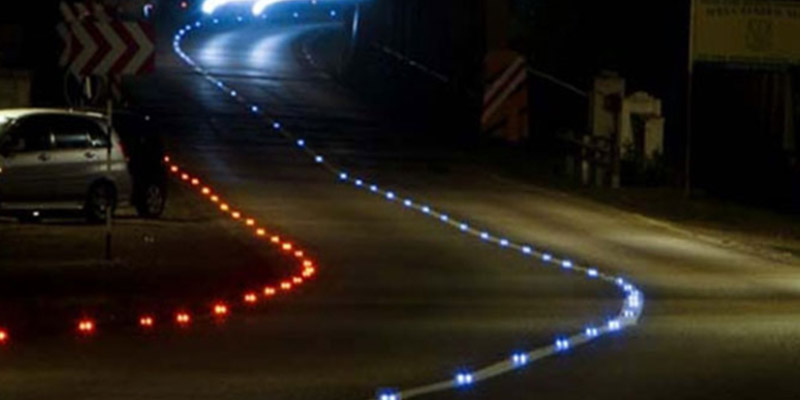
Choosing a manufacturer with strong customization capabilities is the key to successful customization. It is necessary to examine the strength of the manufacturer's R&D team and understand its professionalism and experience in the development of customized products. Evaluate the production capacity of the manufacturer to confirm whether it can meet the requirements of mass production and delivery time.
Complete performance testing equipment is the foundation for ensuring product quality. It is necessary to confirm that the manufacturer has the full-process testing capability. At the same time, review the manufacturer's past customization cases, especially project experiences in similar scenarios, to evaluate its actual service capabilities.
Communication and Collaboration Efficiency
Efficient communication and collaboration are the guarantee for the smooth progress of customization. Manufacturers need to have a professional communication team that can provide multilingual communication services to meet the communication needs of cross-border projects. In response to changes in demand, manufacturers need to be able to respond quickly and optimize their solutions.
In addition, manufacturers need to maintain information transparency, promptly feed back the progress of sample production and mass production to the purchasing party, and enable the purchasing party to keep abreast of the project dynamics in real time.
A perfect after-sales service can reduce the risks of long-term use. It is necessary to clearly define the warranty period, including the overall product warranty and the warranty for core components (solar panels, batteries). The manufacturer should provide comprehensive maintenance support including installation guidance, technical training and on-site maintenance.
At the same time, it is necessary to ensure that manufacturers can supply vulnerable parts and core components in a timely manner. For product quality issues or usage malfunctions, they should have a rapid emergency response capability and solve problems promptly.
Cost allocation should highlight key points. Core components (such as solar panels and batteries) are directly related to the safety performance and durability of road studs, and priority should be given to ensuring the cost input for this part. R&d costs need to be reasonably controlled. The necessity of customized functions should be evaluated to avoid paying excessive R&D expenses for unnecessary functions.
The selection of production processes and materials should be based on the size of the batch. For small-batch customization, flexible production processes can be chosen, while for large-batch customization, unit costs can be reduced through large-scale production.
It is necessary to clarify the requirements in advance to avoid repeated revisions of the plan due to unclear requirements, which may result in additional modification costs. Customize appropriate packaging and transportation plans based on product characteristics to reduce the risk of damage during transportation and avoid additional transportation and maintenance costs.
Choosing products with low maintenance difficulty and long service life can reduce long-term maintenance costs. Ensuring product compliance can prevent rework or fine costs caused by non-compliance.
Mass customization projects can negotiate bulk discounts with manufacturers to reduce procurement costs. Establishing a long-term and stable cooperative relationship can enhance the efficiency of subsequent customization, and at the same time, it may lead to more favorable cooperation terms and reduce the cost of subsequent customization.
Under the premise of ensuring quality, one can actively adopt the cost optimization suggestions provided by manufacturers to achieve a balance between quality and budget.
Customizing solar-powered road studs is a systematic project that requires a comprehensive consideration of multiple factors such as demand clarification, product parameters, scene adaptation, compliance certification, supply chain services, and cost control. Only by taking all these factors into comprehensive consideration can we ensure that customized products precisely match actual needs.
The key point lies in taking the actual usage requirements as the core, balancing quality, cost and delivery time, and at the same time choosing a professional and reliable custom manufacturer. We have rich experience in customizing solar-powered road studs and can provide one-stop services from demand communication to after-sales support.
If you have any customization needs for solar-powered road studs, please feel free to contact us. We will tailor a customized solution that meets your requirements to facilitate the smooth progress of your project.