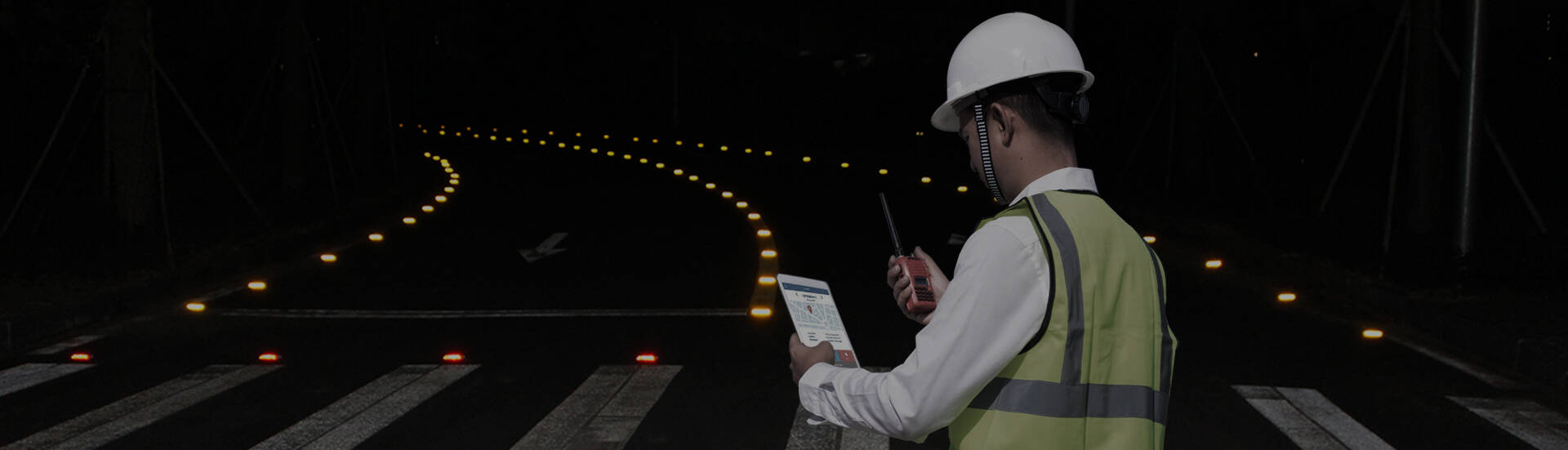
The proportion of traffic accidents at night remains high. In low visibility conditions, drivers' reactions are delayed, which can easily lead to collision accidents. In high-risk scenarios such as sharp curves, steep slopes, pedestrian crossings, and construction sections, the warning effect of traditional traffic facilities is limited, and safety hazards are particularly prominent.
More importantly, traditional transportation facilities mostly adopt passive protection models and are unable to proactively predict and warn of risks. With the acceleration of urbanization and the sharp increase in traffic flow, the demand for intelligent traffic management has become increasingly urgent, forcing the upgrading and iteration of road safety facilities.
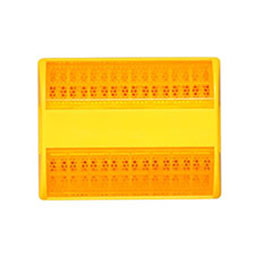
Traditional road studs rely on external light sources to achieve passive light emission. Their visibility is extremely poor in bad weather such as rain, fog and snow, making it difficult for them to play a guiding role. The single function is also its core shortcoming. It can only provide basic road boundary guidance and lacks the ability of active early warning.
In addition, traditional road studs cannot provide feedback on their own working status, making it difficult for maintenance personnel to accurately grasp the equipment failure situation and easily creating safety blind spots. Meanwhile, its performance parameters are fixed and it cannot dynamically adjust its working mode according to real-time traffic flow, weather changes, etc., resulting in poor adaptability.
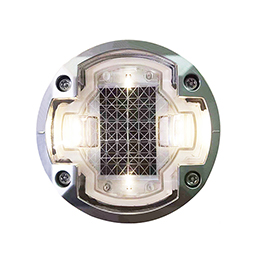
Intelligent road studs are new types of road safety facilities that integrate functions such as active lighting, intelligent sensing, and data interaction. Their core features lie in "active perception, active early warning, and intelligent linkage". Compared with traditional road studs, it has achieved a transformation in road safety protection from "passive response" to "active prevention".
This article will systematically analyze from multiple dimensions such as core advantages, scene applications, technical support, and actual cases how intelligent road studs can address the pain points of traditional facilities and comprehensively enhance road safety levels.
The intelligent road studs adopt a solar self-power supply mode and can actively emit light without relying on external light sources, fundamentally solving the drawback of traditional road studs' "passive light emission". Its brightness can reach over 600cd, and the longest visible distance can reach 300 meters. Even in low-visibility weather such as rain and fog, it can clearly convey road information.
Meanwhile, it supports the switching of multiple lighting modes such as constant light, flashing, and gradient, and can be flexibly adjusted according to the needs of different scenarios. For instance, in construction sections, a high-frequency flashing mode is adopted to enhance warnings, while in residential areas, a soft constant light mode is used to avoid disturbing the residents.
Intelligent road studs are equipped with built-in radars or infrared sensors, which can accurately detect the positions and movement status of passing vehicles, pedestrians and non-motorized vehicles in real time. In high-risk scenarios such as sharp turns and steep slopes, when a vehicle is detected approaching, a warning signal can be triggered in advance to remind the driver to slow down and give way.
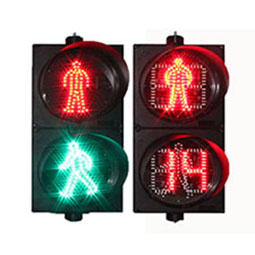
For pedestrian crossing scenarios, it can sense the behavior of pedestrians crossing the street, synchronously trigger the flashing of road studs, enhance the reminder to drivers, and reduce the risk of collisions between pedestrians and vehicles. In addition, intelligent road studs can be linked with traffic lights, speed measurement devices and other facilities to achieve signal coordination and further enhance the efficiency of early warning.
Through Internet of Things (iot) technology, intelligent road studs can transmit their working status data in real time to the background management platform, including battery power, luminous performance, and sensing sensitivity, etc. Once a malfunction occurs, the system will automatically alarm. The operation and maintenance personnel can accurately locate the fault position and handle it in a timely manner, avoiding potential safety hazards caused by equipment failure.
Meanwhile, it can also collect data such as traffic flow and vehicle speed, providing data support for traffic management departments to optimize control strategies. Managers can also remotely adjust the light-emitting mode and early warning parameters of the road studs through the background system to achieve refined management.
The intelligent road studs are designed with a high protection level, reaching IP67-IP68. They feature excellent water resistance, dust resistance and corrosion resistance, and can operate stably in various harsh weather conditions such as high temperatures, severe cold, heavy rain and sandstorms.
Its shell is made of high-strength engineering plastic or stainless steel, with a pressure resistance grade of 40 to 80 tons. It can withstand the long-term rolling of heavy vehicles and has a service life of 5 to 8 years. In addition, it is equipped with high-efficiency monocrystalline silicon solar panels, which can efficiently collect energy even in low-light conditions such as short days and cloudy days in winter, ensuring stable battery life.
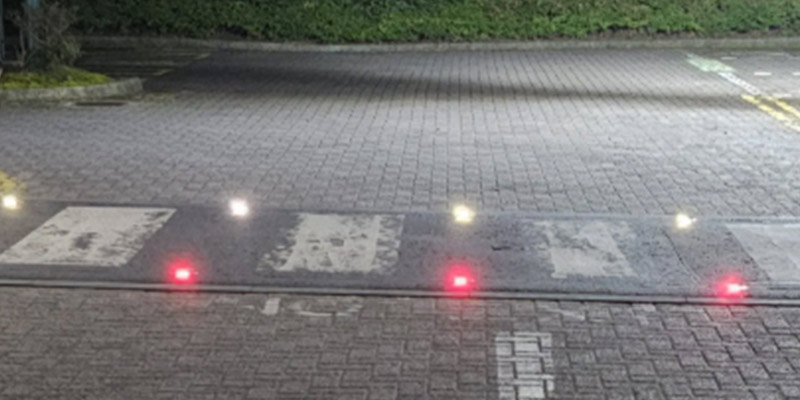
At pedestrian crossings in cities with high pedestrian traffic, intelligent road studs can be linked with pedestrian crossing request buttons and traffic lights. When pedestrians press the crossing button, the road studs start to flash synchronously, clearly dividing the pedestrian crossing area. At the same time, remind passing vehicles to slow down and give way.
Practical application data shows that after the installation of intelligent road studs, the average rate of human-vehicle collisions in pedestrian crossing areas has decreased by more than 60%, and the rate of drivers voluntarily giving way has increased by 75%, effectively safeguarding the right of way for pedestrians.
Sharp bends, steep slopes and other sections with blocked visibility are high-risk areas for traffic accidents. The application of intelligent road studs in these sections can detect oncoming vehicles through sensors and trigger warning signals before the vehicles enter the driver's blind spot, allowing both drivers to sense the presence of the other 2-3 seconds in advance and leaving sufficient time for avoidance.
On the continuous sharp bends of mountainous roads, intelligent road studs can also form "warning belts" to guide vehicles to travel along safe trajectories. Practical experience has shown that after installing intelligent road studs on such sections of road, the incidence of collision accidents can be reduced by about 70%.
On expressways and main urban roads, intelligent road studs can clearly mark lane boundaries, guide vehicles to drive in a standardized manner, and reduce scratch accidents caused by random lane changes and overtaking. When encountering sudden situations such as traffic accidents or road construction, the background system can remotely trigger the road studs in the accident area and the upstream section to flash, forming a continuous warning band to remind subsequent vehicles to slow down and detour.
This function can not only reduce the occurrence of secondary accidents, but also shorten the time of traffic congestion. Data shows that after installing intelligent road studs on the construction sections of expressways, the average congestion duration has been shortened by 40% and the accident rate has decreased by 55%.
Scenic spots and residential areas mainly rely on slow traffic, and thus have high requirements for the safety and comfort of road facilities. The intelligent road studs adopt a low-glare light-emitting design to prevent strong light from irritating the vision of pedestrians and residents. Meanwhile, through clear illuminated guidance, the sidewalks and non-motorized vehicle lanes are demarcated to prevent motor vehicles from entering illegally.
In the scenic area's walkways, the intelligent road studs can also adjust the light color and mode in combination with the landscape design, achieving a dual effect of "safety protection + landscape beautification". After installation, traffic disputes and safety accidents in scenic spots and residential areas have significantly decreased, and the safety satisfaction of residents and tourists has increased by more than 80%.
The traffic organization on the construction section is complex, temporary markings are prone to wear and tear, and the effect of traditional warning facilities is limited. Intelligent road studs are easy to install and reusable. They can quickly mark the boundaries of the construction area and detour routes, and alert vehicles to stay away from the construction area through flashing warnings.
When the construction area changes, the position of the road studs and the early warning parameters can be flexibly adjusted to meet the dynamic construction requirements. After application, the accident rate on the construction section can be reduced by 50%, greatly ensuring the safety of construction workers and passing vehicles.
The intelligent road studs are equipped with high-efficiency monocrystalline silicon solar panels with a conversion efficiency of ≥20%, which can maximize the collection of solar energy. Equipped with a large-capacity lithium battery, it has a strong energy storage capacity and can support continuous operation for 7 to 15 days in rainy and cloudy weather.
Meanwhile, it is equipped with an intelligent energy management system that can automatically optimize charging and discharging strategies, adjusting energy distribution based on light intensity and usage frequency. This not only ensures stable operation but also extends battery life.
By adopting high-precision radar or infrared sensing technology, intelligent road studs can accurately detect target objects within a certain range. The recognition distance error does not exceed 0.5 meters, and the false alarm rate is lower than 3%. Meanwhile, it integrates an environmental sensing module, which can monitor environmental parameters such as temperature, humidity and rainfall in real time, and automatically adjust the light brightness and early warning mode.
Through the target classification and recognition algorithm, it can accurately distinguish vehicles, pedestrians and non-motorized vehicles, achieve targeted early warning, and avoid ineffective early warning from disrupting traffic order.
Relying on low-power wide-area communication technologies such as LoRa and NB-IoT, intelligent road studs can achieve stable data interaction with the background management platform, with long transmission distance and low power consumption, making them suitable for large-scale deployment. Through Internet of Things (iot) technology, it can be connected to the intelligent traffic management system and achieve multi-device linkage with facilities such as traffic lights, surveillance cameras, and electronic police.
This linkage capability has broken the situation of "information islands" in transportation facilities and formed a comprehensive safety protection network.
It is equipped with an intelligent algorithm module. The intelligent road studs can dynamically adjust their working mode according to real-time traffic flow and environmental changes. For instance, enhance the brightness of the light and the frequency of early warnings during peak traffic hours, and reduce power consumption during off-peak hours. Automatically raise the warning level in bad weather.
The background remote control system supports centralized management of multiple road studs, allowing for batch parameter adjustment and group early warning, significantly enhancing management efficiency. Meanwhile, it is equipped with self-diagnosis technology for faults, which can automatically detect the working status of circuits, sensors and other components to ensure the reliable operation of the equipment.
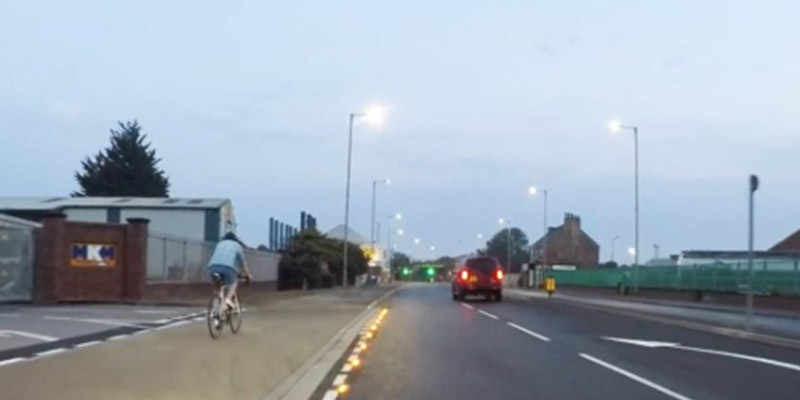
Project Background: The pedestrian flow at the pedestrian crossing in the core business district of City A is large, and conflicts between pedestrians and vehicles occur frequently at night. The warning effect of traditional zebra crossings is poor. Application solution: Install intelligent road studs with pedestrian sensing and traffic signal light linkage functions at 12 pedestrian crossings in this area.
Safety achievements: After the project was implemented, the number of pedestrian and vehicle collisions at night crosswalks in this area decreased by 65%, the rate of drivers voluntarily giving way increased from the original 30% to 80%, and the sense of security for pedestrians crossing the street was significantly enhanced.
Project Background: In the mountainous area of Zone B, there are many continuous sharp turns on the roads, causing severe obstruction of visibility. As a result, numerous oncoming collision accidents occur every year. Application solution: Install intelligent road studs with oncoming vehicle detection and active early warning functions on 20 high-risk sharp curves to form a continuous early warning system.
Safety achievements: After installation, the accident rate on sharp curves was reduced by 70%, and the average reaction time of drivers was advanced by 2.5 seconds, effectively avoiding multiple serious collision accidents.
Project Background: During the construction of a certain section of the expressway in Area C, traffic congestion was severe and the risk of secondary accidents was high. Application solution: Deploy temporary intelligent road studs in the construction area and a 3-kilometer section upstream and downstream to achieve the functions of boundary marking and emergency early warning in the construction area.
Safety achievements: During the construction period, the accident rate on this section of the road decreased by 55%, the traffic congestion time was shortened by 40%, and the construction progress was not affected by traffic, achieving dual safety in construction and passage.
In the future, intelligent road studs will, through technological upgrades, provide high-precision positioning information such as road boundaries and lane lines for autonomous driving vehicles, serving as a supplement and extension of the autonomous driving perception system. Through vehicle-road coordination technology, two-way data interaction between intelligent road studs and autonomous driving vehicles is achieved, enabling the early transmission of road risk information and enhancing the safety and reliability of autonomous driving.
Relying on big data and artificial intelligence technologies, intelligent road studs will have a more powerful ability to predict risks. By analyzing historical traffic data and real-time traffic flow changes, risks such as congestion and accidents can be predicted in advance, and early warnings can be triggered proactively, achieving an upgrade from "passive early warning" to "active prediction". At the same time, personalized early warning strategies will be formulated based on the behavioral characteristics of different traffic participants.
The future intelligent road studs will integrate more functions, such as environmental monitoring (air quality, visibility detection), emergency response (accident alarm, rescue guidance), etc. By coordinating with emergency systems such as fire protection and first aid, it can quickly guide the passage of rescue vehicles in the event of traffic accidents or natural disasters, thereby enhancing the efficiency of emergency response.
In terms of energy utilization, more efficient solar energy collection technologies and energy storage materials will be adopted to further enhance energy utilization efficiency. In terms of material selection, more degradable and environmentally friendly materials will be adopted to reduce the impact on the ecological environment. Meanwhile, by optimizing the circuit design to reduce power consumption, green and low-carbon operation throughout the entire life cycle is achieved.
Intelligent road studs, with their core advantages such as active light emission, intelligent sensing, active early warning, and data linkage, have broken through many limitations of traditional road studs and improved road safety levels from multiple dimensions. Whether it is urban roads, expressways, scenic spots or construction sections, it can precisely adapt to the scene requirements and effectively reduce the accident rate.
As a core product for the intelligent upgrade of road traffic safety facilities, intelligent road studs not only ensure current traffic safety but also meet the development needs of future intelligent transportation and autonomous driving, providing important support for building a safe, efficient and intelligent road traffic system.
For traffic management departments, engineering enterprises and other units that pay attention to road safety, choosing intelligent road studs is an important measure to improve the level of road safety. We have been deeply engaged in the intelligent transportation field for many years and can provide high-quality intelligent road stud products and one-stop solutions, offering full protection from solution design, product customization to installation and operation and maintenance. Welcome to contact us for consultation at any time. Let's join hands to build a safer road traffic environment together.