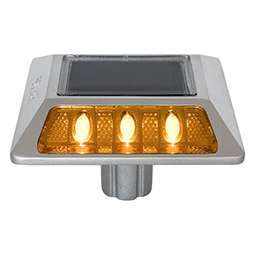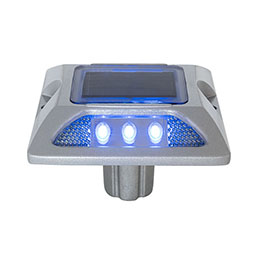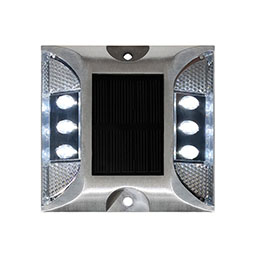
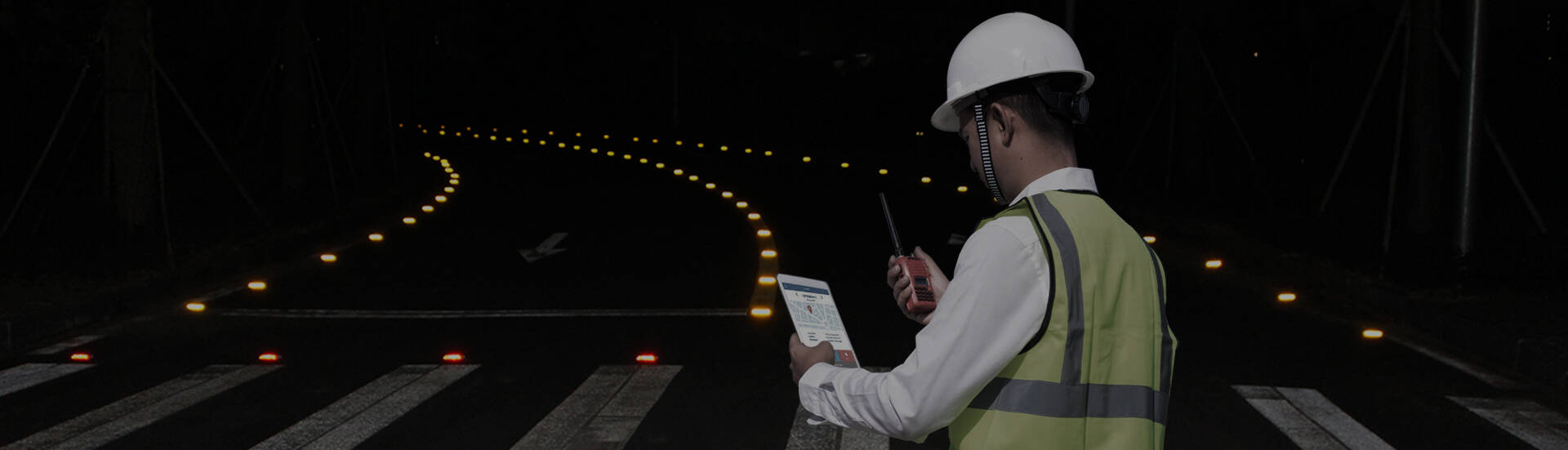
Municipal projects (such as urban roads, pedestrian crossings, parks, and scenic areas) are characterised by large scale and extended usage cycles. Consequently, it is crucial for solar road studs to possess stable performance and a long service life, typically exceeding five years.
Concurrently, municipal projects impose stringent compliance requirements, mandating products to meet national or regional traffic safety standards and municipal procurement specifications. Furthermore, municipal projects encompass diverse scenarios—ranging from high-traffic arterial roads to pedestrian-dense zones—while enduring adverse conditions including rain, snow, and heavy vehicle rolling.
Particularly regarding cost control, municipal projects must balance quality with budgetary constraints to prevent post-installation wastage arising from inappropriate selection.
Inappropriate selection poses multiple risks to municipal projects. Firstly, safety hazards arise: solar studs with insufficient brightness or poor visibility in adverse weather directly increase night-time accident rates.
Secondly, operational costs surge as frequent leaks, damage, and other faults necessitate repeated replacements, significantly increasing municipal maintenance burdens. More critically, non-compliant products may cause project acceptance failures, forcing costly rectification work.
Furthermore, insufficiently durable products fail to meet municipal projects' long-term usage requirements, shortening replacement cycles and further escalating costs.
This guide focuses on the core requirements of municipal projects, systematically outlines key selection criteria, and provides scenario-based selection solutions alongside practical pitfall avoidance techniques.
It aims to help municipal procurement officers and contractors avoid selection pitfalls, make informed decisions, and select solar road studs that combine safety, durability, compliance, and cost-effectiveness, thereby ensuring project quality and road safety.
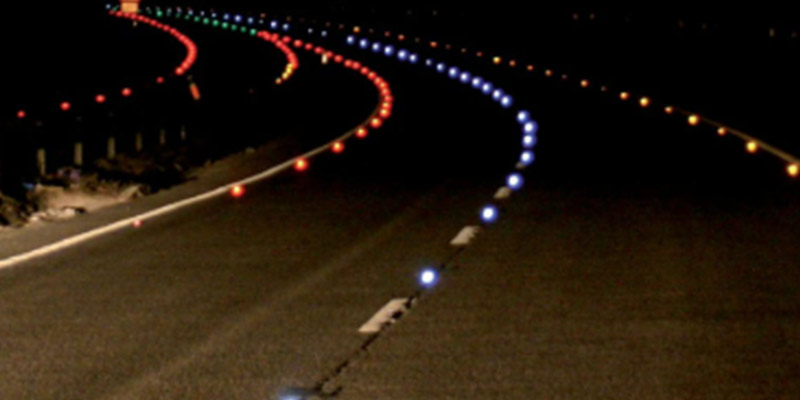
First, define the specific application context—whether urban arterial roads, secondary roads, pedestrian crossings, or municipal routes in parks, scenic areas, or rural settings. Traffic conditions vary significantly across these scenarios, necessitating confirmation of traffic volume (high/medium/low), vehicle types (cars/heavy goods vehicles), and pedestrian density.
Secondly, define functional requirements: whether basic luminous guidance suffices, or advanced features like intelligent sensing and synchronised flashing with traffic signals are needed. Finally, establish budget constraints and delivery timelines to align with project schedules while maintaining quality standards.
Prior to product selection, one must be thoroughly familiar with applicable national or regional standards. For instance, in China, this includes the national standard for road traffic retroreflective materials and luminous devices (GB/T). For international municipal projects, compliance with the corresponding standards of the target country or region is essential.
Simultaneously, strict adherence to municipal procurement specifications is required, clarifying specific demands regarding product parameters, quality certifications, and after-sales service. Furthermore, verify essential certifications required for the product, such as ISO 9001 Quality Management System certification. International projects additionally necessitate certifications like CE/RoHS.
Climatic conditions constitute a critical consideration. Understand the project location's annual rainfall, rainy season duration, and temperature range to determine the product's required resistance to high/low temperatures and waterproofing needs.
Road conditions must also be addressed, including surface type (asphalt/concrete/paving stones), surface evenness, and whether the product must withstand heavy vehicle traffic. Furthermore, the existing lighting environment (presence of streetlights) and average daily sunlight duration directly impact the energy harvesting efficiency of solar road studs and require thorough prior investigation.
Brightness must match the scenario: High-traffic arterial roads require ≥600 cd, standard municipal roads ≥400 cd, and pedestrian zones ≥200 cd. Visibility distance must also align with road classification: ≥300 metres for expressways, ≥150 metres for standard roads, and ≥50 metres for pedestrian areas.
Lighting modes should be selected according to requirements: Constant-on mode suits basic guidance, flashing mode offers enhanced warning effects, while intelligent sensing mode enables ‘on-demand illumination,’ balancing energy efficiency with precise alerts.
Solar panels should prioritise monocrystalline silicon with conversion efficiency ≥20%, delivering superior energy storage in low-light conditions. Panel dimensions must match energy requirements. Batteries should utilise long-life lithium-ion cells without memory effect, with capacity ≥800mAh. In rainy regions, ensure ≥7 days' endurance during overcast periods.
Charging efficiency must also be considered, adapted to local sunlight conditions to ensure adequate energy storage during short-day seasons and prevent screen blackouts during overcast periods.
Compressive strength must correspond to traffic intensity:
- High-traffic roads (buried installation): ≥60 tonnes
- Ordinary roads (raised installation): ≥20 tonnes
Ensuring resistance to heavy vehicle rolling.
Waterproof rating:
- Standard areas: ≥IP67
- Rainy/coastal regions: ≥IP68
Preventing leakage and short circuits.
Housing materials should be engineering plastics (ABS/PC) or stainless steel, offering corrosion resistance, UV resistance, and ageing resistance. Service life must meet municipal project fundamentals (≥5 years), with premium products extending to 8 years.
Surface-mounted installations offer convenience (3M adhesive + nailing), suitable for asphalt/concrete surfaces with low construction costs and minimal traffic disruption. Flush-mounted installations resist foot traffic and vehicle碾压, ideal for high-traffic roads and pedestrian crossings, though requiring pavement cutting and slightly higher installation complexity.
Prioritise products with simple installation and short construction cycles to minimise disruption to normal traffic flow.
Products must comply with national/regional traffic safety standards and municipal procurement specifications, forming the basis for project acceptance. Suppliers must provide comprehensive certification documentation, including test reports and ISO 9001 certification.
Product consistency must be guaranteed; batch products must match certified sample standards to prevent acceptance issues arising from batch variations.
Warranty periods must be clearly defined: core components (solar panels, batteries) ≥ 2 years; entire product ≥ 1 year. Suppliers must provide installation guidance, technical training services, and guarantee timely spare parts supply.
For local municipal projects, suppliers must possess rapid emergency response capabilities, ensuring on-site resolution of product faults within 24-48 hours.
Selection should not be based solely on initial purchase price; Total Cost of Ownership (TCO) must be calculated, comprehensively considering maintenance, replacement, and energy consumption costs throughout the operational lifespan.
Avoid excessively low-priced products, as these often involve substandard materials and workmanship, significantly increasing long-term operational costs. For large-scale municipal projects, negotiate volume purchase discounts with manufacturers to further control budgets.
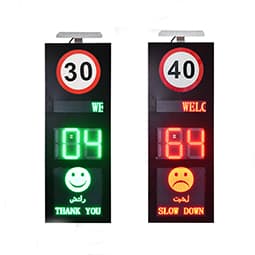
Where municipal projects involve smart city initiatives, opt for products with intelligent capabilities. Examples include radar/infrared-sensing models that automatically brighten when vehicles or pedestrians approach, delivering both energy efficiency and precise warning effects;
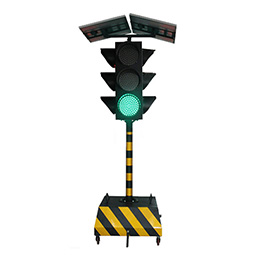
Products with remote monitoring capabilities enable real-time battery level tracking and fault alerts, facilitating centralised municipal management; models supporting synchronisation with traffic signals enhance intersection warning effectiveness.
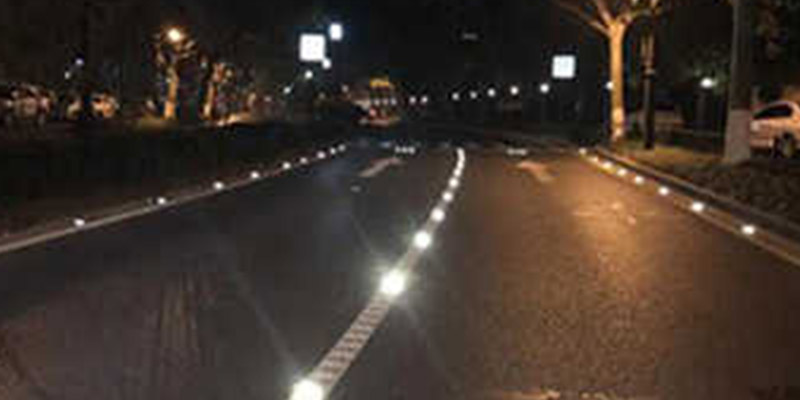
Core Requirements: High brightness, robust durability, extended endurance. Recommended: In-ground solar studs with ≥600cd luminance, ≥60-tonne load resistance, IP68 waterproof rating, and ≥1200mAh lithium battery ensuring ≥10 days' endurance during continuous overcast/rainy conditions.
Optional features: Traffic light synchronisation flashing and remote monitoring capabilities to further enhance road safety management.
Core requirements: Balanced performance, low glare, easy installation. Recommended: Raised solar road studs with 400-600 cd brightness, ≥30 tonne load resistance, IP67 waterproof rating, ≥800mAh lithium battery supporting ≥7 days of continuous operation during overcast/rainy periods.
Optional smart sensor models are available to prevent night-time glare from disturbing residents' rest while conserving energy.
Core requirements: Low glare, safety-friendly, eco-friendly and aesthetically pleasing. Recommended: In-ground or low-profile raised solar road studs with luminance 200-400 cd, soft light output, load-bearing capacity ≥20 tonnes, and IP67 waterproof rating.
Prioritise models synchronised with pedestrian crossing signals to enhance visibility for crossing pedestrians and reduce vehicle-pedestrian collision risks.
Core requirements: Extended runtime, low maintenance, high cost-effectiveness. Recommend raised solar studs with ≥400 cd brightness, equipped with ≥1000mAh lithium batteries supporting ≥10 days of continuous operation during overcast/rainy periods, IP68 waterproof rating, and straightforward installation/maintenance.
Basic constant-on mode suffices for guidance without complex smart features, effectively controlling costs.
Risks: Products failing municipal standards, obstructing project acceptance; poor quality causing frequent failures, doubling operational costs. Key Avoidance: Prioritise value for money. Verify product certifications and test reports first. Conduct sample testing before bulk procurement.
Risk: Intense glare disrupts drivers' vision and residents' lives, creating new safety hazards and public concerns. Avoidance Key: Precisely match brightness to the environment. Select soft-light products for residential and pedestrian zones.
Risk: Products ‘black out’ during rainy seasons or periods of short daylight, losing their safety assurance function. Key avoidance points: Select battery capacity and solar panel efficiency based on local rainfall and daylight hours; conduct endurance performance testing on samples.
Risk: Lack of professional support for product faults, delayed repairs impacting road functionality.
Key avoidance points: Specify after-sales terms (warranty period, response time, spare parts supply) in procurement contracts; prioritise suppliers with municipal project experience.
Risk: Product mounting methods incompatible with road surfaces necessitate additional modifications, prolonging project timelines.
Key mitigations: Pre-confirm road surface conditions, select compatible installation methods, and require manufacturers to provide on-site installation guidance.
Conduct comprehensive testing on shortlisted products, covering core metrics such as luminous performance, waterproofing, pressure resistance, and battery life. Conduct small-scale trial installations on key project sections, observing actual usage outcomes for 1-2 months with a focus on verifying visibility and stability.
Adjust product selection based on trial results. Only initiate bulk procurement once products are fully validated to meet project requirements.
Contracts must clearly stipulate product specifications (brightness, battery life, lifespan, etc.), quality standards, and inspection methods. Specify delivery timelines, transport arrangements, and installation support obligations to prevent project delays.
Detail after-sales service clauses, including warranty coverage, fault response times, and spare parts supply guarantees, while clearly assigning responsibility for quality issues.
Maintain continuous oversight throughout installation to ensure compliance with manufacturer specifications and project requirements, preventing performance degradation due to improper fitting. Conduct acceptance inspections strictly according to contractual terms and national standards, encompassing visual checks, performance testing, and documentation verification (certification files, test reports, etc.).
Only proceed with commissioning upon successful acceptance, maintaining comprehensive records of acceptance outcomes to inform subsequent operations and maintenance.
Develop a scheduled maintenance programme to periodically clean dust and debris from solar panel surfaces, inspect operational status, and promptly replace faulty products. Implement a fault reporting and resolution process to ensure rapid issue response and resolution.
Maintain long-term collaboration with manufacturers, conducting regular performance reviews to optimise operational strategies, extend product lifespan, and reduce long-term operational costs.
When selecting solar road studs for municipal projects, three core elements must be comprehensively considered: project requirements, standard specifications, and environmental conditions. Focus should be placed on key indicators such as luminous performance, durability, and compliance, rejecting the misconception of prioritising low cost alone.
Scientific selection not only ensures night-time road safety but also reduces long-term operational costs, contributing to the development of green smart cities. With over a decade of specialised expertise in municipal transportation, we possess extensive experience in municipal project services. We offer compliant, high-quality, cost-effective solar road studs alongside a comprehensive solution encompassing selection consultation, customised production, installation guidance, and after-sales maintenance.
Should you be advancing the procurement and selection of solar road studs for municipal projects, we invite you to contact us for consultation and collaboration. Let our professional team safeguard your endeavours as we jointly fortify road safety defences.