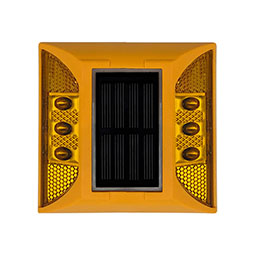
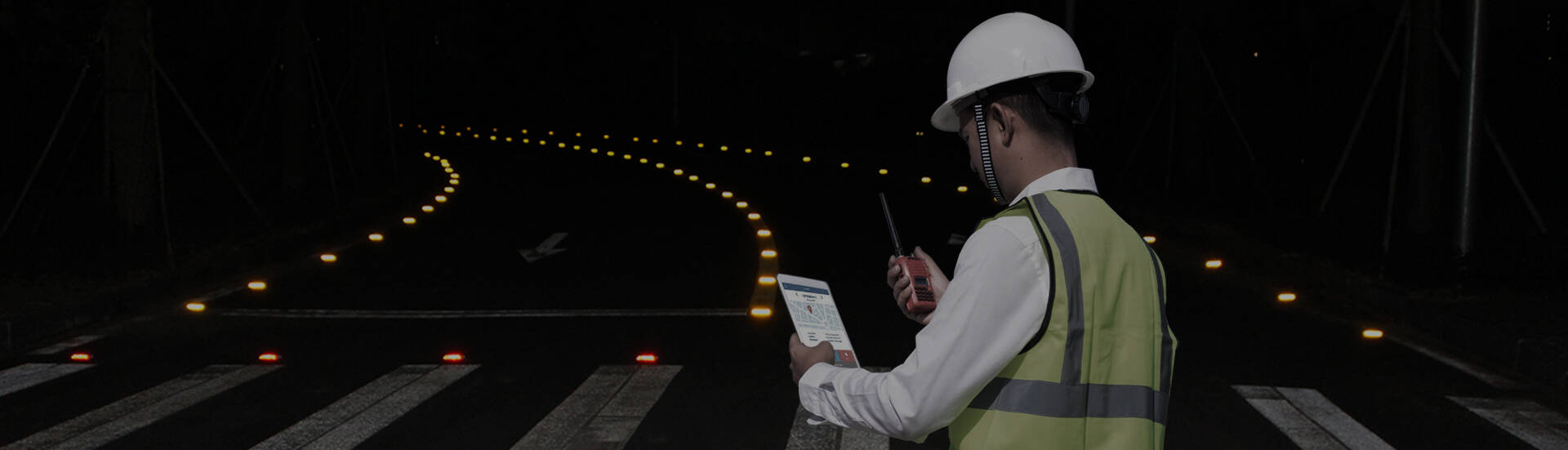
As a core component of outdoor traffic safety infrastructure, solar road studs are widely used in various settings—including highways, sidewalks, parks, and tunnels—thanks to their self-powered operation, active illumination, and wireless installation. However, during long-term outdoor use, many users encounter issues such as studs failing to light up, abnormal flashing, charging failures, and reduced battery life. These problems not only compromise traffic safety but also increase maintenance costs. This article will comprehensively analyze the eight core reasons why solar road studs fail to function, providing actionable troubleshooting and solutions. It will also reveal how to prevent failures at the source by selecting high-quality products—a conclusion drawn from HOAN Traffic’s (haroadstud.com) years of industry expertise.
The proper functioning of solar road studs relies on the coordinated operation of core components such as solar panels, batteries, LED lights, and controllers. However, due to their long-term exposure to the outdoors, they must withstand multiple challenges—including vehicle rolling, rain exposure, intense heat, and dust accumulation. A malfunction in any single component can cause the road stud to “stop working.”
Based on statistics from HOAN Traffic’s technical team, with over 15 years of industry experience, 80% of reported solar road stud failures stem from subpar product quality, while 20% result from improper installation or maintenance. This article will systematically break down the causes and troubleshooting methods for each type of failure, helping users resolve issues quickly. It will also guide readers in selecting reliable products to reduce failure rates at the source and highlight HOAN Traffic’s core strengths in ensuring the quality of solar road studs.
The solar panel is the core component responsible for charging the road stud. Once obstructed or damaged, the road stud will gradually cease to function due to an inability to charge properly. This is also the most frequently reported issue by users.
Specific Causes: ① Outdoor dust, sand, oil stains, fallen leaves, and other debris accumulate on the solar panel’s surface over time, blocking sunlight and causing a sharp drop in charging efficiency; ② Vehicle rolling or accidental impacts cause the solar panel to become scratched, cracked, or deteriorated, or even result in the panel detaching; ③ Improper installation of the road stud, leaving it permanently in the shade of trees or buildings, resulting in insufficient sunlight to meet charging requirements.
Quick Troubleshooting: Check the solar panel surface for obstructions, scratches, or damage. Wipe the panel with a clean cloth, then place it in direct sunlight for 4–6 hours. If the road stud still fails to light up, the panel may be damaged.
Solutions: ① Regularly clean the surface of the solar panel to prevent the buildup of dust and grease; ② Choose solar panels with wear-resistant and pressure-resistant surfaces (such as the monocrystalline silicon wear-resistant panels used by HOAN Traffic) to reduce the risk of scratches and damage; ③ Avoid shaded areas during installation to ensure sufficient daily sunlight exposure.
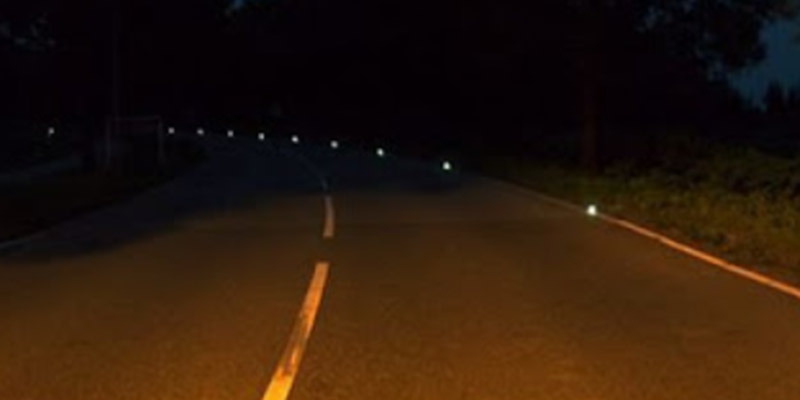
The battery is the core component for storing electrical energy in solar road studs, and its lifespan directly determines the stud’s operational duration. Battery aging or failure can result in the stud failing to charge, reduced runtime, or even complete failure to illuminate.
Specific Causes: ① The lithium battery has reached the end of its cycle life (conventional lithium batteries last 3–5 years, while low-quality ones last only 1–2 years), resulting in a significant decline in storage capacity; ② Extreme outdoor temperatures (below -20°C or above 70°C) cause the battery to swell, leak, or experience internal short circuits; ③ Prolonged undercharging during continuous rainy weather leads to permanent battery degradation, preventing normal energy storage; ④ Some manufacturers falsely advertise battery capacity or use substandard batteries, resulting in failure after only a few months of use.
Quick Troubleshooting: Place the road stud in direct sunlight to fully charge it, then switch to constant-on mode. If the runtime is less than 24 hours, or if it turns off shortly after charging, this indicates that the battery has aged or failed.
Solutions: ① Choose high-capacity lithium batteries with a long cycle life (HOAN Traffic solar road studs use industrial-grade lithium batteries with a lifespan of 5–7 years); ② Avoid exposing road studs to extreme temperatures for extended periods; if necessary, select models reinforced for high and low temperatures; ③ Regularly check battery status and choose road studs with replaceable batteries to reduce maintenance costs.
Solar road studs are exposed to the outdoors for extended periods, making them highly susceptible to water ingress from rain, dew, and standing water. This can cause short circuits in the wiring, controller, and LED chips, making it one of the primary causes of failure for outdoor road studs.
Specific causes: ① Insufficient waterproof rating (below IP65), unable to withstand heavy rain or prolonged immersion in standing water; ② Aging of sealing rings or peeling of adhesive, leading to reduced sealing performance and moisture ingress; ③ Cracked or crushed housing, compromising the seal and allowing direct rainwater infiltration; ④ Inadequate sealing during manufacturing, resulting in gaps.
Quick Troubleshooting: Inspect the housing for cracks or signs of adhesive peeling. If the stud flickers abnormally or fails to illuminate, and there has been recent heavy rain, water ingress is the most likely cause.
Solutions: ① Prioritize IP68-rated waterproof road studs (the highest waterproof rating, capable of long-term submersion) when purchasing; for example, the entire HOAN Traffic solar road stud series meets IP68 standards; ② Choose road studs with a fully sealed structure and cast aluminum casings to enhance sealing performance; ③ Ensure adhesive is applied evenly during installation, inspect the seal regularly, and promptly replace aged O-rings.
Solar road studs installed on road surfaces must withstand vehicle rolling and pedestrian foot traffic. If the housing material is poor or lacks sufficient compressive strength, it is highly prone to cracking, leading to damage of internal components and subsequent malfunctions.
Specific Causes: ① The housing is made of thin plastic, low-quality aluminum alloy, or other materials with poor compressive strength; ② The solar stud’s compressive strength rating is insufficient to withstand the weight of heavy vehicles such as trucks and construction vehicles (standard road surfaces require ≥10 tons, while highways require ≥20 tons); ③ Improper installation, resulting in loose or displaced road studs that are prone to cracking when run over by vehicles; ④ Unreasonable housing design causing uneven stress distribution, leading to cracking after prolonged rolling.
Quick Troubleshooting: Inspect the road stud housing for cracks, deformation, or looseness. If internal wiring or LED chips are exposed, it indicates damage from heavy rolling.
Solutions: ① Choose road studs with a one-piece cast aluminum housing for superior load-bearing capacity (HOAN traffic road studs can withstand up to 30 tons, suitable for highways and heavy-duty vehicle traffic); ② Ensure the road stud’s load-bearing rating matches the application scenario; avoid substituting highway-grade models with pedestrian-path models; ③ Use proper installation methods to ensure the road studs are securely fastened, preventing loosening or displacement.
The LED light source is the core component responsible for the illumination of solar road studs. Once damaged, the road stud will immediately lose its warning function. Common symptoms include complete failure to illuminate, dim lighting, or abnormal flickering.
Specific Causes: ① Use of low-quality LED chips, which experience rapid light decay and have a short lifespan, failing after 1–2 years of use; ② Water ingress into the road stud or unstable voltage, causing the LED chips to burn out; ③ Poor electrical contact or cold solder joints, preventing the LED from receiving power normally; ④ Prolonged exposure to high temperatures and direct sunlight, accelerating the aging of the LED chips.
Quick Troubleshooting: Fully charge the track spike and observe whether the LED emits light. If it does not light up at all or the light is uneven, the LED light source is damaged.
Solutions: ① Choose high-brightness industrial-grade LED chips, which have slow light decay and a long lifespan; ② Ensure the road stud is waterproof and the voltage is stable to prevent LED burnout; ③ Choose products with secure soldering and precise craftsmanship to minimize contact issues.
The controller acts as the “brain” of the solar road stud, responsible for controlling charging, discharging, and lighting modes (constant on/flashing). Once the controller fails, the road stud will exhibit various abnormalities.
Specific Causes: ① Light sensor malfunction, resulting in lights staying on during the day but not at night, or remaining off all day; ② Abnormal charging/discharging logic, preventing proper charging or discharging, leading to battery undercharge or damage from overcharging; ③ Low-quality controllers unable to withstand high or low temperatures, causing short circuits or system crashes in extreme weather; ④ Poor signal transmission due to faulty controller circuit connections.
Quick Troubleshooting: Test the road stud in both sunlight and darkness. If the lighting behavior is abnormal (e.g., lit during the day but not at night) or if it fails to charge, the controller is likely faulty.
Solutions: ① Choose a controller equipped with a smart light-sensing chip for high sensitivity and stability; ② Select a controller designed for a wide temperature range, capable of stable operation between -20°C and 70°C; ③ Regularly inspect the controller’s wiring to ensure good contact.
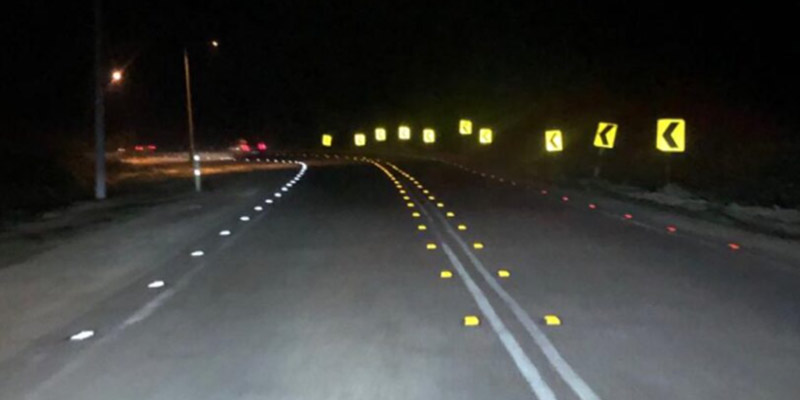
Many solar road stud failures are not due to product defects but rather result from improper installation locations or methods. These issues can be quickly resolved by adjusting the installation method.
Specific Causes: ① Installation in areas with prolonged shade (e.g., under trees or bridges), preventing the solar panel from charging properly; ② Uneven installation or insufficient adhesive causes the stud to loosen or shift, making it prone to damage from being run over and allowing moisture to enter; ③ Buried too deeply or protruding too high—burying too deeply blocks sunlight from reaching the solar panel, while protruding too high makes it susceptible to being scraped by vehicles; ④ Installed in the middle of the road or in areas with heavy traffic, where long-term rolling by heavy vehicles exceeds the stud’s load-bearing capacity.
Quick Troubleshooting: Check whether the installation location has sufficient sunlight, whether the installation is secure, and whether the height is appropriate. If any of the above issues are present, the problem can be preliminarily attributed to installation-related faults.
Solutions: ① Select a location with ample sunlight and no obstructions during installation, avoiding shaded areas; ② Use the correct installation method: for surface-mounted studs, ensure the adhesive is applied evenly; for embedded studs, ensure they are securely installed and flush with the road surface; ③ Select an appropriate installation location based on the usage scenario: choose areas with low traffic volume for sidewalks and residential communities, and select installation methods suitable for heavy-duty vehicles on highways.
Most of the above seven types of failures can be resolved through maintenance and adjustments. However, if the product is substandard, frequent failures will occur even with proper maintenance—this is the root cause of 90% of solar road stud failures.
Specific Causes: ① Manufacturers cut corners by using substandard materials (such as thin plastic casings, low-efficiency solar panels, and inferior batteries); ② Lack of strict quality control during production, with no waterproofing, pressure resistance, or aging tests conducted, resulting in low product pass rates; ③ Absence of relevant certifications (such as CE, ROHS, ISO), with products failing to meet industry standards and having extremely short lifespans; ④ Misrepresentation of product specifications (such as waterproof rating, battery capacity, and pressure resistance), leading to performance that falls short of advertised claims in actual use.
Quick Troubleshooting: If the road studs have been in use for a short period (less than 1 year), frequently experience multiple malfunctions, and lack certifications or quality inspection reports, they are most likely substandard products.
Solution: Choose reputable manufacturers with industry experience and certified products to prevent failures at the source—this is the quality philosophy HOAN Traffic has consistently upheld.
Rather than troubleshooting and repairing after a failure occurs, it is better to take preventive measures in advance. This not only reduces maintenance costs but also ensures the long-term stable operation of the road studs. Based on the experience of HOAN Traffic’s technical team, we have summarized the following 5 practical tips:
For outdoor use, waterproofing and impact resistance are essential requirements. IP68-rated waterproofing can withstand heavy rain and standing water, while cast aluminum housings can withstand being run over by heavy vehicles, significantly reducing the likelihood of water ingress and housing damage.
Monocrystalline silicon solar panels offer high photovoltaic conversion efficiency and can charge normally even in low-light conditions; high-quality lithium batteries have a long cycle life and stable power storage, helping to avoid frequent battery replacements and reduce malfunctions.
Avoid shaded areas during installation to ensure sufficient sunlight; strictly follow the installation instructions to ensure the road studs are securely fastened and flush with the road surface, preventing loosening or displacement.
Clean the surface of the solar panels every 1–3 months to remove dust and grease; regularly inspect the road stud casings and seals, and promptly replace aged O-rings and loose road studs.
Products from reputable manufacturers undergo strict quality inspections, hold relevant certifications, and come with comprehensive after-sales support. They provide professional installation guidance and troubleshooting solutions, reducing failure rates at the source.
Most malfunctions in solar road studs stem from product quality issues, improper installation, or inadequate maintenance. By choosing HOAN Traffic’s solar road studs, you can avoid failures at their source and reduce maintenance costs through comprehensive measures covering core components, production quality control, and after-sales support. Additionally, HOAN Traffic offers a full range of products, including solar road studs, traffic signals, and radar speed detection signs, to meet the needs of various projects. For more details, please visit our official website at haroadstud.com.