In various transportation engineering, municipal construction, and landscape renovation projects, solar-powered road studs serve as a core facility for enhancing traffic safety at night and in low-visibility conditions. The appropriateness of their selection directly determines the project’s safety outcomes, construction efficiency, and long-term operational and maintenance costs. Selecting the wrong solar road studs can not only hinder project acceptance and cause maintenance costs to skyrocket but may also create serious traffic safety hazards. This article will guide project managers, purchasers, and contractors step by step, starting from project requirements, to scientifically select solar road studs suitable for their specific projects, avoid common selection pitfalls, and ensure the safe and efficient implementation of the project.
Thanks to their core advantages—self-powered operation, active illumination, and no need for wiring—solar road studs have been widely adopted in various project scenarios, including highways, pedestrian paths and parks, tunnels and bridges, residential communities, and remote areas without grid power, becoming the “invisible guardians” of nighttime traffic safety. According to data from the World Road Association, over 40% of fatal traffic accidents occur at night, with poor visibility of road boundaries and lane markings being one of the primary contributing factors.
Unlike traditional reflective road studs, which rely on headlight reflection to function, solar-powered road studs charge during the day and emit light at night. They provide clear warnings even in adverse conditions such as darkness, rain, fog, and snow, effectively reducing the incidence of nighttime accidents. However, it is important to note that project scenarios, budgets, and environmental requirements vary greatly. Blind procurement can easily lead to issues such as “high-end products wasting costs” or “low-cost products being unreliable” (frequent replacements affecting project reputation).
The core objective of this article is to help professionals involved in various projects precisely match solar road studs with project requirements, balancing safety, durability, and cost-effectiveness, so that every dollar invested in the project delivers maximum value.
The prerequisite for selection is a thorough understanding of the project. Only by clearly defining the project’s core requirements and constraints can one avoid making uninformed choices. It is recommended to establish clear selection criteria based on two dimensions: project type and core constraints.
Different scenarios impose vastly different requirements on the performance, materials, and installation methods of solar road studs. This is the primary basis for selection:
Highway/Road Construction Projects: Core requirements include resistance to rolling and long-distance visibility. These projects must withstand frequent passage by heavy vehicles, demanding extremely high compressive strength and brightness from the solar road studs, while also withstanding complex outdoor weather conditions;
Sidewalk/Park/Greenway Projects: Primarily used by pedestrians and non-motorized vehicles, these projects prioritize aesthetics and low maintenance. While high compression resistance is not required, the lights must emit a soft, non-glare illumination and be easy to install without disrupting the landscape;
Tunnel/Bridge Projects: Located in low-light, high-humidity environments, these projects demand solar road studs with strong low-light charging capabilities and superior waterproofing to prevent short circuits and failures caused by moisture;
Residential/Community Projects: Characterized by low vehicle speeds and high pedestrian traffic, with a particular focus on the safety of the elderly and children. Models that are easy to install, provide stable illumination, and do not pose a tripping hazard to pedestrians must be selected;
Remote/Off-Grid Areas: The core requirement is stable battery life. Solar road studs must function normally even under low light or during prolonged rainy periods without relying on external power sources.
In addition to scenario requirements, project budget, timeline, environmental conditions, and compliance requirements will also directly influence product selection decisions:
Budget Constraints: A balance must be struck between product cost, installation cost, and long-term maintenance costs; avoid focusing solely on unit price while overlooking future replacement expenses;
Timeline Constraints: Confirm the lead time for solar road studs and the complexity of installation to prevent project delays caused by late product delivery or installation difficulties;
Environmental Constraints: Consider the temperature range, rainfall, humidity, and whether the project site is in a coastal salt fog area. These factors directly determine the waterproofing and weather resistance requirements for solar road studs;
Compliance Constraints: Compliance with local transportation industry standards is required. Some projects may also require international certifications such as CE, ROHS, ASTM, and EN1463 to ensure project acceptance.
After clarifying project requirements, focus on the core performance metrics of solar road studs and match them one by one with the project scenario to avoid omitting key parameters and ensure a scientific and reasonable selection.
The core function of solar road studs is “warning and guidance.” Brightness and visibility distance directly determine safety effectiveness and must be matched according to the project scenario:
LED Brightness: Prioritize high-brightness LED chips ≥5mm in size, which provide uniform illumination and strong penetration, preventing nighttime visibility issues caused by insufficient brightness;
Visibility Distance: For highway and arterial road projects, select products with a visibility distance of ≥500 meters. For sidewalks and residential areas, this distance may be appropriately reduced but must remain ≥300 meters to ensure pedestrians and vehicles have sufficient reaction time;
Lighting Angle and Mode: We recommend selecting 360° omnidirectional models to ensure visibility from any angle. These should support both constant-on and flashing modes: use constant-on mode (soft and comfortable) for standard road sections, and flashing mode (enhanced warning) for hazardous areas.
Solar road studs are continuously exposed to outdoor conditions and must withstand vehicle rolling, pedestrian traffic, and weathering. The materials and compressive strength directly determine their service life:
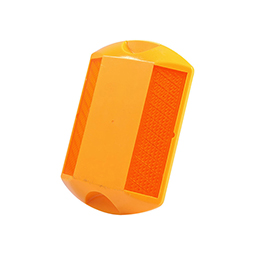
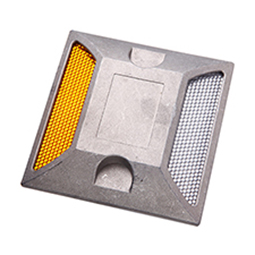
Housing Material: Aluminum alloy (high compressive strength, corrosion-resistant) is suitable for high-traffic scenarios such as highways and main roads; PC material (lightweight, high cost-effectiveness) is suitable for low-traffic scenarios such as sidewalks and residential areas; glass material (high reflectivity) can be used for supplementary warning applications;
Compressive Strength: For highway projects, select products with a compressive strength of ≥20 tons; for sidewalks and residential areas, ≥10 tons is sufficient to prevent damage or deformation caused by insufficient compressive strength;
Anti-aging and Corrosion Resistance: Select products with UV resistance and anti-yellowing properties. For coastal projects, pay special attention to salt spray corrosion resistance to ensure the road studs do not fade or become brittle over time.
The reliability of solar road studs hinges primarily on the performance of the battery and solar panel, which is particularly critical for projects in remote or rainy regions:
Battery Type: Prioritize lithium-ion batteries, which offer a long service life, stable charging and discharging, and significantly superior endurance compared to traditional nickel-metal hydride batteries;
Endurance: Standard projects must meet the requirement of “8 hours of charging under sunlight, with ≥40 hours in constant-on mode and ≥120 hours in flashing mode.” In rainy regions, ensure the system can maintain normal illumination for 3–7 consecutive days of overcast or rainy weather to prevent lights from turning off at night due to insufficient power;
Solar Panel Efficiency: Select monocrystalline silicon solar panels with a photovoltaic conversion efficiency of ≥18%-22%. These panels can charge quickly even in low-light conditions such as overcast days or under tree shade, ensuring stable year-round operation.
Outdoor environments are complex, and water resistance and weather resistance directly determine the failure rate of solar road studs. Selection must be based on the local climate of the project site:
Waterproof Rating: Prioritize IP68-rated waterproofing (capable of withstanding prolonged submersion and heavy rain/flooding). For standard projects, select at least IP67-rated (capable of withstanding short-term submersion) to prevent short circuits and LED damage caused by water ingress;
Temperature Adaptability: Select products capable of stable operation within the -20°C to +70°C range to accommodate most global climate zones. For extremely cold regions, choose low-temperature-resistant reinforced models (-40°C to +70°C) to ensure reliability during extreme weather conditions.
Installation convenience and long-term maintenance costs directly impact project timelines and ongoing operational expenses. Selection should be based on pavement type:
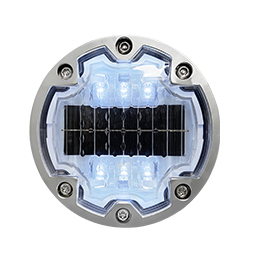
Installation Type: Surface-mounted (no drilling required; secured directly with adhesive) is suitable for surfaces like pavers and stone where construction is difficult; it offers quick installation without damaging the pavement. Recessed (sunken installation) is suitable for concrete and asphalt surfaces; it provides greater stability, resistance to rolling, and is less prone to damage from collisions;
Maintenance Requirements: Select products with low-maintenance designs where batteries and LED chips can be easily replaced. This prevents the entire road stud from becoming unusable due to the failure of a single component, thereby reducing long-term maintenance costs;
Construction Efficiency: Prioritize models that can be quickly installed by a single person to shorten the construction cycle and minimize disruption to on-site traffic and project progress.
Some projects have specific requirements, necessitating the selection of solar road studs that support customization to ensure compatibility with the overall project:
Color Customization: White (standard route guidance), yellow (warning zones), and red (hazard zones) can be customized according to project safety requirements to align with safety regulations;
Parameter and Logo Customization: Parameters such as brightness, battery life, and lighting modes can be customized according to project technical requirements. Additionally, project logos or symbols can be printed to enhance project visibility;
Special Designs: Aesthetic models can be customized for landscape projects; low-light charging-enhanced models for tunnel projects; and anti-theft, impact-resistant models for remote areas, meeting the unique needs of different projects.
There are numerous models of solar road studs on the market. They can be categorized based on project type and performance requirements for precise matching. There is no need to pursue “high-end” models; simply focus on finding the “right fit.”
Solar Road Studs for Expressways: High load-bearing capacity (≥20 tons), high brightness (visible distance ≥500 meters), IP68 waterproof rating. Designed for heavy-duty vehicle traffic, they withstand extreme weather conditions to ensure long-term, stable operation;
Solar Road Studs for Walkways: Lightweight with soft illumination, primarily installed flush with the ground for easy installation without disrupting the landscape. Ideal for parks, greenways, and residential walkways;
Tunnel-specific solar road studs: Strong charging capability in low-light conditions, resistant to humidity and dust, primarily operating in constant-on mode to ensure clear visibility in low-light tunnel environments;
Coastal-specific solar road studs: Resistant to salt fog corrosion, made of corrosion-resistant materials, with a waterproof rating of ≥IP68, suitable for humid coastal and salt fog environments to prevent corrosion damage.
Standard Solar Road Studs: Balanced performance that meets routine project requirements; moderately priced; suitable for most municipal, residential, and pedestrian path projects; offers the best value for money;
High-Performance Solar Road Studs: High brightness, high compression resistance, and long battery life; suitable for high-standard projects such as highways, tunnels, and remote areas; longer service life and lower long-term maintenance costs;
Economy-Class Solar Road Studs: Affordable, meeting basic warning requirements; suitable for projects with limited budgets, low traffic volume, and short-term use (e.g., small parks, temporary construction zones).
Combining the selection criteria and road stud types discussed above, we have developed a standardized selection process. Project professionals can follow this guide directly to ensure accurate and efficient selection:
Step 1: Identify Core Project Information
Determine the project type (highway/sidewalk/tunnel, etc.), application scenario, traffic volume, and local climate, and identify the project’s core requirements (e.g., high compression resistance, long battery life, aesthetic appeal).
Step 2: Define Key Performance Metrics
Based on project requirements, determine key parameters such as brightness, visibility distance, waterproof rating, compression strength, and battery life to define the selection scope.
Step 3: Match the Stud Type
Based on the parameter requirements, select the appropriate stud type (e.g., high-performance models for highways, standard models for sidewalks) and eliminate products that do not meet the specifications.
Step 4: Verify Product Certifications and Manufacturer Qualifications
Confirm that the product complies with local industry standards and holds the required certifications (e.g., CE, RoHS, IP68). Simultaneously, verify the manufacturer’s production capabilities and project experience to avoid purchasing substandard products.
Step 5: Request Samples for Testing
Before bulk purchasing, request samples to test their brightness, charging efficiency, and waterproof performance. This ensures the actual product performance matches the specified parameters and prevents misrepresentation of specifications.
Step 6: Confirm Service and Delivery
Confirm the manufacturer’s lead time, installation guidance, and after-sales support (such as warranty period, fault handling, and spare parts supply) to ensure alignment with the project schedule and future maintenance requirements.
Among numerous solar road stud manufacturers, HOAN Transportation (Henan Hoan Transportation Facilities Co., Ltd.) has become the preferred partner for many global transportation projects thanks to over 15 years of industry experience, a comprehensive product portfolio, and strict quality control. Whether for highways, tunnels, bridges, or pedestrian paths, parks, and residential communities, HOAN Transportation provides tailored solar road stud solutions. Our core advantages are reflected in the following five points:
HOAN Transportation has specialized in the R&D and production of traffic safety facilities for 15 years, focusing deeply on the solar road stud sector. We have served various traffic projects in over 100 countries and regions worldwide. With a mature production system, a professional R&D team, and extensive project implementation experience, we can accurately identify the pain points of different projects, provide practical selection recommendations and solutions tailored to project needs, avoid common selection pitfalls, and ensure the smooth implementation of projects.
HOAN Traffic offers a complete product portfolio of solar road studs, covering all types—including models specifically designed for highways, sidewalks, tunnels, and coastal areas—as well as standard, high-performance, and economy variants. Whether the project requires high compression resistance, long battery life, low-light charging capabilities, or customized solutions, we provide a one-stop solution, eliminating the need to search multiple suppliers for compatible products and significantly improving procurement efficiency. We have developed five generations of solar road studs, ranging from traditional cast aluminum models to ultra-thin designs, to meet the diverse needs of different regions. For example, our “Pearl” series solar road studs have been in stable use in the South African market for a decade, while our cast aluminum models have gained high recognition in the Middle East market.
HOAN Traffic operates a 3,000-square-meter professional dust-free production facility and has established a rigorous quality control system. From component procurement and manufacturing to final product shipment, every solar road stud undergoes multiple testing procedures—including brightness, water resistance, pressure resistance, and battery life tests—to ensure product performance aligns with specified parameters and eliminate any misrepresentation of specifications. The products have obtained international certifications such as ISO, CE, RoHS, and FCC, and comply with European and American standards including EN1463-1 and ASTM D4280. With an IP68 waterproof rating and an operating temperature range of -40°C to +70°C, they can withstand extreme weather conditions and have a service life of 5–7 years, significantly reducing long-term maintenance costs.
HOAN Traffic has a professional R&D team that can customize lighting colors, illumination modes, product specifications, and exterior logos based on specific project needs. We also offer specialized designs (anti-theft, impact-resistant, and landscape models) to meet the bidding and implementation requirements of various special projects, providing complete certification and testing reports to facilitate smooth project acceptance.
HOAN Traffic offers comprehensive end-to-end services, ranging from product selection consultation and sample testing to delivery, installation guidance, and after-sales maintenance. With 24/7 online support and stable lead times, we ensure timely product delivery without delaying project schedules. Additionally, we provide a 2–5-year warranty, with our professional technical team handling fault resolution, spare parts supply, and operational guidance to completely eliminate concerns regarding post-installation maintenance.