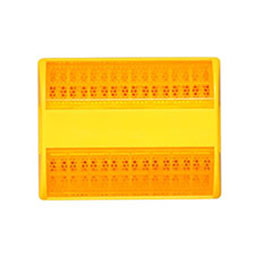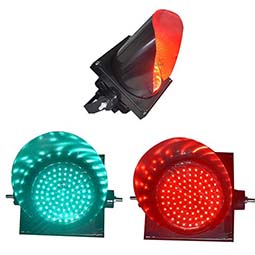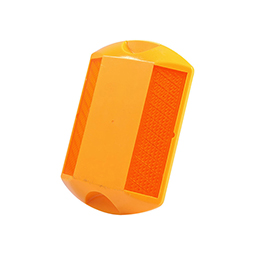
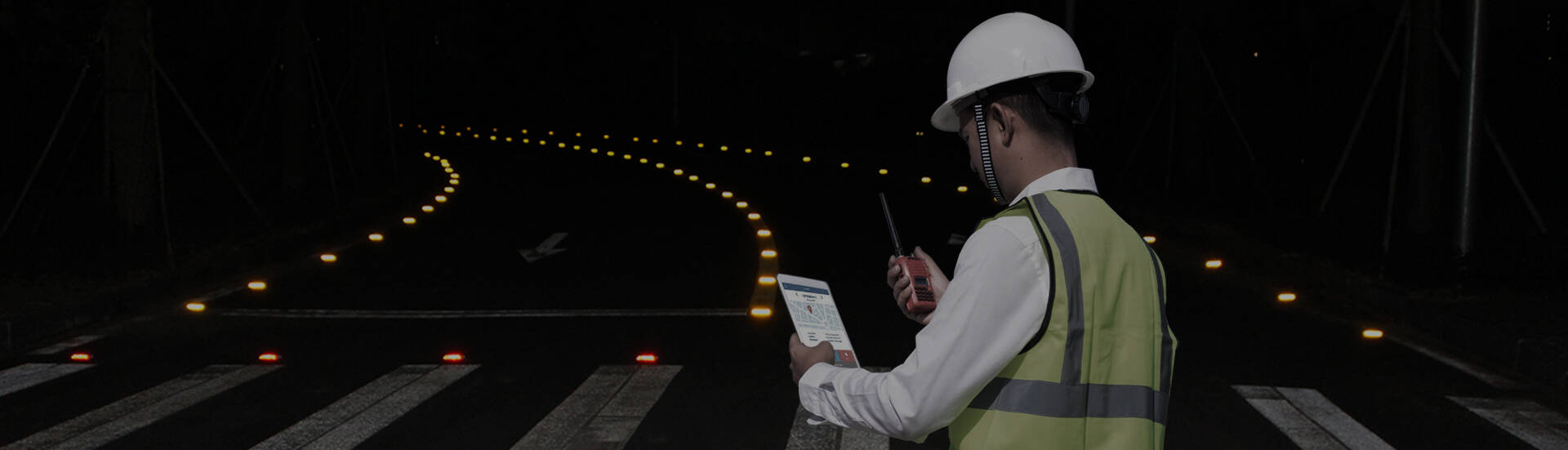
Low-visibility conditions—such as nighttime driving, rainy or foggy weather, and mountain curves—have long been high-risk areas for road safety. Traditional road markings are prone to wear and tear and offer poor reflectivity, making it difficult to provide drivers with clear visual guidance and increasing the likelihood of traffic accidents such as rear-end collisions and lane departures. Reflective road studs (also known as cat’s-eye studs), as passive road safety devices, have become the core solution for addressing safety issues in low-visibility scenarios due to their advantages of requiring no power supply, being stable and reliable, and offering high visibility.
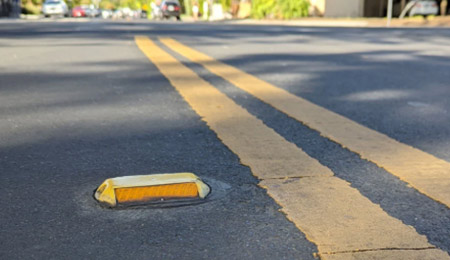
Reflective road studs utilize the principle of retro-reflection to reflect vehicle headlights back into the driver’s field of vision along the original direction, creating highly visible markers. Requiring no external power source or electronic components, they can operate stably over the long term even in extreme environments.
The core advantage of reflective road studs stems from their unique retro-reflective principle—they contain high-purity glass beads or micro-prism reflective structures. When vehicle headlights strike the surface of the stud, the reflective structure bounces the light back along the original direction of illumination, precisely reflecting it into the driver’s field of vision to form a clear, high-visibility marker. This ensures visibility from a distance even in low-visibility conditions such as at night or during rain and fog.
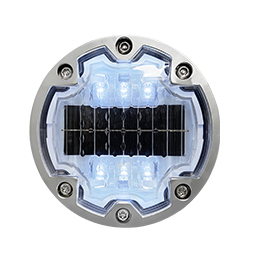
Compared to active lighting devices (such as solar-powered road studs), the greatest advantage of reflective road studs is their “zero energy consumption and zero failure rate”: they require no batteries or circuitry, eliminating issues such as power outages, short circuits, and battery degradation. They maintain stable performance even under extreme temperatures ranging from -20°C to 85°C and in harsh environments such as high humidity and heavy rain. Additionally, all HOAN reflective road studs comply with international and domestic standards such as JT/T 967-2015 and ASTM D4280, ensuring that their reflectivity and durability meet the industry’s highest standards and providing reliable protection for road safety.
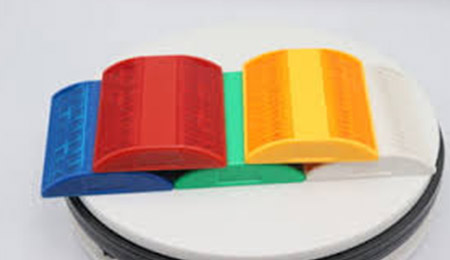
Different road scenarios, traffic volumes, and environmental requirements place varying demands on the materials and performance of reflective road studs. With 15 years of deep industry expertise, HOAN Traffic has developed a full range of reflective road stud products covering four mainstream types, precisely tailored to various scenarios to meet the selection needs of different projects.
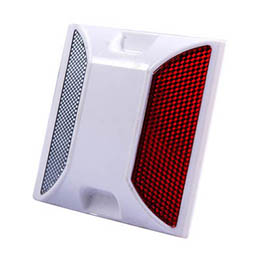
Plastic reflective road studs are made from high-strength ABS/PC engineering plastics. They are lightweight and cost-effective, making them an excellent value-for-money choice for standard applications. Their core performance includes a load-bearing capacity of 10–16 tons, capable of withstanding long-term traffic from small vehicles and non-motorized vehicles. The surface undergoes weather-resistant and UV-resistant treatment to prevent fading and aging. Installation is straightforward, allowing for quick fixation using specialized adhesive or bolts.
Suitable applications primarily include urban side streets, parking lots, bicycle lanes, and temporary emergency barriers—scenarios with low traffic volume and no heavy-duty vehicles. HOAN’s corresponding product is the HA-101 Plastic Reflective Road Stud, featuring a two-tone reflective design with clear visibility and strong weather resistance. It meets the warning requirements for standard roads and is the preferred choice for projects with limited budgets.
Cast aluminum reflective road studs are manufactured using an integrated die-casting process with aluminum alloy. The material is hard and the structure is robust, with a core performance rating of ≥40 tons of compressive strength. They can withstand long-term rolling from heavy-duty vehicles such as trucks and construction vehicles, while also offering excellent resistance to wear, corrosion, and impact. They are resistant to breakage and deformation, with a service life of up to 5 years.
Primary applications include highways, national roads, heavy-duty lanes, bridges, and tunnel entrances—key sections with high traffic volume and dense heavy-duty vehicle traffic. As HOAN’s premium heavy-duty solution, cast aluminum reflective road studs have successfully been deployed in numerous large-scale road projects worldwide due to their stable performance, serving as a core safeguard for highway safety.
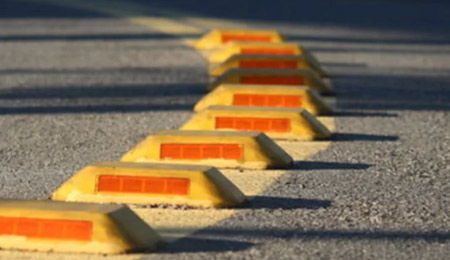
Ceramic reflective road studs are made of high-density ceramic material, offering core advantages such as high-temperature resistance, colorfastness, anti-aging properties, and resistance to dust accumulation. With a compressive strength exceeding 30 tons and a smooth, wear-resistant surface, they maintain stable reflective performance even after prolonged outdoor exposure. Their service life exceeds 5 years, significantly reducing long-term maintenance costs.
Ideal applications include humid regions, high-temperature road sections, and areas where long-term maintenance is difficult (such as mountain roads and remote sections). Leveraging its professional R&D capabilities, HOAN has developed customized ceramic formulations to ensure these reflectors perform reliably in extreme environments—such as the rainy south and the high-temperature northwest—effectively addressing the common issue of conventional road studs failing under harsh conditions.
Glass reflective road studs are made of high-borosilicate tempered glass. Their core advantage is 360° omnidirectional reflectivity with no blind spots. Featuring an internal structure of high-purity glass beads, they offer a high reflectivity coefficient and strong penetration in rainy or foggy conditions. With a compressive strength exceeding 20 tons, they provide drivers with comprehensive visual guidance in low-visibility scenarios such as at night, in tunnels, or during rain and fog.
Ideal applications include mountain curves, tunnels, low-light nighttime sections, and emergency evasion zones—scenarios where reflective performance is critical. HOAN’s omnidirectional glass road studs specifically address the blind spots found in conventional road studs, effectively improving driver reaction times and reducing accident rates in complex road conditions.
The reason reflective road studs have become “essential equipment” for road safety lies in their six core advantages. They precisely address the shortcomings of traditional warning facilities while meeting the safety requirements of various scenarios, balancing practicality with cost-effectiveness.
The retro-reflective design of these road studs ensures a nighttime visibility range of up to 500 meters. Their reflective performance in rain, fog, and snow far surpasses that of traditional road markings, providing drivers with clear lane guidance and hazard warnings even in low-visibility conditions. This is particularly crucial in emergency situations such as accidents, roadwork, or temporary traffic restrictions, where they can rapidly mark hazardous areas to prevent secondary accidents.
Unlike active lighting devices, reflective road studs contain no electronic components and require no power supply; they rely entirely on vehicle headlights to achieve reflection. This eliminates issues such as power outages, circuit failures, and battery degradation at the source, ensuring long-term stable operation with minimal maintenance. They maintain consistent performance even under harsh conditions such as extreme temperatures, humidity, and heavy rain.
Different types of reflective road studs offer compressive strengths ranging from 10 to 40 tons, accommodating the needs of various traffic flows from small vehicles to heavy-duty trucks. In particular, HOAN’s cast aluminum and ceramic reflective road studs can withstand long-term rolling, are resistant to breakage and deformation, and have a service life 3–5 times longer than traditional road markings, significantly reducing road maintenance costs.
Reflective road studs can be installed using either adhesive or bolt-fastening methods, requiring no complex construction. A single stud can be installed in just 10 minutes, allowing for rapid deployment across various road environments. Routine maintenance involves only wiping away surface dust, with no complicated procedures, significantly reducing labor and material costs. This makes them particularly suitable for rapid deployment in emergency situations.
The total cost of purchasing, installing, and maintaining reflective road studs is significantly lower than that of active lighting devices such as solar-powered road studs, offering long-term benefits from a one-time investment. Through its factory-direct supply model, HOAN eliminates middlemen to provide cost-effective products that meet the needs of projects with limited budgets, temporary emergency scenarios, and other diverse requirements.
Reflective road studs adhere to internationally recognized color standards: white for lane guidance, yellow for lane edge warnings, red for no-entry zones, and green for bicycle lanes. This clear visual guidance helps drivers quickly identify road information, enhancing traffic safety. In emergency situations, red reflective road studs can be used to rapidly warn of hazardous areas and strengthen safety protection.
During the selection, installation, and use of reflective road studs, many users hold misconceptions that not only affect reflectivity and service life but may also create safety hazards. Drawing on HOAN Traffic’s 15 years of industry experience, we have compiled four common misconceptions to help you avoid these pitfalls.
Many users, in an effort to cut costs, blindly choose low-cost plastic road studs for applications such as highways and heavy-duty lanes, leading to rapid breakage and failure. Conversely, some users overemphasize durability by selecting cast aluminum road studs for urban side streets and parking lots, resulting in unnecessary cost waste. The correct approach is to select road studs made of the appropriate material based on traffic volume, road conditions, and environmental requirements. HOAN offers one-on-one selection advice to help you avoid these pitfalls.
Some users install reflective road studs with arbitrary spacing, particularly on hazardous sections such as curves and downhill slopes. Installing them too close together leaves drivers insufficient reaction time; or installing them too far apart, which fails to provide continuous visual guidance. The correct approach is: 10–15 meters for highway studs and 20–30 meters for general roads. Densely spaced installation is required in hazardous areas, curves, and downhill sections to ensure drivers have sufficient reaction time.
Low-cost reflective road studs have poor sealing performance, allowing rainwater and moisture to easily penetrate the interior, causing the reflective layer to peel off and the material to age, resulting in failure within a short period. The correct approach is to select products with IP68-rated waterproofing and strong weather resistance. All HOAN reflective road studs undergo rigorous waterproofing and weather resistance testing, ensuring long-term stable performance in harsh environments such as humidity, heavy rain, and high temperatures, thereby preventing premature failure.
Some users focus solely on price when purchasing, opting for low-cost, inferior reflective road studs. These have low reflectivity coefficients, with a nighttime visibility range of less than 100 meters, failing to provide effective warning and instead creating safety hazards. The correct approach is to look for micro-prism or high-bead glass reflective structures and ensure the reflectance coefficient meets national standards. HOAN reflective road studs use imported reflective materials with a reflectance coefficient exceeding national standards by 20%, providing clearer visibility.
HOAN Traffic (haroadstud.com) has dedicated 15 years to the R&D and production of road safety facilities, specializing in reflective road studs. With professional R&D capabilities, a rigorous quality control system, and a comprehensive product portfolio, it has become the preferred partner for numerous road projects worldwide. Its reflective road stud products not only cover the four mainstream types but also offer differentiated core advantages, precisely meeting the needs of various scenarios.
HOAN’s reflective road studs encompass four major categories: Economy, Heavy-Duty, Durable, and Omnidirectional. These correspond to core products such as the HA-101 plastic road stud, cast aluminum reflective road stud, ceramic reflective road stud, and glass omnidirectional road stud. This comprehensive portfolio provides a one-stop solution for selection needs across various projects—including urban roads, highways, emergency scenarios, and extreme environments—eliminating the need to search multiple sources for compatible products and enhancing procurement efficiency.
HOAN reflective road studs utilize imported microprism/high-bead glass reflectors, with a reflectance coefficient exceeding national standards by 20%, ensuring clearer visibility. Employing an integrated molding process, whether made of plastic, cast aluminum, or ceramic, they all feature excellent compression resistance, waterproofing, and weather resistance; All products have obtained international certifications such as ISO, CE, and ASTM, and undergo rigorous factory testing to ensure the stable and reliable performance of every road stud. Additionally, HOAN supports customization of dimensions, colors, and reflective surfaces to meet the bidding and implementation requirements of special projects.
To help users quickly select the right product, HOAN provides precise recommendations based on different application scenarios: For highways and heavy-duty lanes, we prioritize HOAN cast aluminum reflective road studs (compressive strength over 40 tons, durable and stable); For urban roads, parking lots, and emergency scenarios, we recommend the HA-101 plastic reflective road studs (cost-effective and quick to install); for tunnels, mountain curves, and low-visibility scenarios, we recommend HOAN glass omnidirectional road studs (360° reflectivity, strong penetration through rain and fog); for humid and high-temperature extreme environments, we recommend HOAN ceramic reflective road studs (durable and worry-free, with low maintenance costs).
As essential equipment for road safety, the selection and quality of reflective road studs directly impact safety performance in low-visibility conditions and long-term operating costs. Avoiding common pitfalls and selecting the appropriate reflective road studs based on specific application needs maximizes their warning effectiveness, reduces accident rates, and minimizes future maintenance costs.
With 15 years of deep expertise in road safety, HOAN Traffic delivers reliable reflective road stud solutions through professional R&D, rigorous quality control, and a comprehensive product lineup. Whether for conventional roads, high-speed heavy-duty applications, emergency scenarios, or extreme environments, HOAN provides tailored products and one-on-one selection guidance. Choose HOAN reflective road studs (haroadstud.com) to enhance safety in low-visibility conditions, simplify road maintenance, and safeguard every journey with professional quality.