Against the backdrop of global efforts to advance the ‘dual carbon’ goals and the development of green transport, the energy-efficient and safety-focused upgrading of transport infrastructure has become a core requirement for the industry, as well as a key procurement priority for road authorities and engineering contractors. According to authoritative statistics, the global transport sector accounts for approximately 23% of carbon emissions, making it a key area for achieving the ‘dual carbon’ goals. As road safety warning facilities form a vital component of transport infrastructure, the dual enhancement of their energy efficiency and safety has become a crucial lever for driving the development of green transport.
Traditional road studs have long suffered from significant shortcomings: reflective road studs rely entirely on the reflection of vehicle headlights, rendering them ineffective in low-visibility conditions such as at night, in rain, fog or sandstorms, and thus prone to causing traffic accidents; Mains-powered LED road studs, on the other hand, rely on the municipal grid for power, resulting in persistently high energy consumption. Furthermore, their installation involves complex wiring and high maintenance costs, which not only increases the operational burden on transport infrastructure but also runs counter to the principles of energy conservation and carbon reduction, making them ill-suited to meet the dual demands of modern transport for ‘energy efficiency and safety’. Solar-powered road studs, however, leverage the core advantages of renewable solar energy, low power consumption, high safety and ease of maintenance to successfully overcome the limitations of traditional road studs. They have become the optimal road safety solution that balances energy efficiency and safety, and represent the key choice for upgrading green transport infrastructure worldwide.
The core value of solar road studs lies in overcoming the dilemma that traditional road studs present—namely, that energy efficiency and safety cannot be achieved simultaneously. Through four key advantages, they deliver both maximum energy savings and reduced operational costs, whilst ensuring road safety warnings and minimising traffic accidents. Each of these advantages aligns closely with industry needs, balancing practicality, cost-effectiveness and regulatory compliance, making them the preferred choice for modernising transport infrastructure.
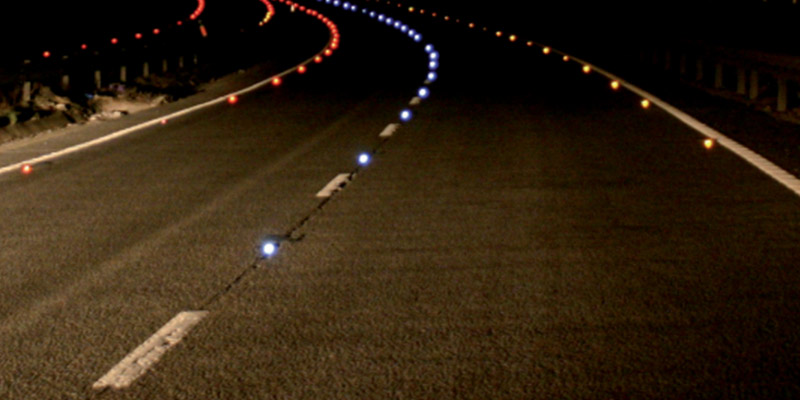
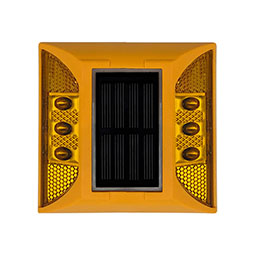
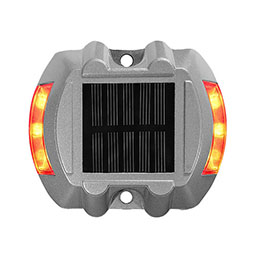
Firstly, solar power eliminates the need for mains electricity, putting the concept of energy conservation into practice at source. Solar road studs rely on high-efficiency photovoltaic panels on their tops to absorb sunlight and store energy, completely freeing them from dependence on the municipal grid and fossil fuels. With no need for any external mains power supply, they truly realise a ‘self-sufficient’ energy-saving model, reducing carbon emissions and electricity consumption at source. According to calculations from actual projects, the use of solar road studs on one kilometre of road can save 6,000–8,000 yuan in electricity costs annually. If applied to a 100-kilometre stretch of motorway, this translates to annual savings of 600,000–800,000 yuan. Long-term application can significantly reduce the operational costs of transport infrastructure, saving substantial expenditure for road authorities and project procurers. HOAN solar road studs are equipped with high-efficiency monocrystalline silicon photovoltaic panels, with a photovoltaic conversion efficiency far exceeding the industry average, reaching 18%–22%. Even in conditions of insufficient sunlight, such as continuous rain, fog or smog, they can efficiently absorb and store scattered light. Featuring a built-in high-capacity lithium battery (with some models incorporating supercapacitors), an 8-hour charge enables continuous operation for over 72 hours, thoroughly resolving the challenges of energy efficiency and warning visibility in low-light scenarios, and is suitable for various complex lighting environments such as mountainous areas, tunnels and regions with high rainfall.
Secondly, low power consumption combined with a long service life offers dual energy savings and enhanced durability, reducing long-term maintenance costs. Solar road studs generally utilise ultra-bright LED light sources. Whilst ensuring the same level of warning brightness, their power consumption is merely one-tenth that of traditional mains-powered LED road studs, with individual studs consuming as little as 0.1W. As they do not require frequent power consumption, energy-saving benefits are further enhanced; simultaneously, the LED light source has a lifespan of over 100,000 hours, eliminating the need for frequent replacements and reducing the energy waste and labour costs associated with such replacements. Compared to traditional road studs (with a service life of just 1–2 years), solar-powered road studs have an overall service life of 5–8 years. Among these, HOAN’s cast aluminium and ceramic solar-powered road studs, thanks to their high-quality materials and rigorous quality control, boast a service life of up to 8 years, significantly reducing replacement frequency and minimising energy consumption and resource wastage associated with replacement from the outset. Furthermore, all HOAN solar road studs are equipped with a built-in intelligent energy-saving control system featuring light-sensing capabilities. They automatically enter charging mode during the day and illuminate at night, thereby avoiding unnecessary energy consumption during daylight hours. Additionally, they automatically adjust brightness and flashing frequency according to ambient light levels, automatically increasing both in low-visibility conditions such as rain or fog. This ensures effective warning visibility whilst minimising energy consumption, achieving a ‘win-win’ for both energy efficiency and safety.
Thirdly, the wireless design and low maintenance requirements indirectly reduce energy consumption and labour costs whilst improving installation efficiency. Traditional mains-powered LED road studs require extensive cabling, involving road excavation and pipe laying during installation. This not only results in lengthy construction periods and high energy consumption but also damages the road surface structure. Furthermore, as cables age and faults occur, ongoing maintenance requires continuous investment in labour and electricity, increasing operational burdens. In contrast, HOAN solar road studs feature a wireless design requiring no cabling whatsoever. They offer two simple installation methods—adhesive bonding or bolting—requiring neither specialist installation teams nor complex equipment. A single unit can be installed in just 10 minutes, with the installation process generating no dust and involving no cable laying, thereby minimising both energy consumption and construction costs.
Furthermore, HOAN solar road studs feature an IP68 waterproof and corrosion-resistant design, with a casing made from high-strength materials. They can withstand extreme temperatures ranging from -40°C to 70°C and are resistant to wear, ageing and rolling. Capable of withstanding complex environmental conditions such as prolonged exposure to rain, intense heat and freezing cold, they require minimal maintenance. requiring only periodic cleaning of dust from the photovoltaic panel surface, with no additional labour or electricity costs, further reducing energy consumption and costs during maintenance, making long-term use more hassle-free and energy-efficient.
Fourthly, high visibility combined with all-weather adaptability ensures energy savings without compromising safety, thereby strengthening road safety defences. The greatest advantage of solar road studs is that they offer ‘uncompromised energy savings and enhanced safety’, featuring 360° omnidirectional active illumination with a visibility range of 500–800 metres—three times that of traditional reflective road studs. In low-visibility conditions such as at night, in rain, fog, sandstorms or tunnels, the light penetrates effectively, enabling drivers to identify them quickly. This effectively prompts vehicles to slow down and give way, thereby reducing the incidence of traffic accidents at night and in adverse weather. HOAN solar road studs utilise directional lighting modules to project light precisely onto the road surface, thereby avoiding light pollution and energy wastage caused by light scattering. At the same time, the arrangement and brightness of the LED chips are optimised to ensure that warning effectiveness remains uncompromised whilst reducing power consumption. They meet the safety warning requirements of various scenarios, including motorways, urban roads and rural roads, truly achieving a ‘win-win’ for energy efficiency and safety.
Road conditions, traffic flow, lighting conditions and energy-saving requirements vary across different traffic scenarios. Drawing on 15 years of industry experience, HOAN has developed a comprehensive range of energy-efficient solar road studs that precisely adapt to every scenario. This ensures that energy-saving benefits are realised in every setting whilst meeting the safety warning requirements of diverse environments. The range caters to the varied and bespoke demands of engineering procurement, eliminating the need to search for multiple products and providing a one-stop solution to energy-saving and safety challenges across all traffic scenarios.
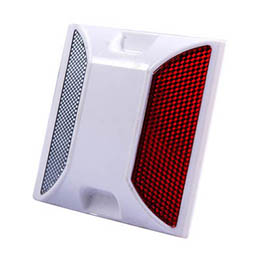
On motorways and national highways, where traffic is dense, heavy-duty vehicles are common and distances are long, traditional road studs require frequent replacement, whilst mains-powered studs consume high levels of energy. This results in significant long-term operational costs and energy consumption burdens, alongside prominent safety hazards in low-visibility conditions such as at night or during rain and fog. For these scenarios, HOAN’s cast aluminium solar-powered road studs (model HA-RS-D1) are the optimal choice. This model features a one-piece cast aluminium housing with a compressive strength exceeding 40 tonnes, enabling it to withstand the weight of heavy-duty vehicles with ease. It is resistant to damage and dislodgement, with a service life of up to eight years, significantly reducing replacement frequency and energy consumption. Equipped with high-efficiency monocrystalline silicon photovoltaic panels and a high-capacity lithium battery, it consumes no mains power, saving 600,000 to 800,000 yuan in annual electricity costs per 100 kilometres, delivering substantial long-term energy savings; Its active illumination design, combined with a rain and fog mode, enables rapid transmission of warning signals at night and in adverse weather conditions, effectively reducing the incidence of road traffic accidents on motorways. This model has already been deployed in numerous domestic motorway projects and has received high acclaim from road administration authorities.
In urban road and residential areas, where traffic is dense and lighting requirements are high, traditional mains-powered road studs consume significant energy, and the wiring installation process damages the road surface. Furthermore, light scattering can easily cause light pollution, disturbing residents’ night-time rest and running counter to the concept of low-carbon, liveable cities. HOAN’s plastic/ultra-thin solar road studs are precisely tailored to these scenarios. This product range is lightweight and easy to install, with a thickness of just 25mm, making it suitable for urban surfaces with thin paving. It requires no road surface disruption, features a wiring-free design and consumes zero mains power, thereby significantly reducing urban carbon emissions and supporting the development of low-carbon, liveable cities; The directional lighting design effectively reduces light pollution, ensuring residents’ night-time sleep is not disturbed. It also supports multi-colour illumination, allowing for customisation of different colours and flashing patterns to meet the requirements of urban road lane markings, pedestrian crossings and bus lanes, balancing energy efficiency, safety and aesthetics. It has now been widely adopted in traffic upgrade projects across numerous cities, becoming a vital component of urban green transport infrastructure.
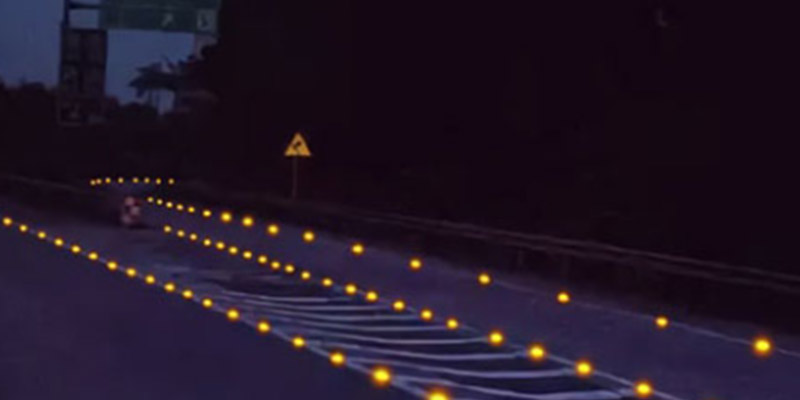
In remote rural areas and ecological conservation zones, issues such as a lack of mains power supply, poor transport links and sensitive ecological environments are common. Traditional road studs cannot function properly in these conditions, whilst cabling works would damage vegetation and soil, making maintenance difficult and energy consumption high. HOAN’s glass/ceramic solar road studs are perfectly suited to these environments. This product range is self-sufficient through solar power, requiring no mains electricity supply. With built-in high-capacity energy storage, they operate reliably even during prolonged periods of rain or overcast weather, completely resolving the challenge of providing warnings in areas without electricity; The wireless design maximises protection of the surrounding environment, avoiding damage to vegetation and soil, and meets the environmental requirements of nature reserves; simultaneously, the use of weather-resistant, eco-friendly materials such as glass and ceramic ensures low power consumption and a long service life, reducing maintenance frequency and eliminating the need for frequent on-site visits. This makes them ideal for rural ‘Starlight Projects’, enhancing night-time road safety in rural areas whilst promoting green and energy-saving principles, thereby supporting the upgrading of rural transport infrastructure.
In emergency and temporary scenarios—such as emergency construction, temporary traffic control and road repairs—there is a widespread need for rapid deployment and recyclability in the absence of mains power. Traditional temporary warning devices are often single-use products that consume high levels of energy, result in significant waste and cannot be reused. The HOAN portable solar road stud is perfectly suited to these scenarios. Lightweight, compact and easy to carry, it can be deployed rapidly. Its solar-charging design enables reuse, consumes no mains power and reduces waste from single-use equipment, thereby lowering emergency costs whilst upholding energy-saving principles; It also features IP68 waterproof and shock-resistant performance, making it suitable for all kinds of harsh emergency environments. A single charge allows for continuous operation of over 72 hours, meeting long-term emergency warning needs. This makes it the preferred warning device for emergency scenarios, helping to enhance both the safety and energy efficiency of emergency response.
There is a wide variety of solar road studs on the market, but most products focus solely on either energy efficiency or safety, making it difficult to achieve both objectives. Furthermore, quality varies significantly and after-sales support is often inadequate, causing considerable difficulties for project procurement. HOAN, however, has established itself as the preferred brand for high-efficiency, energy-saving road safety solutions thanks to 15 years of industry expertise, leading technological capabilities, rigorous quality control and a comprehensive service system. Whether for engineering procurement, road administration departments or international trade, choosing HOAN solar road studs enables the achievement of multiple objectives: energy efficiency, safety, peace of mind and cost-effectiveness.
HOAN’s core strengths are first and foremost reflected in its comprehensive product certifications and reliable quality. The entire range of solar road studs has passed multiple international certifications, including CE, RoHS and ISO, and complies with international energy-saving standards and road safety regulations. Made from environmentally friendly materials with no harmful emissions, they are suitable for all types of global transport projects, ensuring smooth project acceptance whether for domestic procurement or international exports. Secondly, HOAN leads the way in energy-saving technology. Equipped with high-efficiency monocrystalline silicon photovoltaic panels and low-power LED light sources, our products boast high photovoltaic conversion efficiency and low energy consumption, achieving annual energy savings of over 90%. The overall cost is more than 40% lower than that of traditional road studs, and long-term use can save significant amounts on electricity bills and maintenance costs, thereby enhancing the project’s cost-effectiveness. Furthermore, the product offers strong customisation capabilities, supporting personalised adjustments to colour, brightness, flashing patterns and dimensions. We provide bespoke selection solutions tailored to the energy-saving requirements and road conditions of different projects, ensuring suitability for a wide range of specialised needs. Finally, we offer comprehensive one-stop services. HOAN provides a full range of support, including free product selection, installation guidance, sample requests and 24-hour after-sales maintenance. Our professional team provides one-to-one support, guiding you through every stage from product selection and installation guidance to ongoing maintenance, ensuring a smooth process and helping purchasers swiftly implement energy-saving traffic projects whilst minimising procurement and operational risks.
Amidst the global trend towards green transport development and the advancement of the ‘dual carbon’ goals, highly efficient and energy-saving road safety solutions have become an essential industry requirement. Leveraging core advantages such as solar power supply, low power consumption, long service life and high safety, solar road studs perfectly realise the triple value of ‘energy saving + safety + economy’. By breaking through the limitations of traditional road studs, they have become the inevitable choice for the modernisation of traffic infrastructure. For 15 years, HOAN Traffic (haroadstud.com) has remained true to its founding mission, specialising in the field of solar road studs. With leading energy-saving technology, rigorous quality control, and comprehensive.