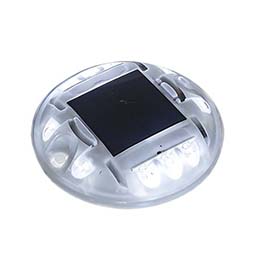

As the global development of smart transportation accelerates, the need for intelligent and efficient road management has become increasingly apparent, while the limitations of traditional solar road studs have gradually come to light. In the past, traditional solar road studs required manual on-site adjustments for brightness and flashing frequency modes; faults were difficult to detect in real time, and maintenance was time-consuming and labor-intensive. Particularly in scenarios such as highways, remote rural areas, and large road sections, the inconvenience and high costs of manual operation no longer meet the management requirements of smart transportation. Against this backdrop, wireless-controlled solar road studs have emerged. They seamlessly integrate the energy-saving benefits of solar power with wireless smart control technology, enabling remote adjustment, batch management, and real-time monitoring. This completely overcomes the limitations of traditional road studs, making them a core component of smart transportation upgrades.
With 15 years of deep expertise in the solar road stud sector, HOAN Traffic stays at the forefront of smart transportation trends. Leveraging its professional R&D capabilities, the company has launched a full series of wireless-controlled solar road studs. Equipped with LoRa/NB-IoT wireless transmission technology and featuring high-efficiency photovoltaic design and intelligent monitoring functions, these products are suitable for all scenarios. Having obtained multiple international certifications including CE, RoHS, and ISO, they have become the preferred brand for engineering procurement, road administration departments, and international trade buyers.
The core value of wireless-controlled solar road studs lies in their “intelligence and convenience, high efficiency and energy savings, and stability and reliability.” They not only retain the energy-saving and eco-friendly advantages of traditional solar road studs but also address the pain points of cumbersome management and high maintenance costs through wireless control technology. Each advantage is deeply aligned with the industry’s practical needs, balancing both practicality and cost-effectiveness.
Adjusting the brightness and flashing modes of traditional solar road studs requires on-site manual operation by staff. For large-scale road sections such as highways and major urban thoroughfares, where road studs are numerous and widely distributed, manual adjustments are not only time-consuming and labor-intensive but also disrupt traffic flow. In remote areas with limited transportation access, manual operation becomes even more challenging. Wireless-controlled solar road studs completely resolve this issue. Without the need for on-site manual intervention, users can remotely adjust the brightness and flashing modes of individual or multiple road studs via a mobile app or computer backend. The system supports various preset modes—including rapid flash, slow flash, and synchronized flash—to meet the needs of different warning scenarios.
HOAN’s wireless-controlled solar road studs are equipped with advanced LoRa/NB-IoT wireless modules, offering a transmission range of 1–3 kilometers in open areas. The signal remains stable and is unaffected by complex road conditions or weather. They also support batch grouping management. Staff can organize the road studs into groups based on road segment requirements, allowing a single person to switch modes and adjust brightness for hundreds of kilometers of road studs. This significantly improves management efficiency, reduces labor requirements, and lowers management costs, making them particularly suitable for large-scale smart transportation projects.
The inability to promptly detect road stud malfunctions is a major shortcoming of traditional solar-powered road studs. This not only compromises road warning effectiveness but may also create safety hazards. Manual inspections are time-consuming and labor-intensive, making comprehensive coverage difficult to achieve. The wireless-controlled solar road studs are equipped with built-in smart monitoring chips that track battery levels, photovoltaic charging status, and LED operation in real time. Should any issues arise—such as low battery, LED failure, or signal abnormalities—the system automatically triggers an alarm, notifying staff in real time via the backend while precisely pinpointing the location of the faulty stud for rapid repair.
HOAN’s wireless-controlled solar road studs feature fast-response, high-precision fault monitoring. This enables proactive maintenance planning, prevents warning failures caused by sudden malfunctions, and reduces traffic accidents resulting from faulty road studs. At the same time, it significantly lowers the costs of manual inspections, making road management more hassle-free and efficient. Whether in unmanned sections of remote areas or large-scale highway segments, real-time control over the status of road studs is achievable.
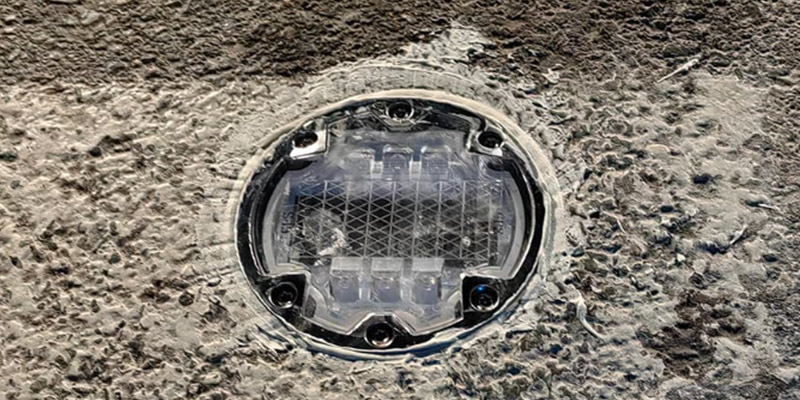
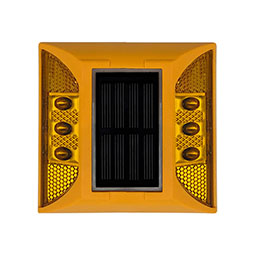
The wireless-controlled solar road studs retain the energy-saving advantages of traditional solar road studs. They rely on high-efficiency monocrystalline silicon photovoltaic panels on top to absorb and store solar energy, eliminating the need for external mains power. With zero carbon emissions and zero electricity consumption, they achieve annual energy savings of over 90%, aligning with the global trends toward low-carbon and smart transportation. Additionally, the wireless control module features a low-power design that does not drain the road stud’s stored energy, ensuring stable operation even during prolonged periods of rain or overcast weather.
HOAN wireless-controlled solar road studs optimize photovoltaic conversion efficiency, enabling them to efficiently absorb and store energy from scattered light even on overcast days or during smoggy conditions. Equipped with a built-in high-capacity lithium battery, they can operate continuously for over 72 hours after an 8-hour charge. Additionally, they feature light-sensing functionality, automatically charging during the day and illuminating at night without manual intervention—offering both energy efficiency and convenience. The wireless design eliminates the need for road excavation during installation, preventing damage to road structures and the surrounding ecosystem. It is suitable for remote areas and ecological conservation zones without grid power access and meets the acceptance requirements for green transportation projects.
The stability of the wireless control module is the core guarantee of the wireless-controlled solar road stud. HOAN’s wireless-controlled solar road studs feature an integrated, sealed design combining the wireless module with the stud, achieving an IP68 rating for water and dust resistance. This effectively withstands the erosion of heavy rain, sandstorms, and mud, preventing water ingress and short circuits in the wireless module; The housing is made of eco-friendly, durable materials such as cast aluminum, high-strength PC, glass, or ceramic, with a compression resistance of over 40 tons. It is resistant to crushing, corrosion, and extreme temperatures, ensuring stable operation in environments ranging from -40°C to 70°C.
Additionally, HOAN has optimized wireless signal transmission performance, ensuring strong signal penetration. Even in adverse weather conditions such as rain, fog, or sandstorms, stable transmission is maintained, guaranteeing precise responses to remote control commands without signal interruptions or control failures. Whether in the rainy south, the frigid north, on high-speed highways with heavy traffic, or on rough rural roads, HOAN’s wireless-controlled solar road studs operate reliably, reducing replacement frequency and lowering long-term maintenance costs.
Traditional smart road studs involve complex installation, cumbersome wiring, lengthy construction cycles, and high costs, while their poor compatibility makes integration with existing intelligent traffic systems difficult. The wireless-controlled solar road studs feature a wireless design that requires only adhesive bonding or bolt fastening for installation. No professional construction team is needed, and a single unit can be installed in just 10 minutes. The installation process generates no dust and does not damage the road surface, significantly reducing construction costs and duration.
HOAN wireless-controlled solar road studs offer exceptional compatibility. They support integration with the HOAN Intelligent Traffic Monitoring Platform and are also compatible with third-party traffic management systems, enabling integrated management of road stud status monitoring and remote control, and supporting the overall upgrade of smart transportation projects. Additionally, the products are compact and available in a variety of styles, allowing for flexible installation locations based on specific scenario requirements to meet the needs of various roads and projects.
Leveraging 15 years of industry experience, HOAN has developed a full series of wireless-controlled solar road studs that precisely meet the needs of different scenarios. Whether for highways, urban smart transportation, remote rural areas, or emergency situations, HOAN provides tailored solutions to ensure intelligent management covers every corner.
Highways and national highways feature long stretches and a large number of road studs, making manual debugging and inspections difficult. Additionally, under adverse weather conditions such as rain, fog, or at night, frequent adjustments to the brightness and flashing frequency of the road studs are required. Traditional road studs cannot respond in real time, which can easily lead to safety hazards. The HOAN cast aluminum wireless-controlled solar road stud (upgraded HA-RS-D1 model) is specifically designed for high-speed, heavy-load scenarios, with a load-bearing capacity of over 40 tons. equipped with a LoRa wireless module for long-range transmission and supporting GPS-synchronized flashing. They can be grouped and controlled in bulk, allowing staff to remotely adjust brightness and flashing modes via the backend based on weather changes and monitor faults in real time. A single person can manage hundreds of kilometers of road studs, significantly improving management efficiency and reducing safety risks. This solution has already been deployed in multiple smart highway traffic upgrade projects.
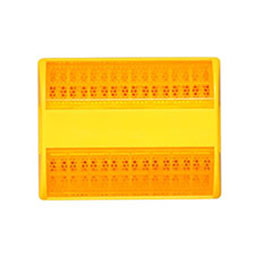
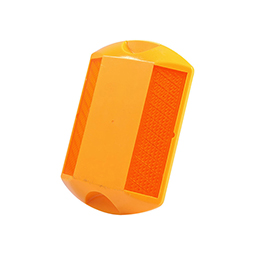
In scenarios such as urban arterial roads, smart crosswalks, and intersections, the warning modes of road studs need to be adjusted based on traffic flow and time of day, and they must integrate with urban intelligent traffic monitoring platforms to achieve unified management. HOAN’s plastic/ultra-thin wireless solar-powered road studs are compact and easy to install. They support multi-color illumination and multiple flashing modes, and can seamlessly integrate with urban intelligent traffic systems. Staff can remotely switch between modes such as crosswalk warnings and intersection guidance, meeting the needs of urban smart traffic upgrades. Installation is convenient and does not damage the road surface. These studs have been widely adopted in smart traffic upgrade projects across multiple cities.
Remote rural areas and ecological conservation zones lack grid power coverage and have limited transportation access, making manual adjustments and inspections difficult. Additionally, in ecologically sensitive areas, construction must avoid damaging vegetation and soil. HOAN’s glass/ceramic wireless solar-powered road studs are eco-friendly, recyclable, and highly weather-resistant. Powered by self-sufficient solar energy, they require no grid connection. Through remote control and fault monitoring, they enable unattended management without the need for on-site manual operation. Their wireless installation maximizes protection of the surrounding ecosystem, making them ideal for rural “Starlight Projects” and road upgrades in ecological reserves—enhancing road safety while safeguarding the environment.
In scenarios such as emergency construction, temporary traffic control, and road repairs, rapid deployment of road studs and flexible adjustment of warning modes are required. Additionally, temporary sites lack fixed power sources, making manual configuration inconvenient. HOAN’s portable, wireless-controlled solar road studs are lightweight, easy to carry, and quick to deploy. They support remote switching between flashing modes such as SOS and emergency alerts. Powered by solar energy, they require no external power source and are reusable, reducing waste from single-use equipment. They meet the flexible control needs of various emergency scenarios, helping to improve emergency response efficiency and safety.

While there are numerous types of wireless-controlled solar road studs on the market, their quality varies significantly. Some products suffer from unstable signals, inaccurate fault monitoring, and poor durability, causing numerous challenges for procurement and use. As a professional brand with 15 years of deep expertise in the solar road stud sector, HOAN has become the preferred partner for smart transportation projects thanks to its core strengths.
HOAN’s wireless-controlled solar road studs feature a comprehensive product portfolio, including heavy-duty cast aluminum models, urban plastic models, glass/ceramic models for extreme environments, and portable emergency models, providing a one-stop solution for procurement needs across various scenarios. Equipped with leading LoRa/NB-IoT wireless technology, they offer stable signals and long transmission ranges, supporting dual-platform control via mobile apps and computers as well as real-time fault monitoring; Built to exacting quality standards, these units feature IP68 water and dust resistance, withstand extreme temperatures, and resist crushing, with a service life of 5–8 years, thereby reducing replacement and maintenance costs. They also support customization, allowing clients to tailor colors, flashing patterns, and transmission ranges to meet the specific requirements of their projects.
Furthermore, HOAN offers comprehensive one-stop services, including free product selection guidance, installation instructions, and sample requests. Our professional team provides one-on-one support, and bulk purchases qualify for exclusive discounts. With robust after-sales support, we help accelerate the implementation of smart transportation projects. Visit the HOAN official website at haroadstud.com to view the full range of wireless-controlled solar road studs, request free quotes and samples, and embrace a new era of efficient smart transportation management.
In today’s rapidly evolving smart transportation landscape, wireless-controlled solar road studs have completely resolved the management challenges associated with traditional solar road studs through their core advantages of remote control, batch management, real-time monitoring, and energy efficiency. They have become essential equipment for driving smart transportation upgrades and enhancing road management efficiency. Not only do they align with the trend toward low-carbon transportation, but they also significantly reduce management and maintenance costs, delivering multiple benefits including “intelligence, efficiency, energy savings, and safety.”
For 15 years, HOAN Traffic has remained committed to quality and innovation, keeping pace with smart transportation trends to develop a full range of wireless-controlled solar road studs. With leading technology, rigorous quality control, full-scenario adaptability, and a comprehensive service system, HOAN has become the preferred brand for smart transportation projects worldwide. Whether you are an engineering procurement agency, a road administration department, or an international buyer, choosing HOAN’s wireless-controlled solar road studs provides you with a tailored smart transportation solution. This helps enhance road management efficiency and safety standards, enabling us to work together to build a smart, green, and safe transportation environment. Visit the HOAN official website to inquire about details, obtain free product selection plans and samples, and embark on a new journey in smart transportation.