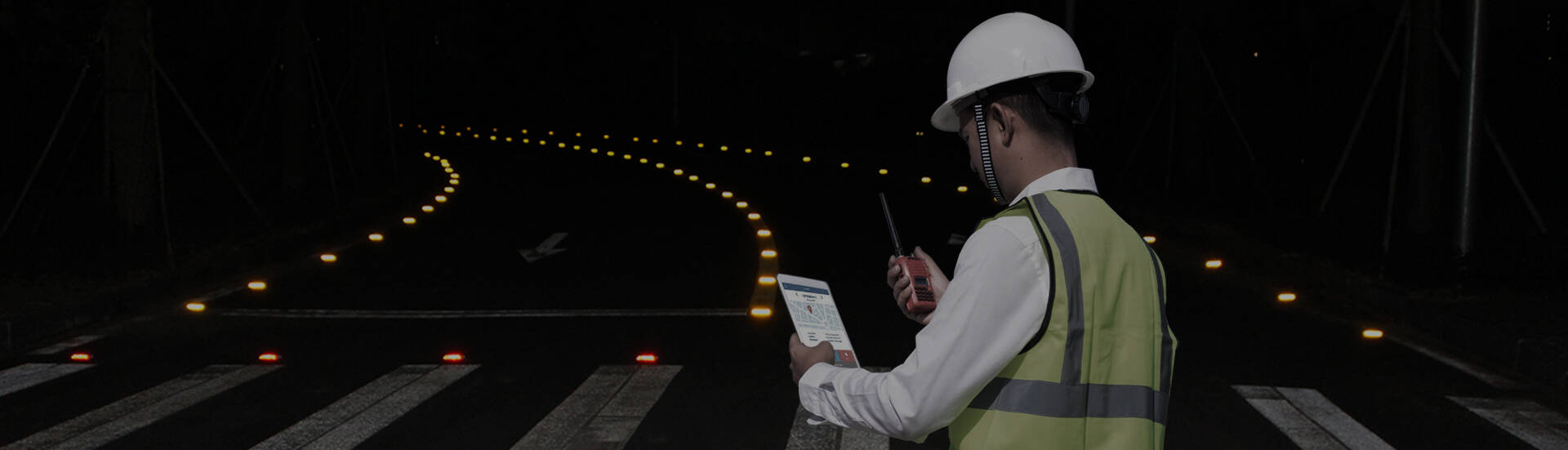
In global urban and rural infrastructure projects, rural revitalization initiatives, scenic area upgrades, and mountainous transportation improvement projects, a widespread challenge exists on numerous remote roads, rural side roads, mountain roads, and industrial park roads: a lack of municipal power grid coverage. These off-grid roads span vast distances, are geographically dispersed, and face limited construction conditions, resulting in a long-standing absence of basic traffic lighting and safety warning facilities. Traditional road safety solutions rely heavily on municipal power grids or manual maintenance. Not only are the renovation costs exorbitant, but implementation is also extremely difficult. As a result, roads without grid access suffer from poor nighttime visibility and persistently high accident rates during rainy or foggy weather, making them a key challenge in road safety upgrades across the country.
Among the various road safety facilities, solar road studs have emerged as the optimal solution for upgrading roads without grid access, thanks to their unique advantages: fully off-grid operation, no wiring required, zero electricity costs, all-weather active illumination, and ultra-low maintenance costs. HOAN Traffic has dedicated many years to the R&D of road safety equipment. Tailored for remote, off-grid roads and complex wilderness conditions, the company has developed a full range of adaptable solar road studs that perfectly address the implementation shortcomings of traditional infrastructure. These products are widely used in off-grid infrastructure projects worldwide, including rural areas, mountainous regions, scenic spots, and industrial parks. This article provides an in-depth analysis of the challenges in retrofitting off-grid roads, the core application advantages of solar road studs, and selection guidelines for specific scenarios, offering professional guidance for project implementation to overseas engineering contractors, municipal procurement agencies, and infrastructure general contractors.
For remote roads without grid access, traditional facilities commonly found on the market—such as streetlights, standard reflective road studs, and thermoplastic road markings—all suffer from unavoidable implementation flaws. They struggle to meet the long-term safety and operational requirements of off-grid road sections, significantly hindering the progress of road safety upgrades.
Municipal streetlights are the most common lighting solution, but they are completely impractical for roads without grid access. Streetlights require full-length wiring, road excavation, and the installation of power distribution facilities. Not only do these projects involve lengthy construction periods and damage to roadbeds and mountain structures, but the overall project costs are also extremely high. For dispersed, remote rural and mountainous roads with moderate traffic volumes, the return on investment is extremely low, making large-scale implementation virtually impossible. At the same time, the costs of post-installation inspection, maintenance, and electricity for streetlights on remote sections are exorbitant, and operations and maintenance are extremely challenging.
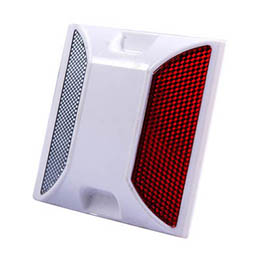
Standard reflective road studs and thermoplastic markings are the basic standard for sections without electrical infrastructure, but since they rely solely on the passive reflection of vehicle headlights, they have critical functional shortcomings. In low-visibility conditions—such as rainy nights, heavy fog, or overcast skies—the road surface reflects light erratically and markings become blurred, making it impossible to clearly delineate the road’s outline. This drastically reduces drivers’ ability to judge distances, making them highly prone to accidents such as lane departures, rollovers, and falling off cliffs. Furthermore, thermoplastic markings are susceptible to rain erosion, vehicle traffic, and sun-induced aging; they fade and peel off within just a few months, requiring repeated repainting and resulting in persistently high long-term maintenance costs.
Furthermore, various grid-powered warning devices, speed detection systems, and lighting fixtures all rely on a stable power grid supply and cannot function properly on off-grid rural roads, rendering them completely impractical. Overall, traditional solutions have consistently failed to meet the four core requirements of low cost, ease of installation, all-weather safety, and low maintenance costs, whereas self-powered solar road studs have completely broken through the bottleneck in upgrading off-grid roads.
Unlike all traditional road safety facilities, HOAN solar road studs are specifically designed for remote, off-grid, and complex environments. By addressing five key dimensions—power supply mode, installation method, protective performance, maintenance costs, and warning effectiveness—they precisely resolve the pain points associated with upgrading roads without electricity, making them an essential product for off-grid road safety upgrades at this stage.
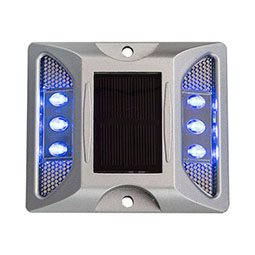
The entire HOAN series of solar road studs is equipped with high-efficiency photovoltaic panels and high-capacity energy storage batteries. They autonomously absorb and store solar energy during the day and automatically activate illumination at night or in low-light environments. The entire process requires no connection to the municipal power grid, no cable laying, and no power distribution equipment. This truly achieves zero electricity bills, zero power supply costs, and zero power maintenance, making them perfectly suited for all remote roads without grid access and solving the power supply challenges for rural road lighting at their root.
Unlike traditional passive reflective road markers, solar road studs actively emit light via high-brightness LEDs and do not rely on vehicle headlights. Whether in pitch-black nights, heavy rain with standing water, or dense fog, they clearly mark road edges, curves, slopes, and cliff edges, with a visibility range of over 600 meters. This completely eliminates visual blind spots on roads without streetlights and significantly reduces the incidence of traffic accidents on remote road sections.
Roads without access to the power grid are often located in rural areas, mountainous regions, and scenic areas, where roadbeds are fragile and mountain ecosystems are sensitive; large-scale construction projects can easily cause damage. HOAN solar road studs support rapid installation via adhesive bonding without excavation or wiring. They require no heavy construction equipment, allowing large sections to be installed in a single day. There is no need for long-term road closures, and they cause no damage to road surfaces or mountain ecosystems. Installation costs are significantly lower than those of traditional facilities such as streetlights.
Remote, off-grid roads commonly face issues such as a shortage of maintenance personnel and the difficulty of conducting inspections. HOAN solar road studs are made of industrial-grade materials, with a service life of 5–8 years. They are completely maintenance-free and require no frequent repairs or replacements; simply cleaning debris from the surface of the solar panels ensures stable operation. This makes them perfectly suited for unmanned, remote operations, resulting in significant long-term savings on maintenance costs for municipalities and industrial parks.
The climatic conditions on off-grid rural roads are complex, with variable conditions such as intense heat and direct sunlight, prolonged rain, mountainous frost, and coastal salt fog. HOAN solar road studs feature an IP68 fully sealed waterproof design and a corrosion-resistant cast aluminum housing, paired with batteries capable of withstanding extreme temperatures ranging from -40°C to 70°C. They are impervious to rain immersion, sand and dust erosion, and heavy-duty碾压, ensuring continuous and stable operation in a wide range of complex outdoor environments.
Different types of off-grid roads vary greatly in road conditions, traffic volume, and risk levels; a single product cannot suit all scenarios. Leveraging a comprehensive product portfolio, HOAN customizes dedicated selection solutions for various off-grid rural roads to precisely meet project requirements.
These roads cover a wide area, feature a dispersed network, and have limited project budgets. With low traffic volume and no power supply infrastructure, we recommend HOAN’s economical round solar road studs. Offering exceptional value for money, low bulk installation costs, stable battery life, and maintenance-free operation, they enable low-cost lighting upgrades for the entire rural road network, addressing villagers’ nighttime travel safety concerns.
Mountain roads feature sharp curves, steep gradients, frequent fog and rain, and heavy truck traffic, resulting in an extremely high risk of accidents. This environment imposes stringent requirements on product compressive strength, stability, and warning effectiveness. We recommend HOAN’s recessed heavy-duty solar road studs. Their deep-buried installation prevents impact damage and dislodgement, while the high-compression-resistant cast aluminum housing withstands heavy vehicle traffic. Dual-sided illumination clearly outlines curves and cliff edges, mitigating driving risks on high-hazard sections around the clock.
Scenic area roads must balance safety and aesthetic requirements, eliminating conspicuous equipment and tripping hazards while providing a subtle warning effect. The HOAN ultra-thin, low-profile solar road studs are ideal for this purpose. Their low profile lies flush with the road surface, eliminating the risk of pedestrians bumping into them. The soft glow does not disrupt the natural landscape of the scenic area, while simultaneously upgrading road safety warnings to meet the needs of refined renovations for cultural and tourism roads.
Off-road trails in industrial parks cover vast areas, experience frequent truck traffic, and feature complex road conditions, requiring equipment with strong warning capabilities and high stability. We recommend HOAN square strobe solar road studs, which feature adjustable multi-mode flashing for enhanced visibility. Their sturdy, wear-resistant housing is designed to withstand long-term, high-frequency vehicle traffic, helping to regulate traffic order within the industrial park and reduce the likelihood of scrapes and accidents on factory roads.
After a comprehensive comparison with various traditional road infrastructure options, solar road studs offer irreplaceable advantages in off-grid scenarios. Compared to municipal streetlights, they require no wiring or power distribution, are less expensive, have shorter installation times, and incur zero electricity costs and zero maintenance expenses, completely resolving the challenges of deployment in remote areas. Compared to ordinary reflective road studs and thermoplastic markings, they provide active illumination and remain effective around the clock, unaffected by weather conditions; their service life is several times longer than that of traditional markings, eliminating the need for repeated construction and repainting. Compared to manual inspection and monitoring, they provide 24-hour unattended, automatic warning, significantly reducing labor costs. For all off-grid, remote, and rural roads, solar road studs represent the optimal upgrade solution that balances safety, cost-effectiveness, and practicality.
Given the complex operating conditions of off-grid roads, project procurement requires precise product selection to avoid installation failures and acceptance issues: For rural sections with heavy rain and fog, prioritize models with IP68 fully sealed waterproofing and long-lasting batteries to prevent failure due to power loss during inclement weather; for heavy-load sections in mountainous areas, cast aluminum recessed models designed to withstand vehicle碾压 and gravel impacts are essential; for large-scale rural retrofit projects, opt for cost-effective, high-value products to control project costs; For overseas off-grid infrastructure projects, we recommend selecting products directly from HOAN’s manufacturing facility. The entire product line comes with international certifications and supports sample testing and customized modifications, ensuring smooth project acceptance and implementation.
The safe retrofitting of remote roads without grid access has long been a challenge in global transportation infrastructure. Traditional grid-powered equipment and passive reflective devices both have significant shortcomings and cannot adapt to complex outdoor conditions. Solar road studs, with their core advantages of fully off-grid self-powering, all-weather active warning, no construction disruption, ultra-low O&M costs, and exceptional weather resistance, are perfectly suited for all off-grid road scenarios—including rural areas, mountainous regions, scenic spots, and industrial parks. They fundamentally address the pain points of poor nighttime visibility, high accident rates, high retrofit costs, and difficult O&M on rural roads, becoming the mainstream standard product for off-grid road safety upgrades worldwide.
To obtain customized selection solutions for various off-grid road types, product specifications, field project case studies, and bulk purchase quotes, please visit the HOAN official website at haroadstud.com. There, you can request free samples and connect with professional engineering consultants to find a one-stop solution for remote road safety upgrades.