
In recent years, an increasing number of overseas distributors and general contractors have chosen to source solar road studs from China. While the supply chain is mature, the product range is comprehensive, and the value for money is strong, first-time importers can easily fall into pitfalls.
Common issues tend to center around a few areas: failing to distinguish between trading companies and actual manufacturers; focusing only on unit prices without checking certifications; being unaware that UN38.3 documentation is required for shipping lithium-ion battery products by sea; misjudging minimum order quantities (MOQs); failure to understand the division of responsibilities between FOB and CIF terms; and placing large orders without first conducting actual sample testing. The result is often goods getting stuck at the port, products unsuitable for the local climate, or inconsistent batch quality.
This guide breaks down the entire process—from defining requirements to customs clearance and receipt of goods—in a practical, step-by-step order.
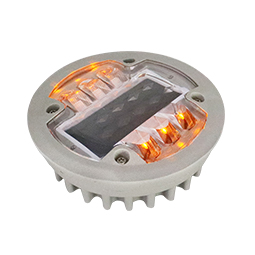
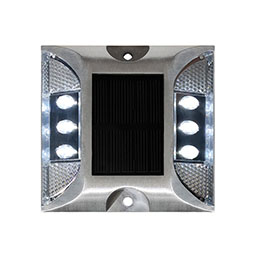
Requirements for road studs vary significantly between highways, industrial parks, airports, and desert roads. First, determine the compression load capacity, protection rating, light color, and operating mode; then decide whether to use an embedded or surface-mounted type.
For the EU market, check for CE and RoHS compliance; projects in the Middle East often require IP68 performance documentation; products containing lithium batteries require UN38.3 certification for both sea and air freight.
Distinguish between sample installations, small-batch trial orders, and full-container-load projects. Clearly specify the volume so suppliers can provide accurate MOQs and tiered pricing.
Don’t just compare unit prices. Include the purchase price, ocean freight, import duties, local customs clearance fees, and a reserve for spare parts in the CIF cost.
Key Tip: The more specific the requirements document, the more accurate the quote will be, and the fewer rework issues will arise later.
Examine the factory’s background, export history, and product test reports; those that can provide actual workshop footage are generally more credible. In the event of quality disputes, middlemen are often unable to trace the issue back to the production stage.
Select models based on local road and climate conditions: samples for desert heat, coastal salt fog, and heavy-duty road sections vary significantly; do not settle for generic models.
Impact resistance, IP68 water and dust resistance, low-light charging capability, battery stability at high and low temperatures, and whether the strobe mode functions properly.
Generally, the buyer bears the sample fee plus shipping costs. Most factories will reimburse the sample fee in subsequent bulk orders; this can be negotiated in advance.
HOAN Reference: We support sample shipping for the full HA-RS-143N, HA-RS-150, and HA-RS-D3 series, and can provide test reports as attachments with the samples.
CE and RoHS are the baseline requirements for market access in the EU and most other markets; certificates must correspond exactly to the purchased model—generic “one-size-fits-all” certificates are not acceptable. UN38.3 is a mandatory document for the sea and air transport of lithium-ion battery products and cannot be bypassed during customs clearance. IP68 performance reports and compression load reports are frequently requested directly in bidding projects.
Projects in the Middle East often require GCC-related supporting documents; the North American market requires corresponding performance test records. Clarify regional differences in advance; do not wait until customs clearance to discover missing documents.
Screenshots of certificates from official websites are not valid; request that the supplier provide complete test report PDFs and verify the model number, issuing authority, and validity period.
HOAN Reference: We can provide a complete set of matching test documents based on the order model for customs clearance and international bidding.
The minimum order quantity (MOQ) for standard solar road studs is typically low; during the trial order phase, most factories support mixed-model container consolidation.
The allocation of costs and risks differs significantly under the three terms: FOB, CIF, and DDP. The contract must specify who bears the responsibility for the port of shipment, ocean freight, insurance, and risks at the port of destination.
Housing material, compression strength rating, protection rating, light color, flashing mode, quantity, unit price, total amount, delivery date, and payment terms—not a single item should be omitted.
Specify the percentage of spare parts and the scope of the warranty. For projects with OEM requirements, clearly state logo and packaging specifications.
Reminder: Do not place a formal bulk order until sample verification and document confirmation are complete.
During mass production, require the factory to provide production photos or short videos. This is especially important for large-volume projects, as maintaining a production record helps avoid disputes over delivery dates.
You may conduct the inspection yourself or commission a third party to inspect the products, checking appearance and lighting functionality, and conducting spot checks on pressure resistance.
Each unit must be individually protected with foam; outer cartons must be reinforced. For sea freight, wooden crates are recommended for added stability to prevent the casings from being bumped or damaged during long-distance transport.
Commercial invoice, packing list, bill of lading, UN 38.3 battery documentation, and CE and RoHS test reports—the absence of any single document may affect customs clearance.
Select a full container load (FCL) or less than container load (LCL) based on shipment volume. Since solar road studs contain lithium battery modules, UN 38.3 documentation is a mandatory requirement for ocean freight; missing documents will cause the container to be detained at the port.
The buyer must prepare a local import tariff code and use the documents sent by the supplier to complete the import declaration. Upon arrival of the goods, first inspect the outer packaging for damage, then conduct a random functional test of the products. If any issues are found, document them on the spot and provide feedback.
Before placing an order, verify each item: clarify the application scenario and technical specifications; request and test samples; verify CE, RoHS, and UN38.3 documentation corresponding to the model; confirm MOQ, trade terms, and Proforma Invoice (PI) details; arrange pre-shipment inspection; ensure all lithium battery shipping documents are complete; and set aside a proportionate number of spare parts.
Importing solar road studs from China essentially involves a complete process chain—from defining requirements, verifying samples, reviewing certifications, and inspecting production to customs clearance and receipt of goods. Omitting any step in this process may result in complications at the port or on-site. When selecting a partner, a verified, physical manufacturing facility is more reliable than the lowest bid. If you wish to proceed with an import project, please visit haroadstud.com to submit your requirements, request samples, and obtain a formal FOB quote.